Travel and Accommodation Website Creation: When to Make Separate Service Pages
Not every trip or room option needs its own detailed page. Decide how much to build by looking at what changes a customer’s choice, what information you have ready, and what you can realistically maintain.
Travel and Accommodation Website Creation: When to Make Separate Service Pages Travel and Accommodation Website Creation: When to Make Separate Service Pages
A travel or accommodation website does not automatically improve by having more information or more pages. Separate service pages can help when customers need to compare meaningful differences before enquiring or booking. If your offerings are simple, a single page that explains the essentials may be easier to understand and maintain. Start by writing down what a visitor needs to decide.
When to separate the pages
Consider a dedicated page if any of the following changes what a customer needs to know or choose: - Packages have different itineraries, accommodation types, inclusions, or conditions. - Seasonal dates, travel styles, or room types involve different preparation or important cautions. - Common questions and pre-booking checks vary by service.
If the options have different names or photos but share the same description and booking process, you can begin with a shared overview and clearly list the choices there. Before splitting pages, check whether each one has enough genuinely distinct information to justify its own page.
Checklist before you build
- [ ] List the packages or rooms customers will compare and note the key differences.
- [ ] Gather verified details such as itineraries, location, inclusions and exclusions, and usage conditions.
- [ ] Check that you can use the photos and descriptions. If you lack suitable images, plan a photo session or other appropriate materials.
- [ ] Decide how visitors will enquire or book, and identify what they should know beforehand.
- [ ] Assign someone to update the pages and set a review schedule.
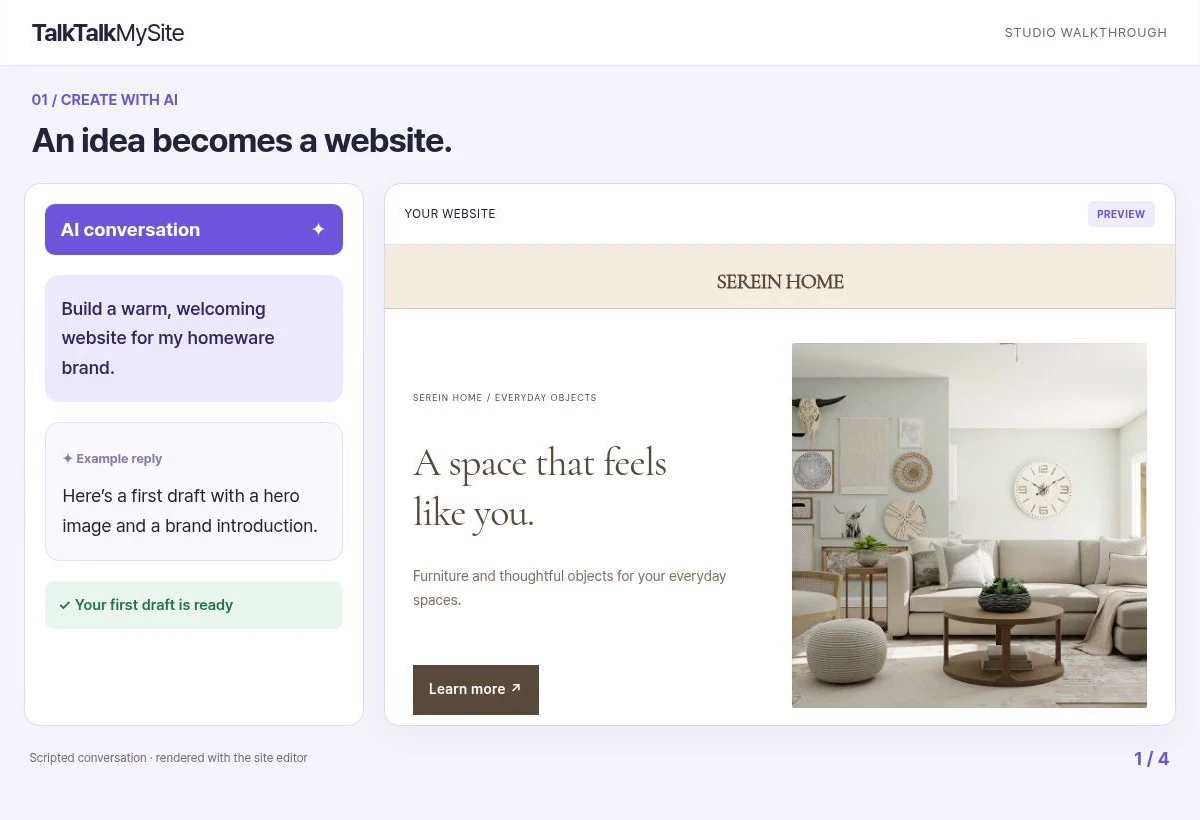
TalkTalkMySite is a no-code tool with templates, AI chat, and visual editing. It lets people start without coding or design experience, but the owner still needs to check that AI-generated wording and editing results accurately reflect the business. After choosing a template, review the actual service details, images, page layout, and booking guidance.
Choose by situation: a hypothetical example
**Hypothetical example:** “Solbit Travel” offers weekend forest stays and guided trips. The stay service needs to explain room types and check-in, while the guided trip has a different itinerary and set of inclusions. Solbit therefore gives those two services separate detail pages. However, if rooms differ only in a few amenities and use the same booking instructions, Solbit could show the room choices in a table on one accommodation page and consider splitting them later if customer questions indicate a need.
The right number of pages depends on what customers must compare and how the information differs, not simply on the industry label. Building a separate page for every option from the outset can create repeated content and make updates easy to miss. But compressing important differences into a vague overview can make it difficult for customers to compare their choices.
Mistakes to avoid and a practical next step
Do not rely on large photos while leaving out location, itinerary, inclusions, or conditions. Avoid presenting undecided details as confirmed, and do not create more pages than you can keep current. Payments, social login, domain connection, and shipping may require separate setup. Basic is for a website, Standard for a store, and Premium for multilingual needs; consider the scope you actually need. No plan guarantees search rankings or sales, and you should not assume unlimited free use or a mistake-free result. Review the live layout and business information yourself before publishing.
For your next step, make a comparison sheet for your services, then draft pages for one or two offerings with genuinely different conditions. Check whether a customer can find enough information to compare them. Use that review to decide the scope of the remaining pages, so you can plan both website creation and ongoing maintenance realistically.
#TravelandAccommodation #TravelandAccommodationWebsiteCreation #TravelandAccommodationNoCode #TravelandAccommodationTemplates #TravelandAccommodationDesign #TravelandAccommodationOnlinePresence #WebsiteCreation #NoCodeWebsite #AIWebsiteBuilder #WebsiteTemplates #WebsitePlanning #WebsiteManagement #NoCode #NoCodeBuilder #BuildWithoutCoding #DesignForBeginners #AIAssistedDesign #TemplateCustomization #ResponsiveDesign #MobileFriendly #ContentPlanning #BrandIntroduction #PageStructure #UserExperience #VisualEditing #WebsiteImages #LaunchPreparation #BeginnersGuide #MaintenanceChecklist #OnlineBusiness