An Independent Publisher’s Website: Turn Introductions into Inquiries
Organize your publisher profile and inquiry instructions first, then set a weekly review routine. If you plan to sell books, assess store creation and payment setup separately.
An independent publisher’s website is more than a list of books. It is a place to explain what the press publishes and who it hopes to work with. Make it clear where visitors should direct an editorial-services request, a manuscript proposal, or a bookstore inquiry. A clear path can help visitors take the next step, but it cannot guarantee more inquiries. Begin by deciding the site’s purpose and what your team can realistically maintain.
Decide before you build
First, choose one primary purpose. If the priority is introducing the press and its titles, start by considering a basic website plan. If you want to sell books on the site and manage orders, look at the Standard plan with store functionality. If you need multiple languages for readers abroad, Premium is an option. Check what each plan includes, and consider whether you are prepared to operate the features you select.
Second, distinguish the people who may contact you. Readers, bookstores, authors, and translators may need different instructions. Choose a work email or other contact method that someone will check, define what kinds of requests you can handle, and briefly explain what information to include. Decide on a work contact method before publishing any personal contact details.
Prepare materials and a clear inquiry path
Gather your press name or logo, a short introduction, cover images and bibliographic details for representative titles, recent news, and images you have permission to use. Verify any business information you plan to publish, such as an address, hours, or contact details. If you intend to sell books, prepare product details and shipping terms; payment and shipping each require setup. A domain and social login also need to be configured if you plan to use them.
Write inquiry instructions so visitors can understand their next action at a glance. For example, “For bookstore inquiries, include your store name and the titles you are interested in” identifies both the audience and the information needed. Link each book page to its publication details and a purchase or inquiry route. Give collaboration inquiries their own instructions rather than mixing them with sales questions.
Hypothetical example: Slow Sentence Press
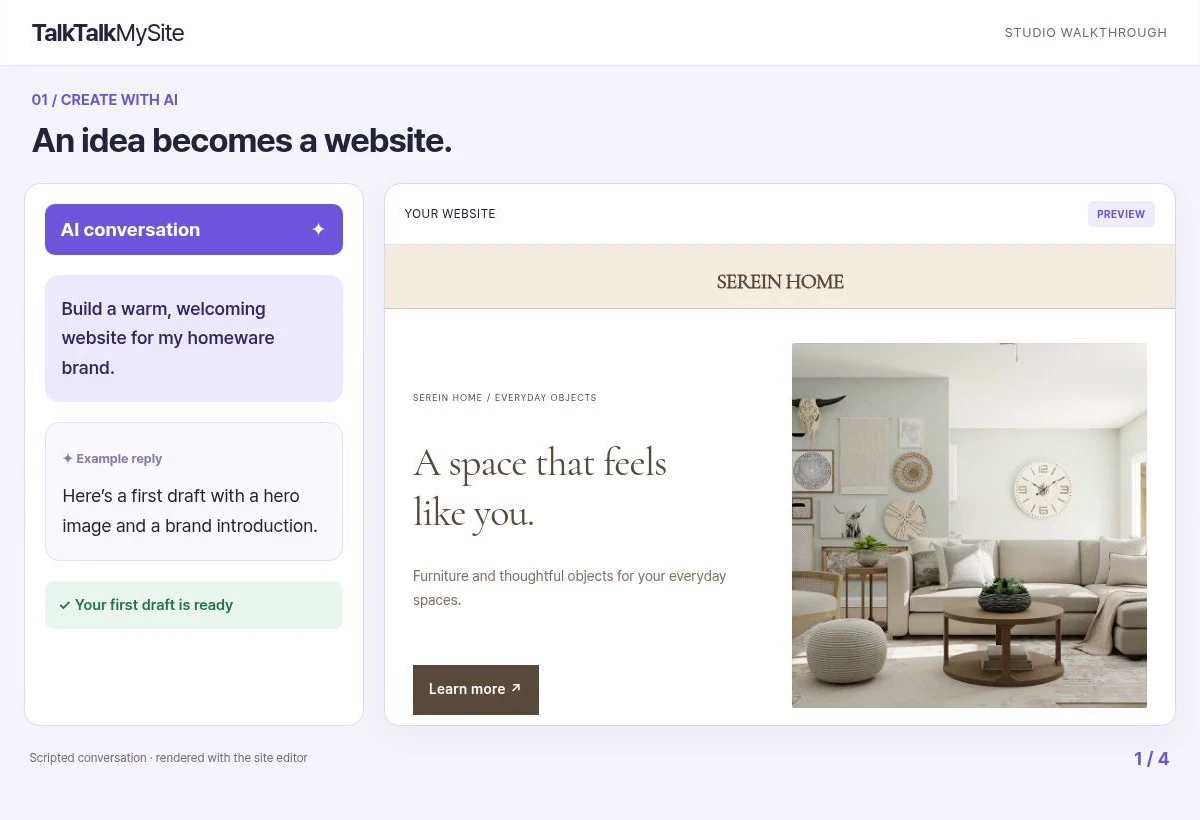
Slow Sentence Press chooses publisher introductions and bookstore inquiries as its main website goals. It prepares covers and bibliographic details for three representative books, a description of its publishing direction, and a work inquiry address. Since it is not ready to sell books directly, it first considers a Basic website. If it later decides to accept orders itself, it will separately review store creation and payment and shipping setup. This is a hypothetical example, not a promise of results.
A weekly review routine for the owner
- Check the inquiry inbox and published contact methods; assign unanswered messages to a person and a next action.
- Review book details, forthcoming-title notices, and any changed business information, such as the address or contact details.
- On both a phone and a computer, open the menus, links, and inquiry routes yourself.
- If books are for sale, check that product details and order, payment, and shipping settings still match how you currently operate.
- After changing text or layout, review the changes again and note what to check the following week.
TalkTalkMySite offers no-code templates, AI chat, and visual editing, so you can get started without coding or design experience. You still need to review the content, layout, and business details yourself. The service does not guarantee search rankings or sales, unlimited free use, or an error-free site. For your next step, write the site’s purpose in one sentence, then sort the materials above into what you already have and what you still need to prepare.