Freelancers: When Does Each Service Need Its Own Page?
You do not need a separate detail page for every service. Choose the page structure by looking at how clients compare options, how the services differ, and how much information you can keep current.
When planning a freelancer website, it is easy to wonder whether every service needs its own detail page. More pages may look comprehensive, but pages with nearly identical content—or details you cannot keep updated—can make choosing harder. Start by asking what clients need to know before they decide to contact you.
Decide whether the services need separate pages
A dedicated page is useful when services differ in their audiences, process, deliverables, required materials, or how the work is scoped, and those differences are hard to explain together. A separate page can also help when clients already know the service name and ask about that service specifically. By contrast, if you offer only a few services to similar clients through much the same process, a single page with a clear comparison may be simpler.
Before deciding, write down: - The main client and problem for each service - What is included, the steps involved, and materials clients must provide - Which deliverables or pre-inquiry questions vary by service - How much time you can spend keeping the information current
If a difference does not affect a client’s decision, it does not have to become a separate page. The number of pages alone does not guarantee inquiries or search performance.
A practical structure for beginners
Start with a page introducing all your services. For each one, briefly explain who it is for, what you provide, the process, and how to inquire. If the explanation becomes long or clients keep asking different questions about one service, add a detail page for it. Keep that page focused on the information relevant to that service, and link it back to the full service overview and inquiry route.
**Hypothetical example:** A solo translator offers general document translation and website translation. Both require checking the languages and source text, but website translation also requires reviewing page structure and visual context. The translator first compares the two services and their required materials on one page. If website translation generates recurring, distinct questions or has a more involved process, the translator then creates a dedicated detail page. This is an invented example, not a promise of results.
Avoid common mistakes and take the next step
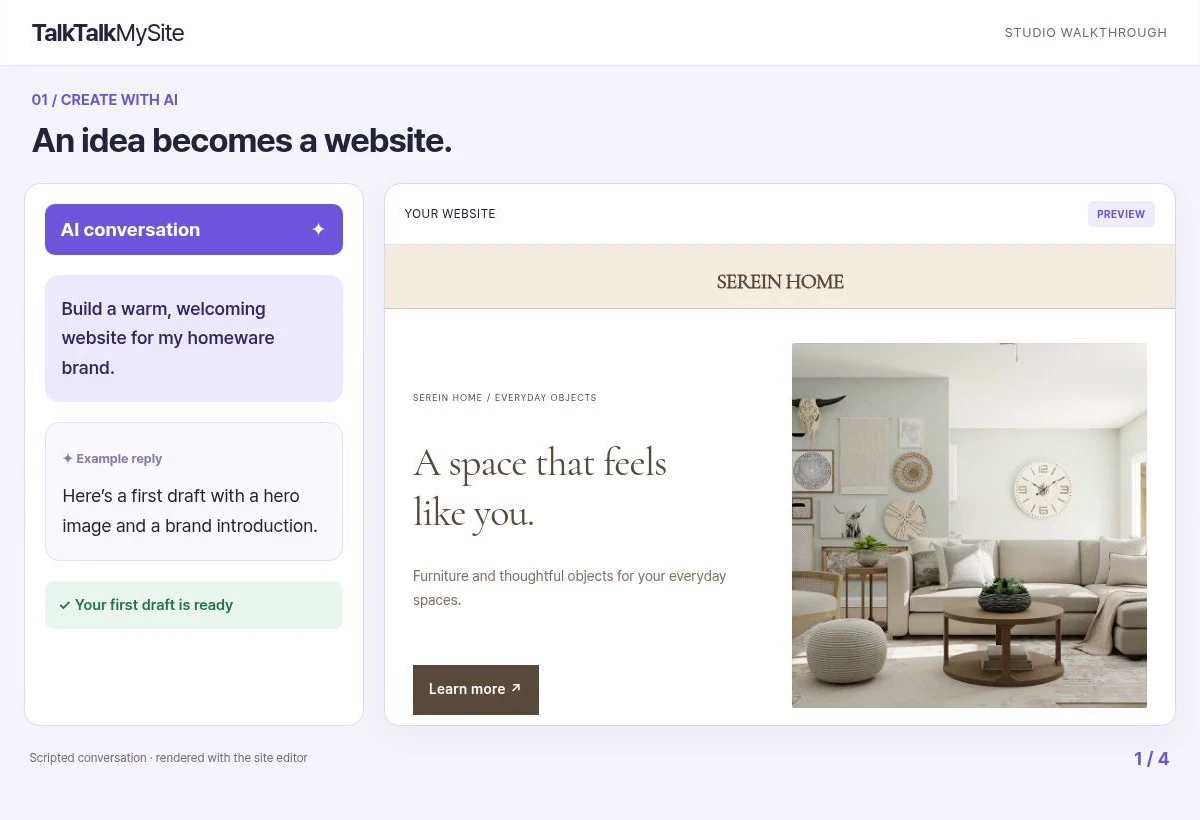
Do not create several near-identical pages by changing only the service name, or promise deadlines and outcomes you have not established. Also avoid cramming every detail into the first screen. TalkTalkMySite is a no-code tool with templates, AI chat, and visual editing, so you can get started without coding or design experience. You still need to check the content, layout, and business details before publishing. Basic is for a website, Standard for a store, and Premium for multilingual use; payments, social login, domains, and shipping require setup. Unlimited free use, error-free results, search rankings, and sales are not guaranteed.
**Next-step checklist** - Describe how each service differs in one sentence. - Separate information shared across services from service-specific details. - Start with an overview page and observe client questions. - Add detail pages only for services with recurring questions or a more complex process.