A startup’s first website: prepare materials and choose what you need
You can start without coding or design experience, but checking business details and content remains your responsibility. Learn what to gather and how to choose between a website and an online store.
When preparing a startup’s first website, decide what it needs to do before choosing a tool. If the priority is introducing the business and receiving inquiries, a basic website may be enough. If you need to display products and accept orders, you will need store functionality. TalkTalkMySite offers no-code templates, AI chat, and visual editing, so coding or design experience is not required to get started. But an easy start does not mean the finished result is created automatically.
Materials to gather first
Describe the business in one sentence and note who the service is for. Then list what visitors need to know and what you want them to do. If your goal is inquiries, prepare contact details and a service description. If you plan to sell, prepare product descriptions and images, prices, and shipping terms. A logo and color palette can help if you have them, but they do not replace accurate content and fact-checking.
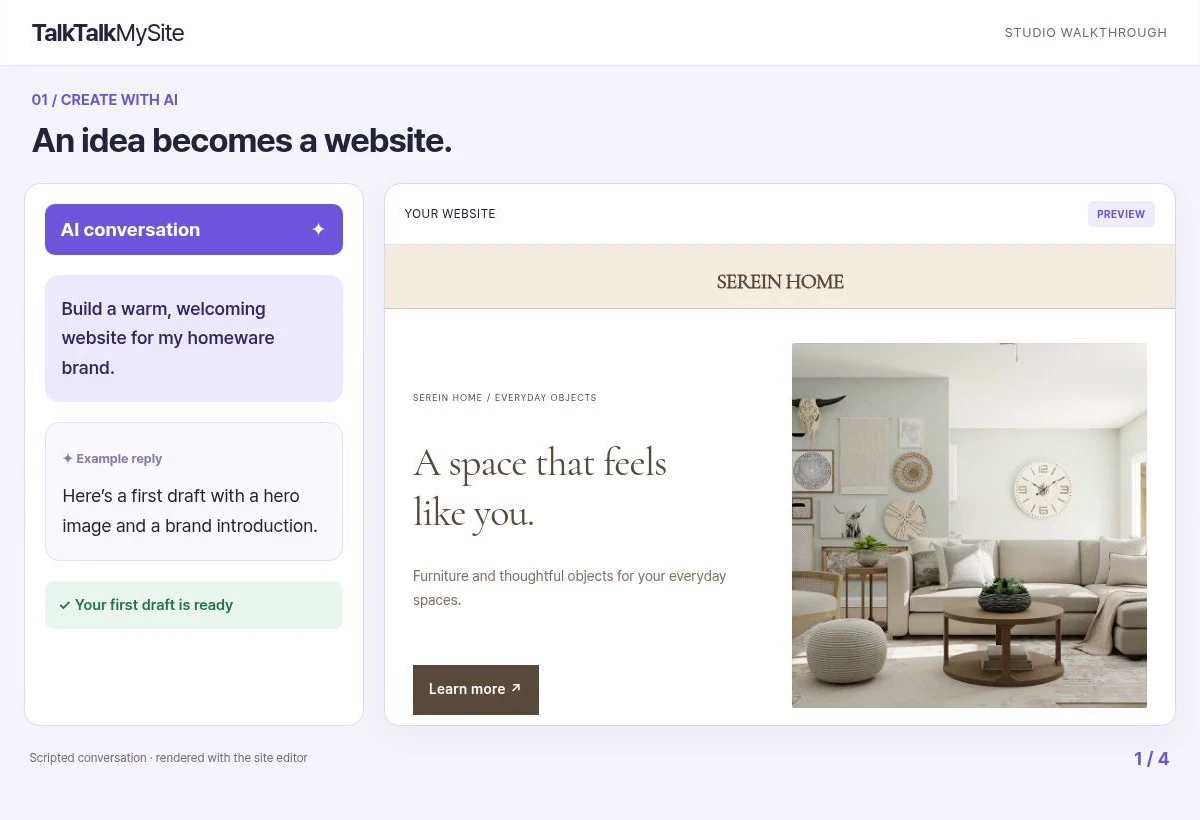
- Business name, introduction, and service or product details
- Photos and images, including confirmation of their source and usage rights
- Business information you plan to publish, such as contact methods and hours
- If selling, the terms needed for payments, shipping, and order handling
- Whether you need pages in other languages and who your main customers are
Choose a plan and features for the job
TalkTalkMySite’s Basic option is for a website, Standard is for an online store, and Premium is for multilingual operation. Choose according to the features you actually need. If you are not taking orders and mainly need to explain a service and receive inquiries, there may be little reason to start with store functionality. If selling products is the goal, check that payment and shipping settings match how you will actually operate. Payments, social login, domains, and shipping require setup when needed, so verify what you must configure instead of assuming it is already taken care of.
Review a draft against your situation
**Hypothetical example — a subscription-based business software startup seeking its first customers:** At first, it chooses a basic website with a service introduction, intended audience, and contact method. Since it is not taking product orders, it postpones store functionality. If it later starts selling physical products online, it can prepare product details and shipping terms, then reconsider the store option. This example does not claim results for any particular company; it shows that the right choice can change as a business develops.
Avoid common mistakes and take the next step
Do not select a template and then leave its wording and business details unchecked. Do not assume payment, domain, or shipping setup will happen by itself. Review the mobile layout and menus, then test the inquiry or ordering flow. Search rankings and sales are not guaranteed; neither free unlimited use nor a complete absence of mistakes should be expected. For a practical first step today, list the pages and materials you need, choose one action you want visitors to take, and build and review a basic draft.