Sporting Goods Website Creation: Set Color and Customer Flow First
Even without design experience, you can set consistent rules for color, fonts, and spacing, then organize pages around shoppers’ questions. Gather the essentials and choose your operating scope before building.
When planning a sporting goods website, decide what visitors need to know before focusing on decoration. Running shoes, sportswear, and rackets raise different questions about materials, sizing, intended use, and care. First choose whether you need an informational website or a store that accepts orders, then make the next action clear on the first screen.
Consistent design without design experience
Choose one main color from your logo or existing photos, and reserve an accent color for buttons and important notices. Prioritize readable contrast between the background and body text. Pick one font for headings and one for body copy, then apply a consistent set of sizes and weights. Repeating the same spacing rules above and below sections, between cards, and around images helps the page feel orderly.
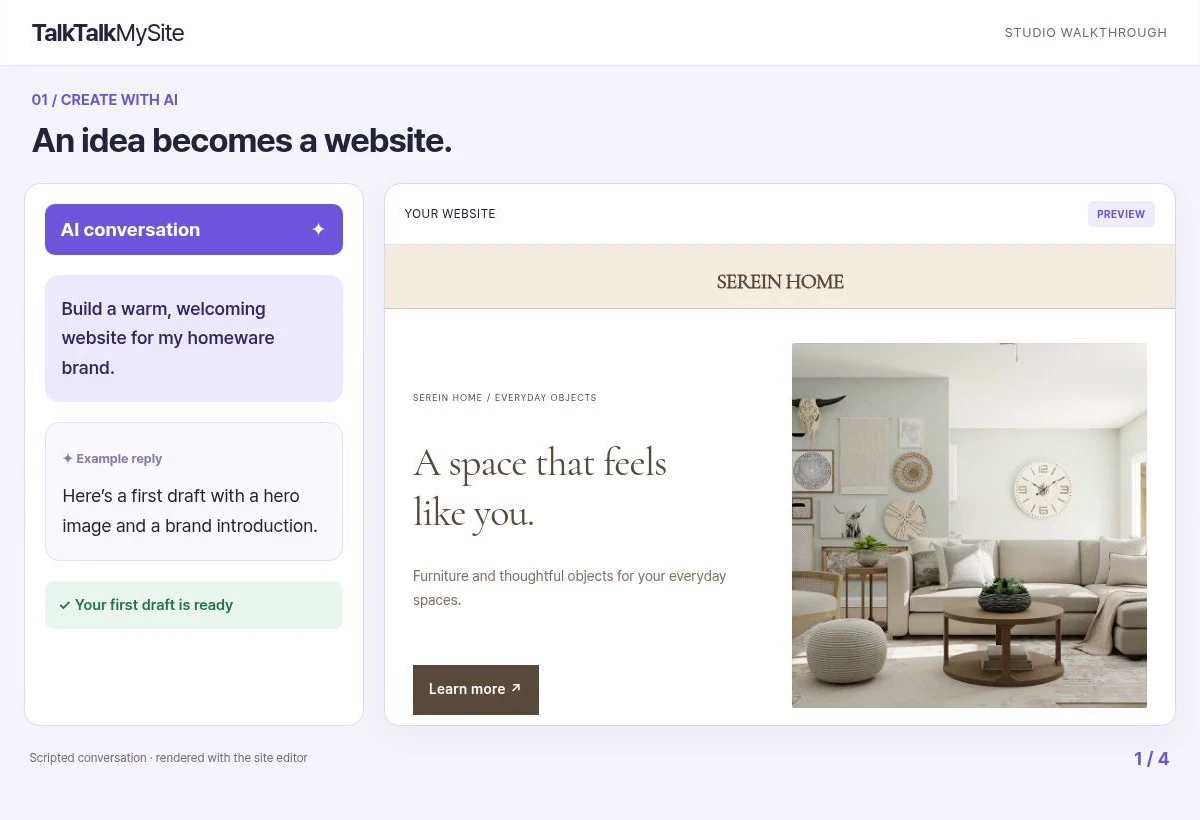
Check that text is readable and buttons do not crowd one another on mobile. Do not communicate out-of-stock or caution information through color alone; include words as well. TalkTalkMySite templates and AI chat can help you start affordably with a draft, while visual editing lets you adjust colors and layout. You can begin without design experience, but the owner still needs to check the copy, layout, and business details.
Organize pages around visitors’ questions
On the first screen, identify the products you carry, your customer group, your featured products or specialty, and clear paths to contact you or browse items. Keep basic product details, such as names and prices, clear in the product list. On each product page, include real photos, size, materials, intended use, care instructions, and anything customers should check before ordering. Write shipping, exchanges and returns, and payment information to match your actual operating policies, and make contact details easy to find.
**Hypothetical example — a neighborhood running and trail shop:** The first screen highlights products for beginner runners and ways to contact the shop. A product page explains the shoe’s intended use, sizing guidance, materials, and care, with links to shipping and exchange information and a contact button. This is only an example of page organization; verify all content against your actual stock, policies, and product characteristics.
Check your materials and feature scope
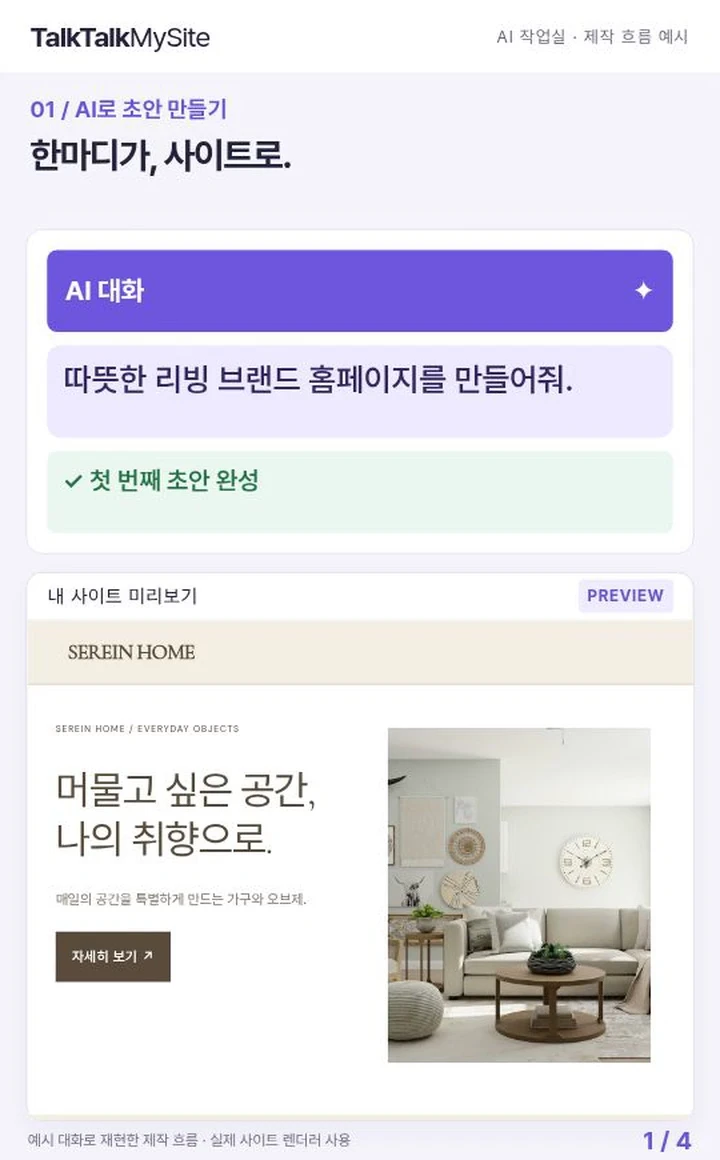
- Gather your logo, photos you have permission to use for each product, and product names, descriptions, and prices.
- Decide how you will track stock and sizes, and who will handle orders and inquiries.
- If you plan to accept payments, check the payment setup. Configure social login or domain connection separately if needed. If you use shipping features, set shipping conditions and test the actual order flow.
- TalkTalkMySite separates its scope into Basic for a website, Standard for a store, and Premium for multilingual use. Check the plan, AI credits, and setup items against the features you need.
Check before publishing and take the next step
Templates and owner editing may help reduce the burden of custom builds and routine updates, but they do not guarantee lower costs or sales results. Before publishing, check the mobile layout, links, product details, prices, stock, and payment and shipping settings yourself. Do not assume unlimited use or error-free results; keep checking usage and content.
For your next step, choose one or two core products and the questions customers ask most often, then draft your first page. Try the TalkTalkMySite AI workspace to create initial copy with a template and AI chat. Then edit the text and images yourself and verify that the information is accurate.
#SportingGoods #SportingGoodsWebsiteCreation #SportingGoodsNoCode #SportingGoodsTemplates #SportingGoodsDesign #SportingGoodsOnlinePresence #WebsiteCreation #NoCodeWebsite #AIWebsiteBuilder #WebsiteTemplates #WebsitePlanning #WebsiteManagement #NoCode #NoCodeBuilder #BuildWithoutCoding #DesignForBeginners #AIAssistedDesign #TemplateCustomization #ResponsiveDesign #MobileFriendly #ContentPlanning #BrandIntroduction #PageStructure #UserExperience #VisualEditing #WebsiteImages #LaunchPreparation #BeginnersGuide #MaintenanceChecklist #OnlineBusiness