Event Planner Website Creation: Pages That Answer Visitor Questions
Plan a first website around your event services and visitor questions, and learn how to keep your business hours and contact details up to date yourself.
An event planner’s website should do more than look polished: it should help visitors decide whether you can handle their event and show them what to do next. Rather than building a large site immediately, identify your main event services and the questions you hear most often, then begin with the pages you need.
Decide what to prepare first
Before creating your website, write down your event types, the areas and clients you primarily serve, your services, and how visitors can contact you. Check that you have permission to use your photos, and prepare the contact details and consultation hours you intend to publish. If you do not plan to publish packages or prices, prepare a clear consultation message instead.
- Describe your main events and services in one sentence.
- Prepare real event photos, a brief introduction, and contact details.
- Confirm business and consultation hours, including days off.
- Decide what information you need for an estimate and what your initial reply should cover.
Arrange pages around visitors’ questions
On the home page, make clear what kinds of events you handle and how to get in touch. On the services page, explain the scope of your planning and how the process works. Keep case studies concise, covering each event’s purpose, your responsibilities, and photos from the venue. On the contact page, tell visitors what details are useful for a consultation, such as their preferred date, location, or estimated guest count—but request only what you need.
Include real questions in your FAQ, such as “Which areas do you serve?”, “How far in advance should we start planning?”, and “Can we consult you if we haven’t set a budget?” Do not present uncertain answers as promises. For details that depend on the circumstances, say that you can confirm them during a consultation. Giving each page one clear next step helps visitors know where to go.
Build your first page with TalkTalkMySite
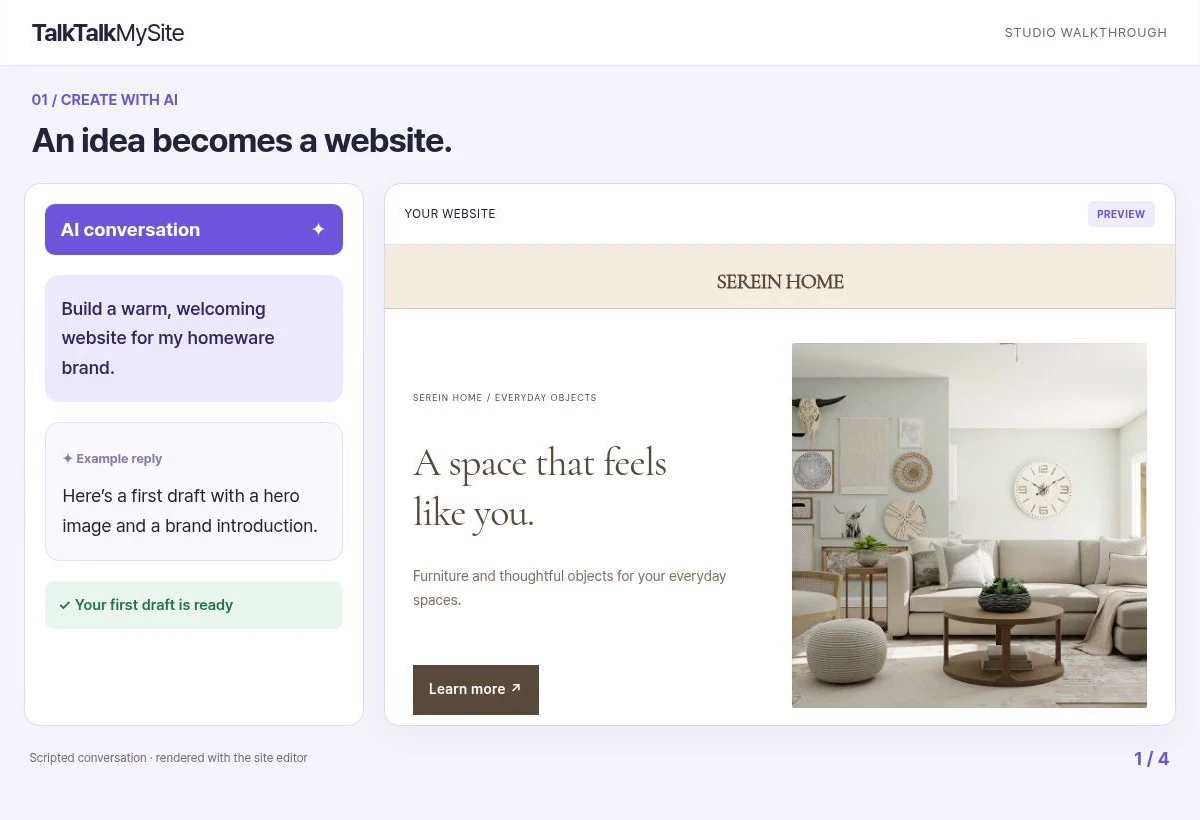
TalkTalkMySite is a practical way to get started with no-code templates and AI chat. You do not need coding or design experience to begin, but after choosing a template, review the page order and inquiry details yourself to make sure they suit an event-planning business. Try the AI workspace to draft your first page.
You can then use visual editing to change text and images yourself, and review and update your business hours or contact details when they change. Gather recurring visitor questions and use them to refresh your pages. Do not assume the tool will always keep your content accurate automatically; check it yourself before publishing.
Check before publishing, then take the next step
Basic is for a website, Standard is for a store, and Premium is for multilingual use, so review the plans according to the scope you need. Payments, social login, domains, and shipping may require separate setup. Check the plans, AI credits, and setup requirements. If you do not need online sales, you do not have to add store features straight away.
- Check on a phone that text, photos, and inquiry buttons are easy to see.
- Compare business hours, phone number, email, and days off with the correct information.
- Test the inquiry form and decide who will respond.
- Record when event details change and who is responsible for updating them.
Templates and owner editing can help reduce the costs of custom builds or repeated updates, but neither results nor savings are guaranteed. Search rankings and sales are not guaranteed, and use is not unlimited. This week, choose one main event and three visitor questions, draft a page in the AI workspace, review it yourself, and decide what to publish.
#EventPlanner #EventPlannerWebsiteCreation #EventPlannerNoCode #EventPlannerTemplates #EventPlannerDesign #EventPlannerOnlinePresence #WebsiteCreation #NoCodeWebsite #AIWebsiteBuilder #WebsiteTemplates #WebsitePlanning #WebsiteManagement #NoCode #NoCodeBuilder #BuildWithoutCoding #DesignForBeginners #AIAssistedDesign #TemplateCustomization #ResponsiveDesign #MobileFriendly #ContentPlanning #BrandIntroduction #PageStructure #UserExperience #VisualEditing #WebsiteImages #LaunchPreparation #BeginnersGuide #MaintenanceChecklist #OnlineBusiness