Local Community Website Creation: FAQ and Weekly Checks
Turn recurring questions into a useful FAQ and follow a weekly review order for content, pages, and organization details. Gather the information residents need first, then start with a manageable website.
Decide what to include and gather materials
For local community website creation, begin by identifying the information residents look for before adding features. Review announcements, meeting schedules, how to participate, locations, and contact details; list questions that keep coming up as possible FAQ entries. Decide in advance whether one operator will manage the site or several people will share the work.
Gather the organization’s accurate name and introduction, contact details, operating hours, activity locations, current announcements, and photos. Confirm permission to publish photos and add descriptions. For schedules that may change, note who is responsible for checking them and when. Consider whether you need inquiry submission or member features, and remember that payments, social login, and a domain require setup.
Reduce inquiries with useful FAQs
Build the FAQ from questions people have actually asked. Give one clear answer to each question, such as “How can I join for the first time?”, “Where does the group meet?”, or “Where can I check for schedule changes?” Explain the steps for joining and provide a contact person. Do not present unconfirmed information as final.
**Hypothetical example — neighborhood book club:** If people ask every week, “Can I join for the first time?”, include whether newcomers are welcome, how to sign up, and where to check the next meeting in one FAQ entry. When the schedule changes, update both the announcement and FAQ that week, then check that no outdated date remains.
Build a first page with TalkTalkMySite
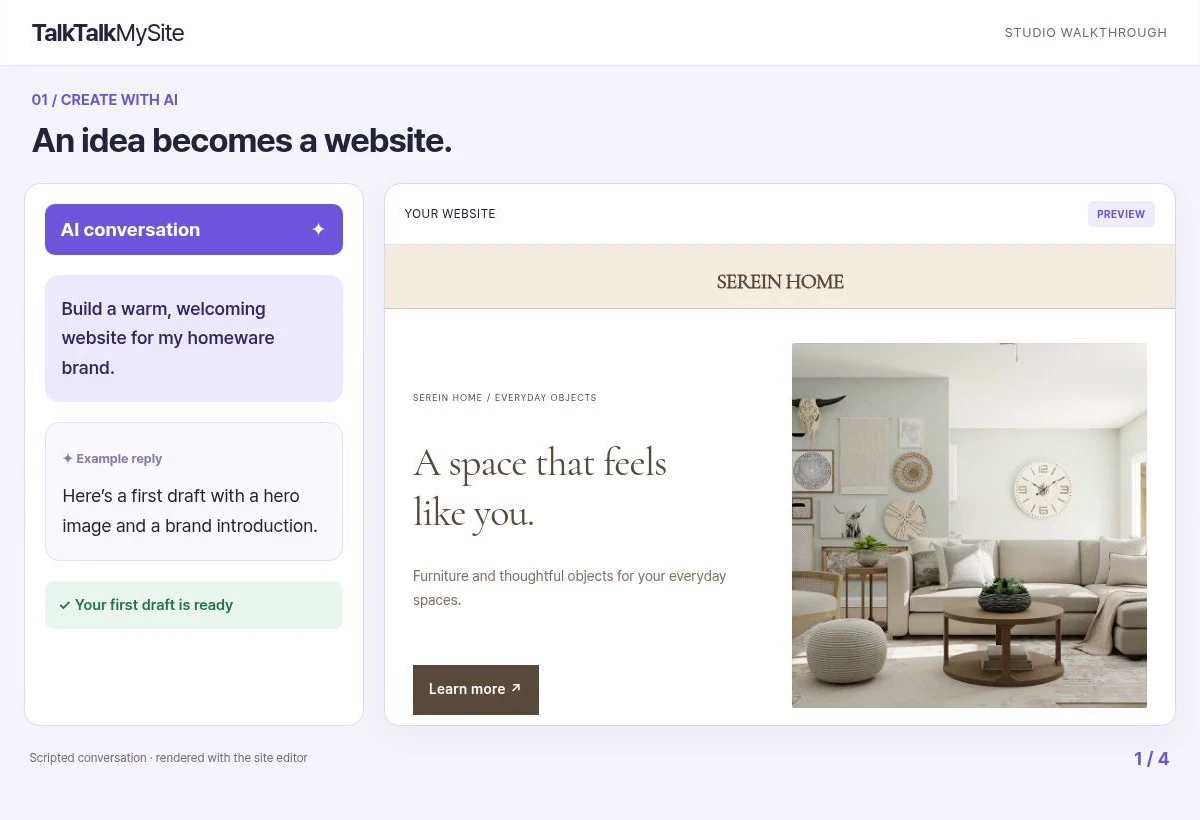
TalkTalkMySite offers no-code templates, AI chat, and visual editing, so operators can get started without coding or design experience. Choose a template that suits a local group and arrange an introduction, schedule, and FAQ. Check which plan fits your needs, along with AI credits and any additional setup. Templates and owner editing can reduce the work involved in custom builds and routine updates, but they do not guarantee cost savings or results.
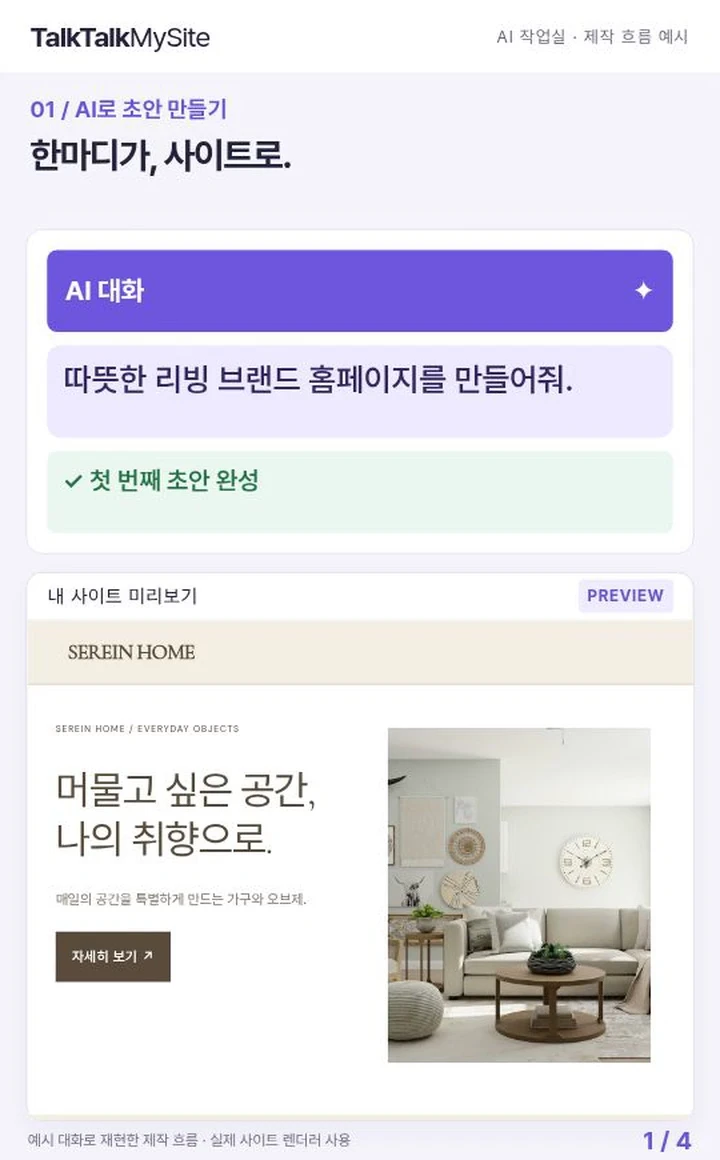
After creating a draft, the operator must review the wording, images, page layout, and organization details. Try the TalkTalkMySite AI workspace and build a first page with an introduction and FAQ. Before publishing, check that contact details and dates are accurate, the page is easy to read on mobile, and its links work.
Weekly review order for the operator
- Confirm that announcements and meeting dates are current and that no past dates remain.
- Review incoming questions, decide whether a new FAQ is needed, and update answers and contact details.
- Check menus, wording, images, and page layout so residents can find information easily.
- Verify organization details such as contacts, locations, and hours; test links and participation steps yourself.
You do not need a perfect site on day one. Publish an introduction, the next meeting date, and the most important FAQs this week, then assign someone to review them next week. Depending on your needs, a website or store may require setup for payments, member login, a domain, or shipping. Check plan limits and setup requirements, and do not expect guaranteed search rankings, participation, sales, or error-free operation.
#LocalCommunity #LocalCommunityWebsiteCreation #LocalCommunityNoCode #LocalCommunityTemplates #LocalCommunityDesign #LocalCommunityOnlinePresence #WebsiteCreation #NoCodeWebsite #AIWebsiteBuilder #WebsiteTemplates #WebsitePlanning #WebsiteManagement #NoCode #NoCodeBuilder #BuildWithoutCoding #DesignForBeginners #AIAssistedDesign #TemplateCustomization #ResponsiveDesign #MobileFriendly #ContentPlanning #BrandIntroduction #PageStructure #UserExperience #VisualEditing #WebsiteImages #LaunchPreparation #BeginnersGuide #MaintenanceChecklist #OnlineBusiness