Bakery Website Creation: Accessibility and Weekly Checks
Gather store details, write clear visitor guidance, and use a practical weekly checklist to review accessibility and accuracy yourself.
A bakery site should do more than display products: it should help visitors quickly find your hours, location, and how to order. First decide whether you need a website to introduce the bakery and its menu, or a store for online orders and payments. A store requires payment and shipping setup. Social login and domain connection also need to be checked and configured if you plan to use them.
Materials to prepare
Collect the bakery name, contact details, address and directions, opening hours and closing days, menu names and prices, allergen-related information, and ordering and pickup instructions in one place. Check that you have permission to use your store and product photos, and that they are up to date. If menus or prices change often, decide who will update them and when. You can get started without coding or design experience, but the owner still needs to check that the published information and layout are accurate.
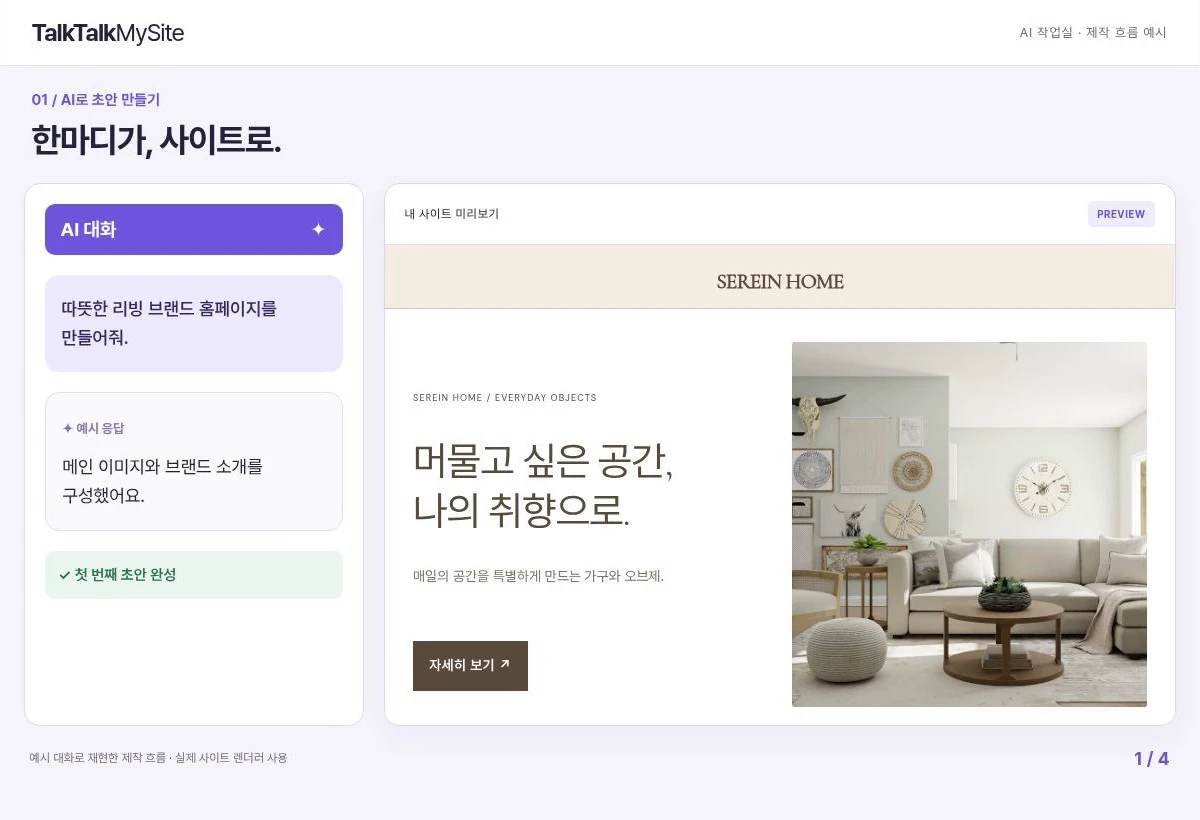
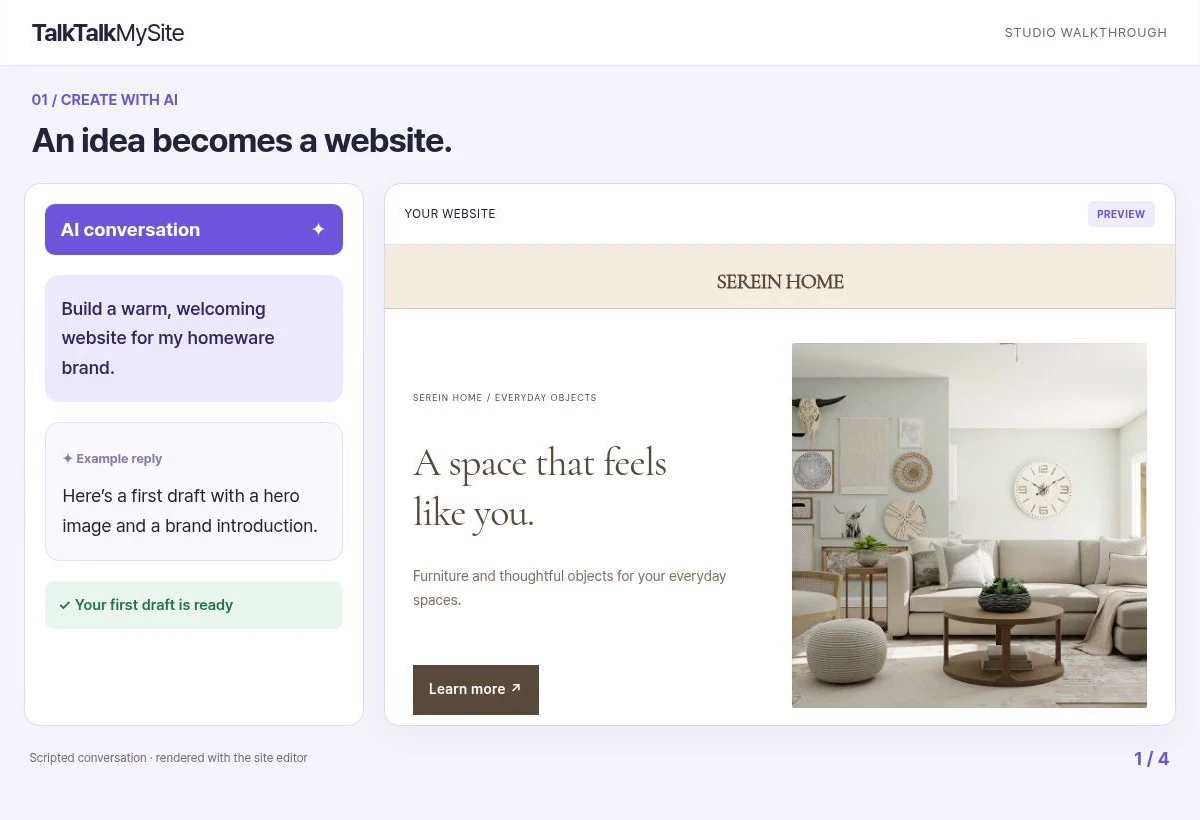
TalkTalkMySite offers no-code templates, AI chat, and visual editing, so you can begin with a template and keep the initial setup approachable. Basic is for a website, Standard for a store, and Premium for multilingual use. Compare plans against the functions you need, and check AI credits and setup requirements as well.
Make the site readable and accessible
Keep each sentence focused on one piece of information, and be specific—for example, “Today’s bread is available from 2 p.m.” Avoid tiny text and text colors that blend into the background; make headings distinct from body copy. Add a brief description of what each image shows, and provide menu information as text rather than placing it only in an image. Use action labels such as “Contact us” on buttons, and check that text and buttons are easy to see on a phone screen.
The owner’s weekly review order
- Confirm that opening hours, closing days, contact details, and location information are current.
- Check that menu names, prices, availability, and photos match what you actually offer.
- Read the copy aloud and fix long sentences, typos, and unclear ordering instructions.
- On a phone and a computer, review headings, text contrast, image descriptions, buttons, and links.
- If you take orders, check that payment, pickup, and shipping information and settings work as intended.
- Record the date of your edits and who will do the next review.
Hypothetical example and next step
Hypothetical example: “Afternoon Bakery” first publishes its store introduction and weekly menu, and decides to take orders by phone. Every Monday, the owner checks menu items and prices, updates sold-out notices, and tests the opening-hours information and call button on a phone. Before introducing online payments, the owner separately reviews the store functions and payment and shipping setup.
With TalkTalkMySite, owners can also edit text and images themselves through visual editing after publishing, which makes routine updates easier to manage. Templates and owner editing may help reduce the need for custom builds and repeated update work, but they do not guarantee an outcome or cost savings. Unlimited use and error-free publishing are not guaranteed either, so check plan details, AI credits, and setup needs. Try the AI workspace to create your first page, then review it yourself with the weekly checklist above before publishing.
#Bakery #BakeryWebsiteCreation #BakeryNoCode #BakeryTemplates #BakeryDesign #BakeryOnlinePresence #WebsiteCreation #NoCodeWebsite #AIWebsiteBuilder #WebsiteTemplates #WebsitePlanning #WebsiteManagement #NoCode #NoCodeBuilder #BuildWithoutCoding #DesignForBeginners #AIAssistedDesign #TemplateCustomization #ResponsiveDesign #MobileFriendly #ContentPlanning #BrandIntroduction #PageStructure #UserExperience #VisualEditing #WebsiteImages #LaunchPreparation #BeginnersGuide #MaintenanceChecklist #OnlineBusiness