Repair Service Website Creation: Build Trust with Project Cases
Do more than collect before-and-after photos: show the repair type, process, and scope. Learn to shape a portfolio around your business strengths and the choices customers need to make.
Decide first: Which repairs should you show?
When planning a repair service website, the goal is not to publish as many photos as possible. It is to help visitors find cases relevant to the repair they need. First list your main services, areas you usually serve, whether you offer on-site or drop-off work, and jobs you do not accept. Put frequently requested work and the jobs you want to take on consistently at the center. Separate or explain other services rather than blending everything together.
For each portfolio case, record the type of work, the reported symptom or request, the problem found, the action taken, the scope of work, and when and where it was completed. If you publish prices, explain what they include and exclude, as well as the conditions that can change them. Get permission before using customer photos, business names, addresses, or other identifying details. Remove information you cannot publish, or leave it out when taking the photos. For before-and-after images, use similar angles and lighting so viewers are not misled about the actual condition or the effect of different photo conditions.
Arrange the portfolio for different situations
If emergency callouts or on-site repairs are your focus, show your service area and the work you can take on early, then group cases by symptom so visitors can find ones close to their situation. If you specialize in particular products or equipment, highlight the type or model category and your diagnostic process—but do not suggest that every case will have the same outcome. If repairs involve difficult judgments or a substantial diagnostic process, briefly explain “request → inspection → action → result and limitations” for each case. This communicates expertise that photos alone cannot convey.
Choose featured cases that support your business’s real strengths. Do not feature work that does not match your service scope just because the photos look good, or present an unusual result as a typical outcome. If you repeatedly handle the same kind of repair, select a few representative cases and link them to relevant frequently asked questions to make browsing easier.
Organize the page and avoid selection mistakes
A first version can start with three sections: “Services,” “Project Cases,” and “How to Contact Us.” Give each case an easy-to-understand title, a key photo, a brief explanation, and a next step for checking the service or making an inquiry. A photo gallery without explanations, unexplained technical terms, or outdated listings for services you no longer provide can create false expectations. Before publishing, check that photos and contact details are easy to see on mobile, and that spelling, service-area names, and business information are current.
Checklist: □ Permission to publish is confirmed. □ Photos and descriptions reflect the actual work. □ Scope and limitations are clearly separated. □ Service and location details are current. □ The inquiry route works. □ The page has been checked on mobile.
**Hypothetical example — a boiler repair service:** The fictional “Warmth Repair” shows its on-site service area first and groups cases under “heating problems” and “leak inspection.” One case includes before-and-after photos with customer details removed, the issue found during inspection, the part actually replaced, and the scope of work. If the cause could not be confirmed, the case states what the inspection found and what still needs checking instead of claiming a definite fix.
Create your first page with no-code tools
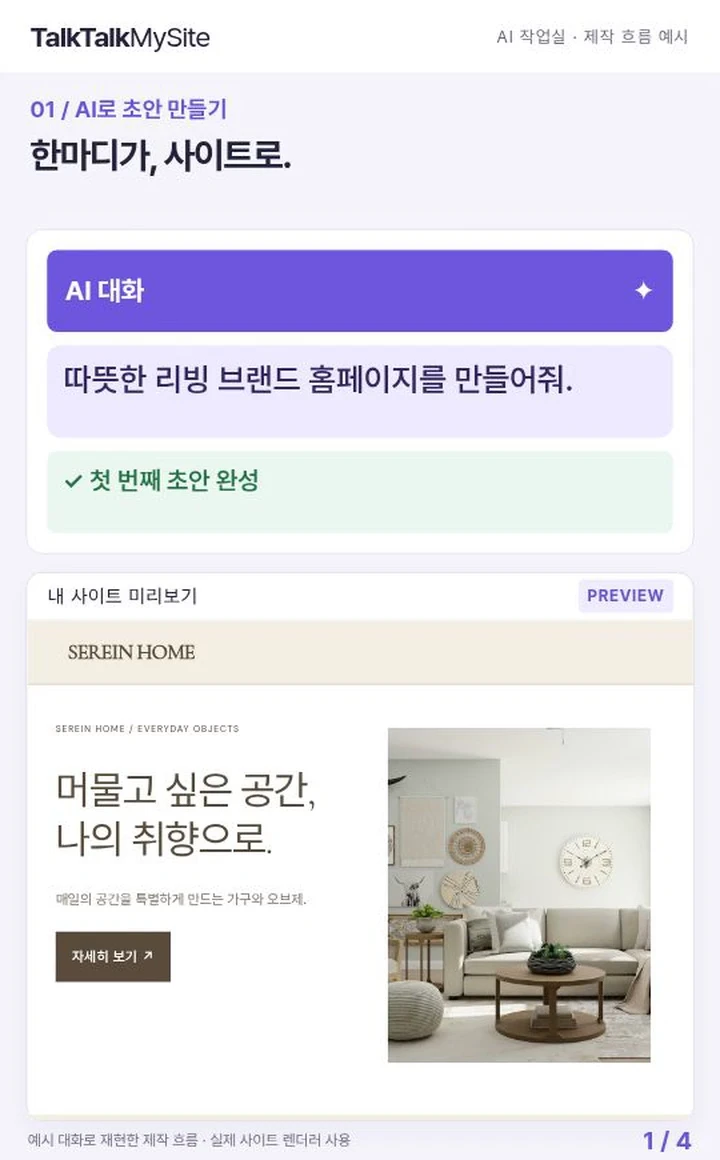
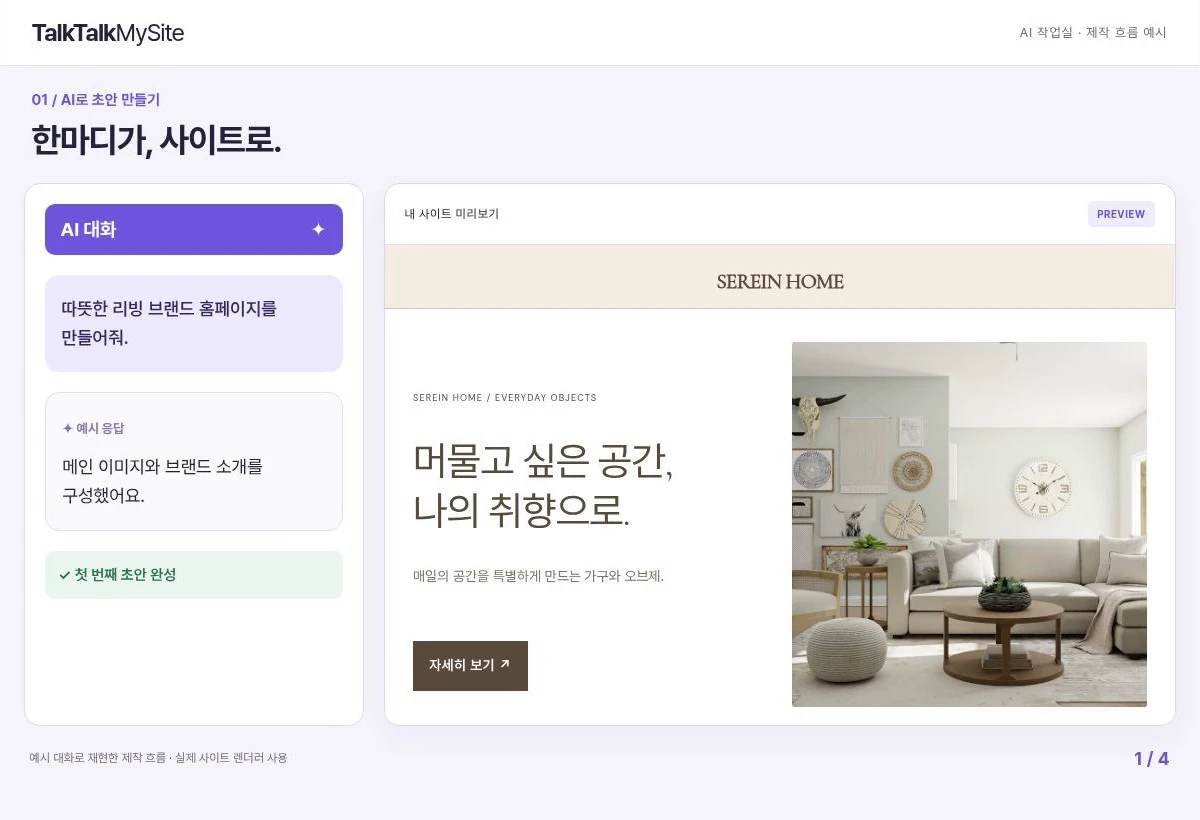
TalkTalkMySite lets you start a project-case page draft affordably with templates and AI chat. You can begin without coding or design experience, but you, the site owner, still need to verify case details, photo permissions, layout, and business information. Templates and owner-led editing can help reduce the cost of custom development and routine changes, but check plan terms, AI credits, and setup requirements first.
You can easily edit text and images yourself, which is useful when adding a new job or updating service information. Online payments, social login, domains, and shipping require setup when needed, and what is available may depend on the plan. Basic is centered on a website, Standard on a store, and Premium on multilingual use, so first decide whether repair bookings or product sales are genuinely needed. Search rankings, sales, unlimited use, and error-free operation are not guaranteed. As a next step, try the AI workspace to build your first page. Choose one real case, confirm you have the materials and permission to publish it, and then add it.
#RepairService #RepairServiceWebsiteCreation #RepairServiceNoCode #RepairServiceTemplates #RepairServiceDesign #RepairServiceOnlinePresence #WebsiteCreation #NoCodeWebsite #AIWebsiteBuilder #WebsiteTemplates #WebsitePlanning #WebsiteManagement #NoCode #NoCodeBuilder #BuildWithoutCoding #DesignForBeginners #AIAssistedDesign #TemplateCustomization #ResponsiveDesign #MobileFriendly #ContentPlanning #BrandIntroduction #PageStructure #UserExperience #VisualEditing #WebsiteImages #LaunchPreparation #BeginnersGuide #MaintenanceChecklist #OnlineBusiness