Online Instructor Website Creation: A First Checklist, Starting with FAQs
Prepare an FAQ and course introduction page to address recurring questions. This guide walks first-time creators through the materials to gather, choosing website or store functions, pre-launch checks, and realistic limitations.
An online instructor website can introduce your courses and serve as a place to answer common questions before enrollment. Rather than building a complex store from the outset, it is easier to start by deciding which pages and payment methods you actually need. The example below is hypothetical.
1. Decide on pages and functions first
Write one sentence describing what you want visitors to do on your website. If the goal is to explain your courses and invite consultation requests, you can start with a basic website. If you need a store to sell products on the site, consider the Standard plan. Basic is for a website, Standard for a store, and Premium for multilingual use. Check the plan terms and the functions you need yourself before signing up.
Use the FAQ for recurring questions such as who the course is for, how classes work, what to prepare, how to check the schedule, and how to get in touch. Include only information you can actually provide. For anything requiring a separate step, such as consultation or payment, make the next action clear.
2. Gather materials before building
- Instructor bio, course topics and intended audience, and teaching format
- A description for each course, plus any schedules and preparation details you can share
- Clear profile and class images, with confirmation that you have the right to use them
- Accurate contact details, such as email and consultation method, and correct business information
- If selling, product descriptions, pricing and operating information, and any necessary shipping details
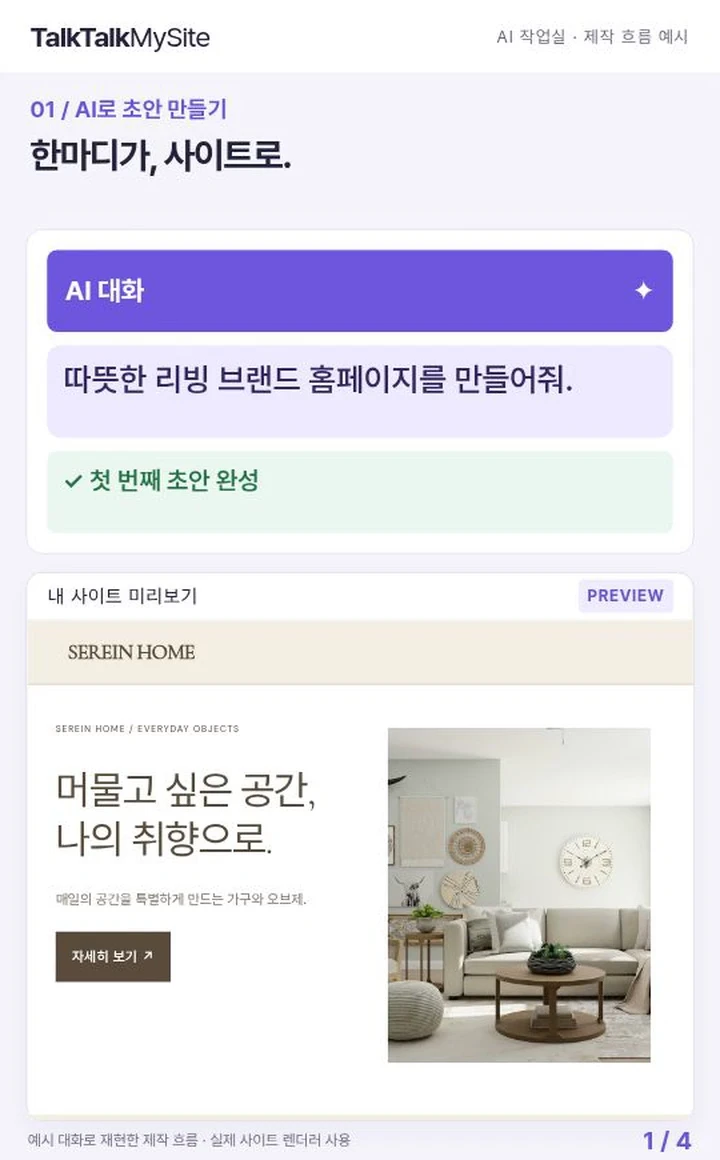
TalkTalkMySite lets beginners without coding or design experience get started with templates and AI chat. This can help you lay out the pages you need before commissioning a custom build. A template is a starting point; choosing content and a structure that fit your courses is still the owner's responsibility.
3. Edit it yourself and check before publishing
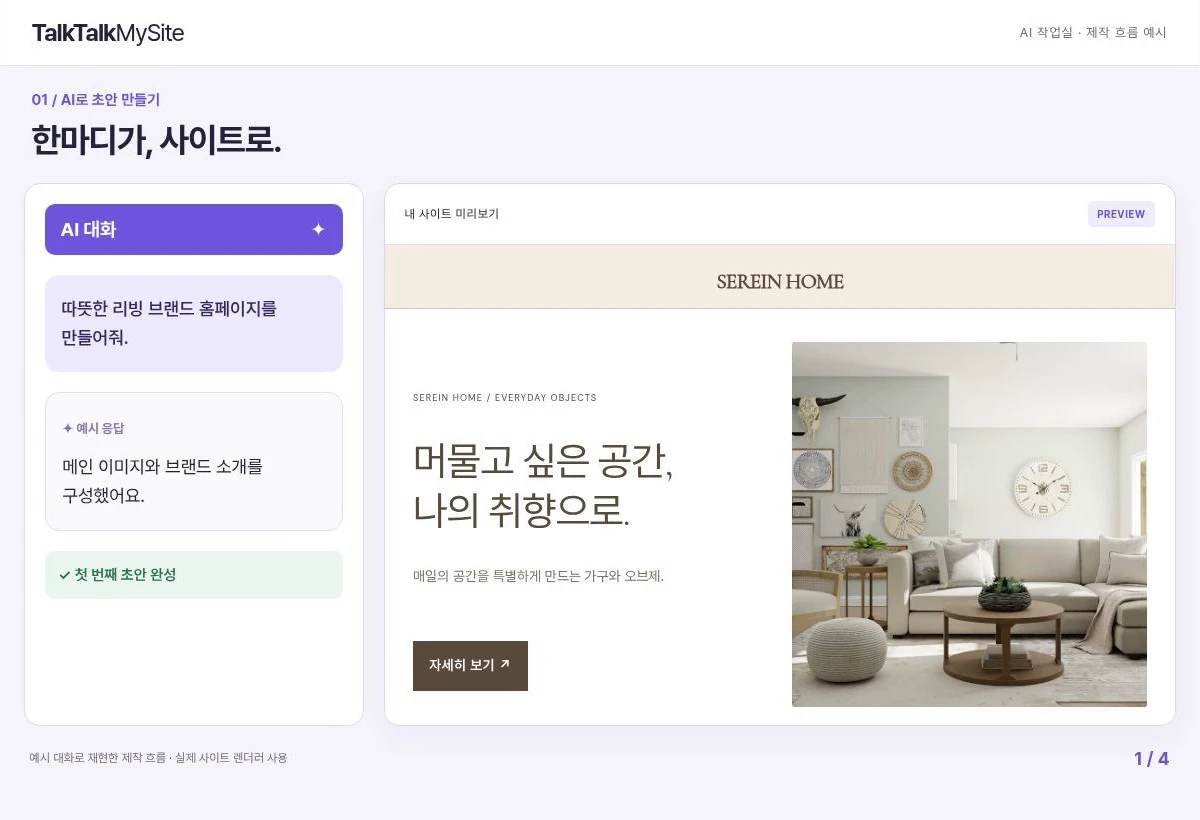
After making a draft, use visual editing to change the wording and images. TalkTalkMySite makes it easy for owners to manage text and images themselves, which can help them keep FAQs and class schedules up to date. However, it does not automatically replace the owner's review before publication.
- On a mobile screen, check the menu, text size, images, and buttons.
- Compare course descriptions and FAQ answers against the actual schedule, contact details, and business information.
- Check that the inquiry button leads to the correct contact method.
- If taking payments, check payment setup; if using social login, check its setup.
- Check whether you need to connect a domain or configure store shipping.
4. Hypothetical example and next step
Hypothetical example: Mina, an online writing instructor, first prepares a basic website with an instructor introduction, a beginner-course page, FAQs, and consultation contact details. She gathers questions asked before enrollment and writes answers, then checks how she will actually accept course registrations before adding only the functions she needs. Afterward, she checks links and current information on a mobile screen. This is an example, not a promise of any particular outcome.
Templates and owner editing may help reduce the burden of custom builds or recurring revisions, but they do not guarantee lower costs, search rankings, or sales. Check the functions included in your plan, AI credits, and whether payment, domain, or shipping setup is required. You should not assume there will be no content errors. As a next step, try the AI workspace to draft your first page, then review it yourself using the checklist.
#OnlineInstructor #OnlineInstructorWebsiteCreation #OnlineInstructorNoCode #OnlineInstructorTemplates #OnlineInstructorDesign #OnlineInstructorOnlinePresence #WebsiteCreation #NoCodeWebsite #AIWebsiteBuilder #WebsiteTemplates #WebsitePlanning #WebsiteManagement #NoCode #NoCodeBuilder #BuildWithoutCoding #DesignForBeginners #AIAssistedDesign #TemplateCustomization #ResponsiveDesign #MobileFriendly #ContentPlanning #BrandIntroduction #PageStructure #UserExperience #VisualEditing #WebsiteImages #LaunchPreparation #BeginnersGuide #MaintenanceChecklist #OnlineBusiness