Local Retail Website Creation: Separate Setup and Weekly Costs
A practical guide for local retailers weighing a website or online store: what to prepare, how to separate initial setup from recurring costs, and what to check each week.
First, decide what you need to build
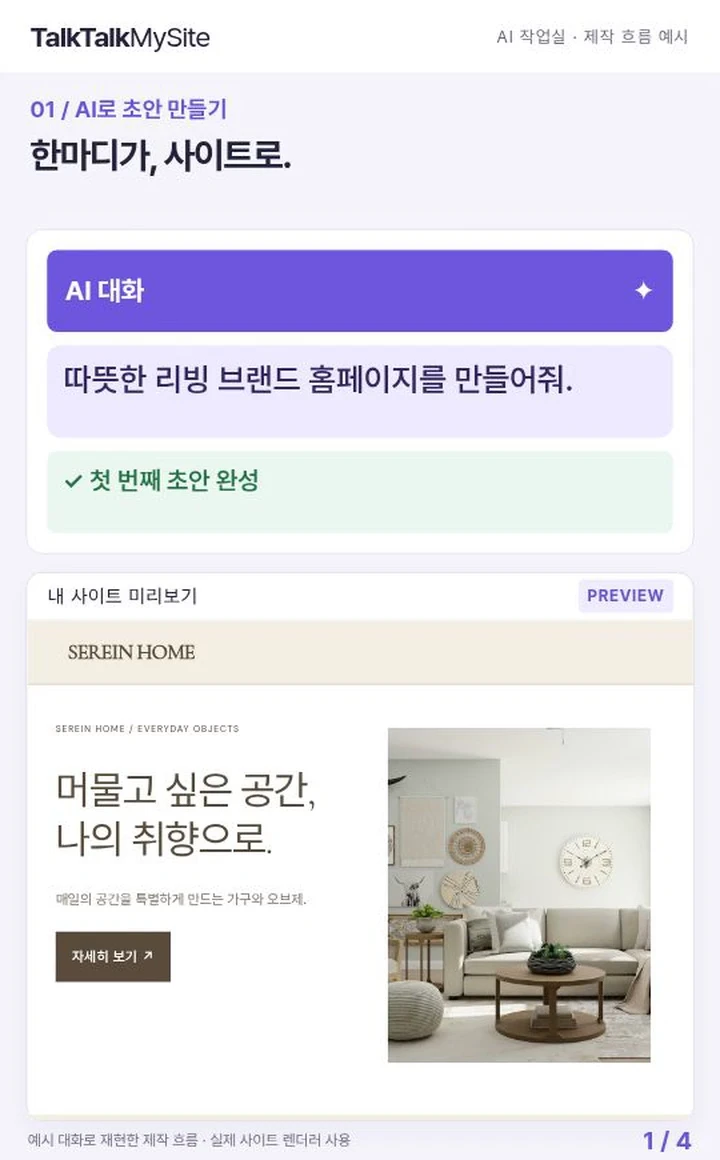
If your priority is sharing your store location, hours, and contact details, start by considering a basic website. If you want to take orders and sell products online, you will need store functionality. If you expect customers who use other languages, look at a setup that includes multilingual support. TalkTalkMySite offers no-code templates, AI chat, and visual editing, so you can get started without coding or design experience. The right option still depends on how you sell and which features you need.
Before starting, gather your business name and address, opening hours, contact details, featured products and prices, product photos, delivery or pickup information, and your approach to returns, exchanges, and customer inquiries. Decide who will provide and approve the images and copy.
Separate initial costs from operating costs
Divide your budget into two columns. Under initial costs, list the work required to choose a template and organize pages, enter products and images, connect a domain, and configure payments, social login, or shipping. Do not assume every feature will be connected by default: check whether the services and accounts you plan to use require separate setup.
Under operating costs, record the plan, AI credits, recurring content and product updates, and any costs for external services you need. Before signing up, check what each plan includes, any usage limits, and whether additional setup is required. Templates and owner editing can help reduce the burden of custom development or routine changes, but they do not guarantee a particular cost or amount saved.
A weekly check, in order
1. Confirm that your opening hours, address, phone number, and closure notices are current. 2. Compare featured products against their prices, stock information, photos, descriptions, and availability for sale. 3. On a phone, check that the menu, text, images, and contact or order buttons are visible and work. 4. Review payment and shipping information and, where possible, check the order flow. Check the setup status of payments, social login, domain, and shipping separately. 5. Add new notices or product changes, then revise wording that has become outdated or unclear.
A shop with a limited budget can consider publishing the pages essential for visits and inquiries first, then adding store functions and the related setup when online sales become necessary. Direct management cannot prevent every error, so after making changes, check the page and the information customers will actually see.
Hypothetical example and next step
Hypothetical example: Sodam Store, a neighborhood household-goods shop, first prepares a site with its location, opening hours, popular products, and phone contact details. The owner separates domain connection and page entry in the initial budget, then checks product prices and closure information each week. After deciding to accept delivery orders, the owner reviews the store setup, payment and shipping configuration, and ongoing plan and operating costs again.
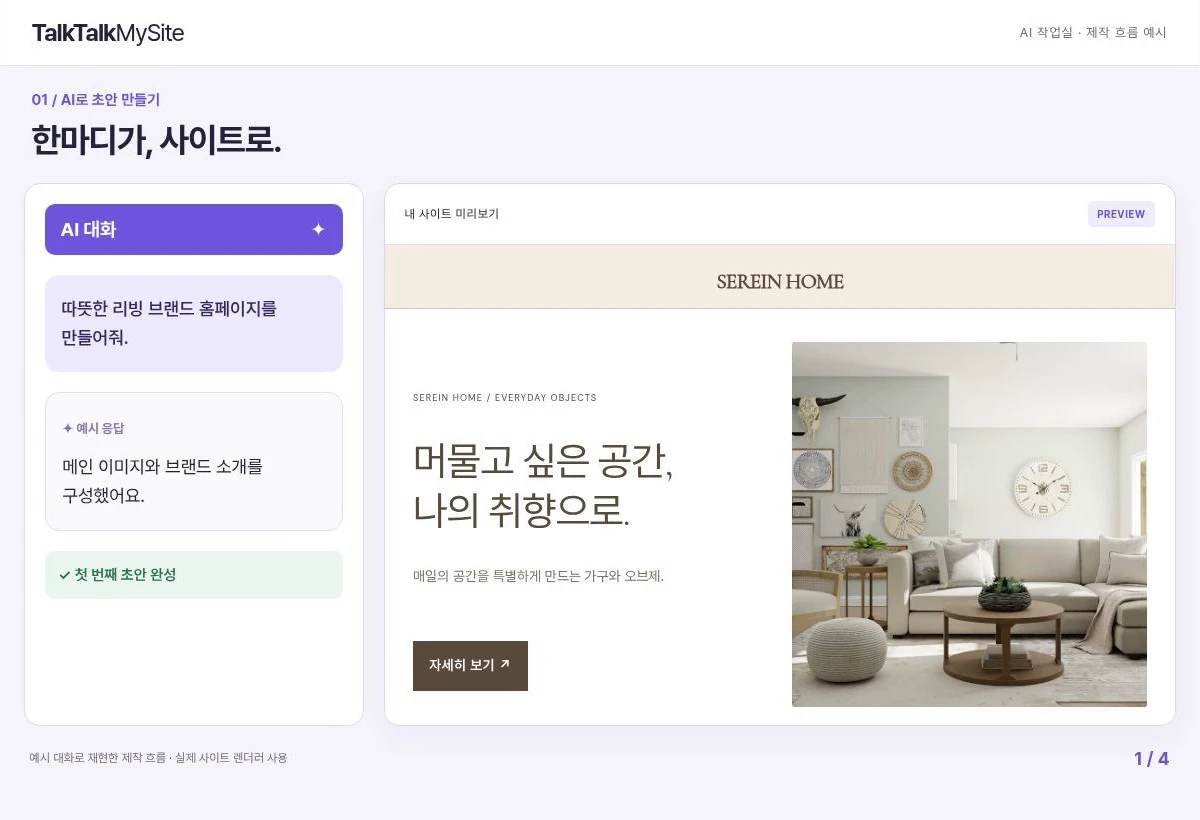
With TalkTalkMySite, you can begin with a template and AI chat while reviewing the setup and plan that fit your needs. Afterward, owners can easily manage text and images themselves using visual editing, but they should check the content, layout, and business details before publishing. Explore the AI workspace and try building a single store-introduction page first. Search rankings, sales, unlimited use, and error-free results are not guaranteed.
#LocalRetail #LocalRetailWebsiteCreation #LocalRetailNoCode #LocalRetailTemplates #LocalRetailDesign #LocalRetailOnlinePresence #WebsiteCreation #NoCodeWebsite #AIWebsiteBuilder #WebsiteTemplates #WebsitePlanning #WebsiteManagement #NoCode #NoCodeBuilder #BuildWithoutCoding #DesignForBeginners #AIAssistedDesign #TemplateCustomization #ResponsiveDesign #MobileFriendly #ContentPlanning #BrandIntroduction #PageStructure #UserExperience #VisualEditing #WebsiteImages #LaunchPreparation #BeginnersGuide #MaintenanceChecklist #OnlineBusiness