Design Studio Website Creation: A First-Page Checklist
You can start with a template even without design experience. Decide what your portfolio and contact path should do, then review the content, layout, and business details before publishing.
1. Decide the site’s purpose and scope first
A design studio’s first website should help visitors understand its style and request a consultation. Before building, write one sentence each about your main audience, core services, and the site’s goal. If you mainly need a portfolio and an inquiry path, consider the Basic website setup. If you plan to sell products on the site, review the Standard store setup. If you need information in multiple languages, compare Premium, while checking each plan’s scope, AI credits, and setup requirements.
2. Gather materials before you build
- Existing visual assets, such as your logo, brand colors, preferred fonts, and images
- Images and descriptions for 3–5 representative projects, including your role and outcomes
- Your service scope, process, ways to request a consultation, and business contact details
- Your business name, business information you intend to publish, and domain plans
- A distinction between materials you can publish and those that require client permission
**Hypothetical example:** A solo design studio, “Corner,” creates packaging and logos for small brands. Its first site will feature three representative projects, a service introduction, the project request process, and a consultation button. For work that cannot be shown with the client’s name or results, the studio will anonymize the name or hold off on publishing it.
3. Build pages from a template
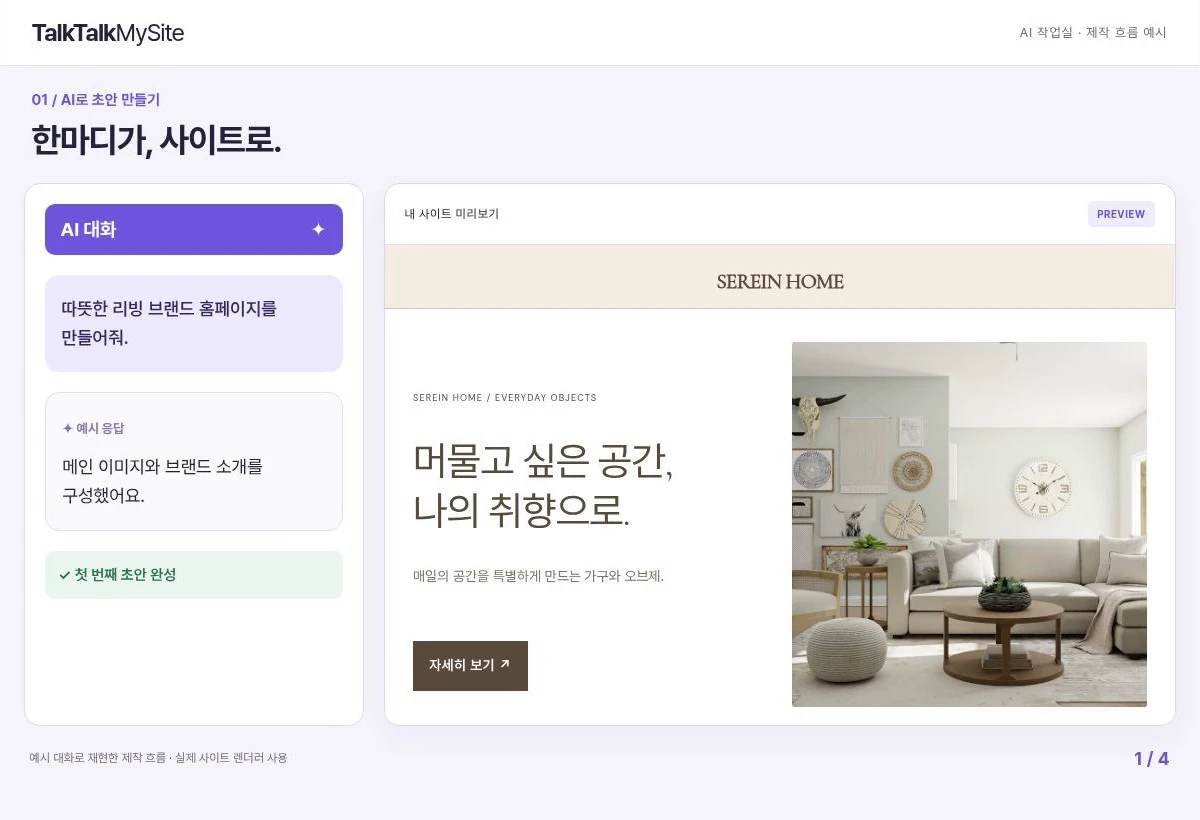
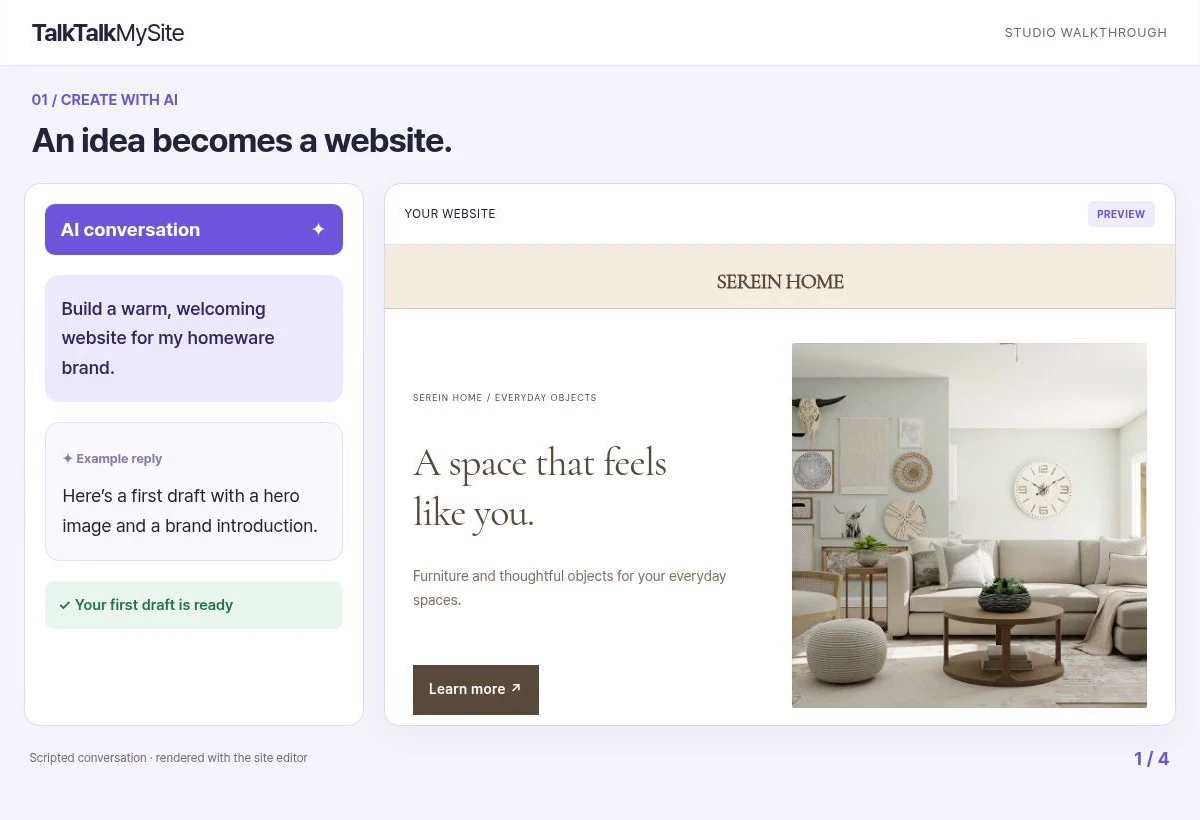
TalkTalkMySite offers no-code templates, AI chat, and visual editing, so coding or design experience is not required to get started. Choose a template suited to your goal, then tell the AI chat about your studio’s clients, services, style, and essential pages to get a draft. Don’t accept the suggested copy and structure as final until you have checked them against how your studio actually operates.
Next, put what your studio does and a featured project on the first screen, project descriptions in the portfolio, and contact methods in the inquiry area. Use TalkTalkMySite’s visual editor to change text and images yourself, and check the mobile layout too. Templates and owner edits can help reduce the work involved in custom builds or routine updates, but they do not guarantee results or cost savings.
4. Pre-publish checklist and next step
- [ ] Do the text, images, and links match real information, with typos corrected?
- [ ] Do the menu and page order clearly guide visitors toward their next action?
- [ ] Are text and buttons easy to read and use on mobile?
- [ ] Have you checked business details, domain needs, and any required payment, social login, or shipping setup? Payments and shipping may need separate configuration if you use them.
- [ ] Have you checked plan limits and AI credits, and decided who will make updates after publishing?
Even with a template, the owner is responsible for reviewing the site before publication. Search rankings, inquiries, and sales are not guaranteed. Gather your materials and try creating a first page in the TalkTalkMySite AI workspace. Once you review the actual page, you can identify missing content and necessary setup, making the next round of edits easier to plan.
#DesignStudio #DesignStudioWebsiteCreation #DesignStudioNoCode #DesignStudioTemplates #DesignStudioDesign #DesignStudioOnlinePresence #WebsiteCreation #NoCodeWebsite #AIWebsiteBuilder #WebsiteTemplates #WebsitePlanning #WebsiteManagement #NoCode #NoCodeBuilder #BuildWithoutCoding #DesignForBeginners #AIAssistedDesign #TemplateCustomization #ResponsiveDesign #MobileFriendly #ContentPlanning #BrandIntroduction #PageStructure #UserExperience #VisualEditing #WebsiteImages #LaunchPreparation #BeginnersGuide #MaintenanceChecklist #OnlineBusiness