Startup Website Creation: Unify Color, Type, Spacing, and Page Flow
A beginner-friendly guide to consistent visual choices and pages that answer visitors’ questions. Use a hypothetical startup, a preparation list, and a launch checklist to plan your first website.
Start by listing visitors’ questions
A startup website should look considered, but it must also answer what visitors want to know. On the first screen, try answering: “What do you offer?”, “Who is it for?”, and “What should I do next?” Write one sentence each about your product or service, intended customers, and how to get in touch or make a purchase. This makes it easier to plan the pages.
For example, a team preparing an early-stage work-management tool might use the home page for a one-sentence introduction and a prompt to inquire or try the product; a service page for features, intended users, and confirmed information about pricing or onboarding; and an about page for the team and organization behind it. You can also prepare FAQ and contact pages. Don’t present undecided details as settled facts.
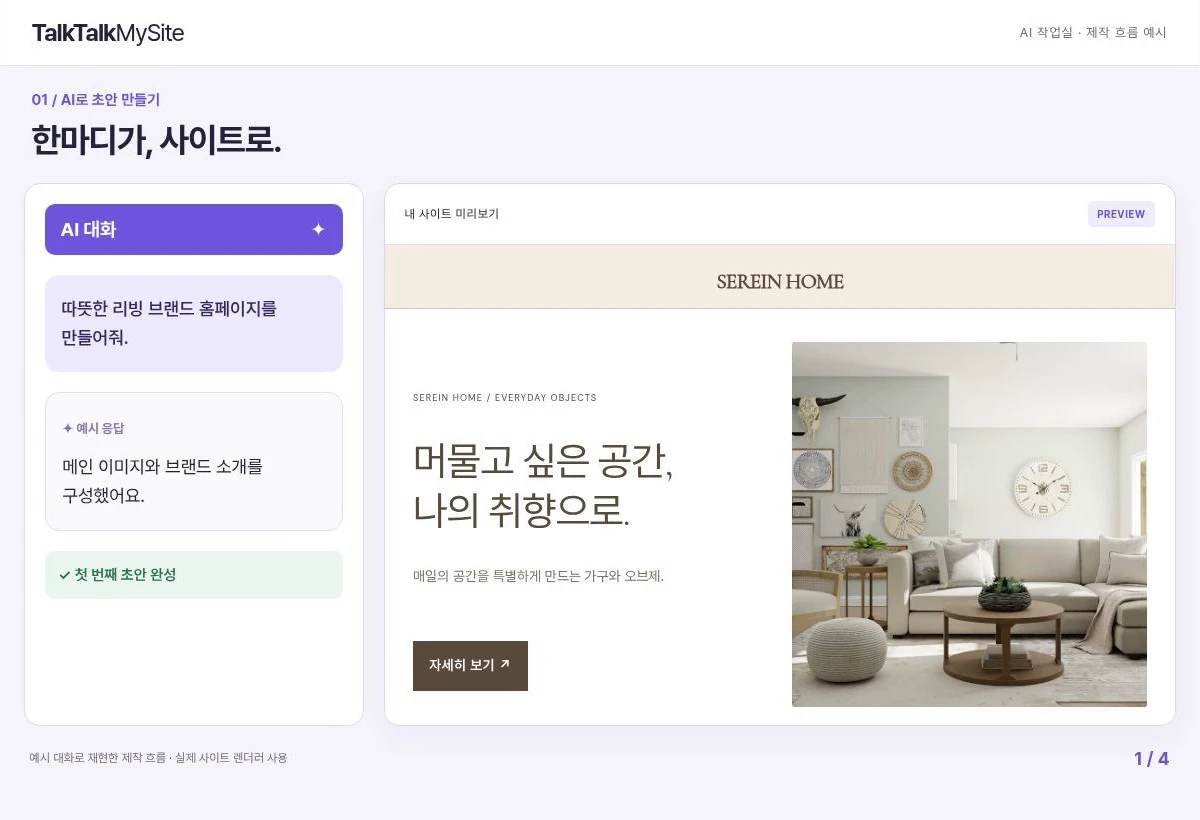
Set consistent rules for color, type, and spacing
If you have no design experience, limiting your choices makes consistency easier. Choose one primary brand color, a background color, and an accent color. Reuse the accent for important actions such as buttons. Check that text and background contrast makes content easy to read.
Start with one font family for body text and headings, and establish hierarchy through size and weight. Use repeatable spacing between headings, descriptions, and buttons so pages don’t feel uneven. Check that text fits and buttons remain easy to use on mobile. Prioritize readability and the next action over decoration.
Prepare materials and build from a hypothetical example
Gather a logo or temporary brand name, an introductory sentence, customer questions, service details, contact information, images to use, and the purpose of each page. Check that you have permission to use images and verify your real business details. Review text, links, and contact information yourself before publishing.
**Hypothetical example — an early-stage work-management tool team:** Visitors want to know which teams the tool suits, how to get started, and where to ask questions. On the home page, state the audience and main benefit briefly. On the service page, include confirmed features and the getting-started steps. In the FAQ, answer only questions the team can address accurately. If purchasing or trial access is not yet set up, use an inquiry prompt instead of a button that suggests it is available.
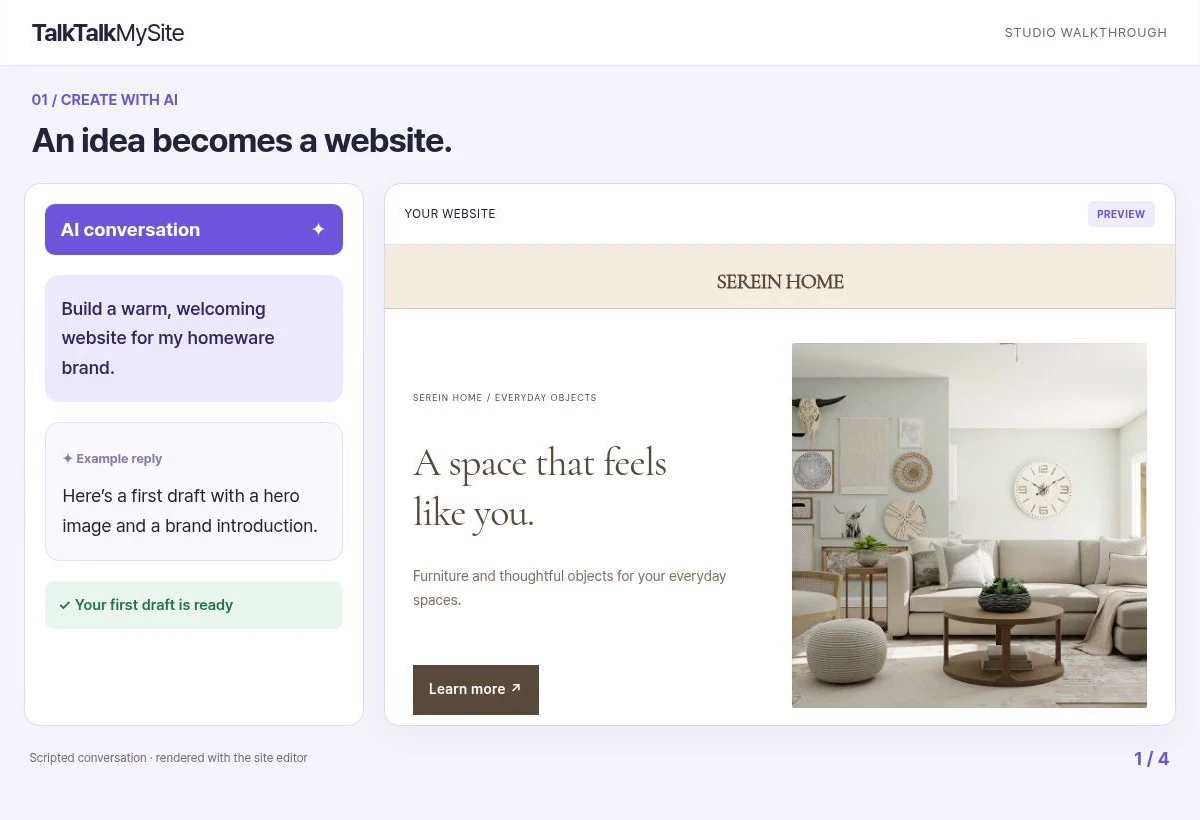
TalkTalkMySite offers no-code templates, AI chat, and visual editing as a way to start a draft. Begin with a template and AI chat to outline pages and draft copy, then adjust the result to follow your color, type, and spacing rules. You can start without coding or design experience, but check the content and business details rather than publishing the draft without review.
Check before publishing and choose the next step
- Does the first screen explain the value and show visitors what to do next?
- Are color, text sizes, and spacing consistent across pages?
- Do headings, images, buttons, and contact details display properly on mobile?
- Do claims about pricing, features, and operations match current facts?
With TalkTalkMySite, you can edit text and images yourself to manage later updates. Before starting, confirm whether Basic fits a website, Standard a store, or Premium a multilingual site, and separately check any setup needed for payments, social login, domains, or shipping. Review plan details, AI credits, and setup requirements, then try the AI workspace and build your first page. Templates and owner editing may help reduce custom-build and routine update costs, but they do not guarantee savings, search rankings, sales, unlimited use, or error-free results.
#Startup #StartupWebsiteCreation #StartupNoCode #StartupTemplates #StartupDesign #StartupOnlinePresence #WebsiteCreation #NoCodeWebsite #AIWebsiteBuilder #WebsiteTemplates #WebsitePlanning #WebsiteManagement #NoCode #NoCodeBuilder #BuildWithoutCoding #DesignForBeginners #AIAssistedDesign #TemplateCustomization #ResponsiveDesign #MobileFriendly #ContentPlanning #BrandIntroduction #PageStructure #UserExperience #VisualEditing #WebsiteImages #LaunchPreparation #BeginnersGuide #MaintenanceChecklist #OnlineBusiness