Consulting Website Creation: A Weekly Routine for Organizing URLs and Content
Before creating or revamping a consulting website, organize service URLs, introductory copy, and contact routes. This beginner’s guide explains no-code setup and a practical weekly review routine.
1. Organize URLs and define your services first
The first step in consulting website creation is not choosing a design. Decide what visitors should understand and what action they should take. If you already have a website, separate the pages to keep from those to revise, then make a table of each page’s current URL, title, and main content. If you change a URL, existing links may no longer work. Record both the old and new URLs and check where the old links have been shared. Confirm the domain and service options you use before configuring any redirects or other changes.
Gather verifiable business information: who you advise, what services you provide, how the process works, how to contact you, and when you can respond. If you describe client examples or qualifications, check that you have permission to publish them and that the information is current. Prepare your logo and image files, descriptions for each service, contact details, access to your existing domain account, the languages you need, and any inquiry form. If you plan to accept payments or offer social login, the relevant accounts and settings are required separately.
2. Plan the visitor journey and choose how to build
A simple initial site can guide visitors through a clear sequence: explain who you help and how on the homepage, show services and the process, then invite them to request a consultation. Give each page one main action and make sure the wording matches what you actually offer. Store creation is relevant if you plan to sell consultation sessions or products online. In that case, review additional setup for payments, shipping, and product information.
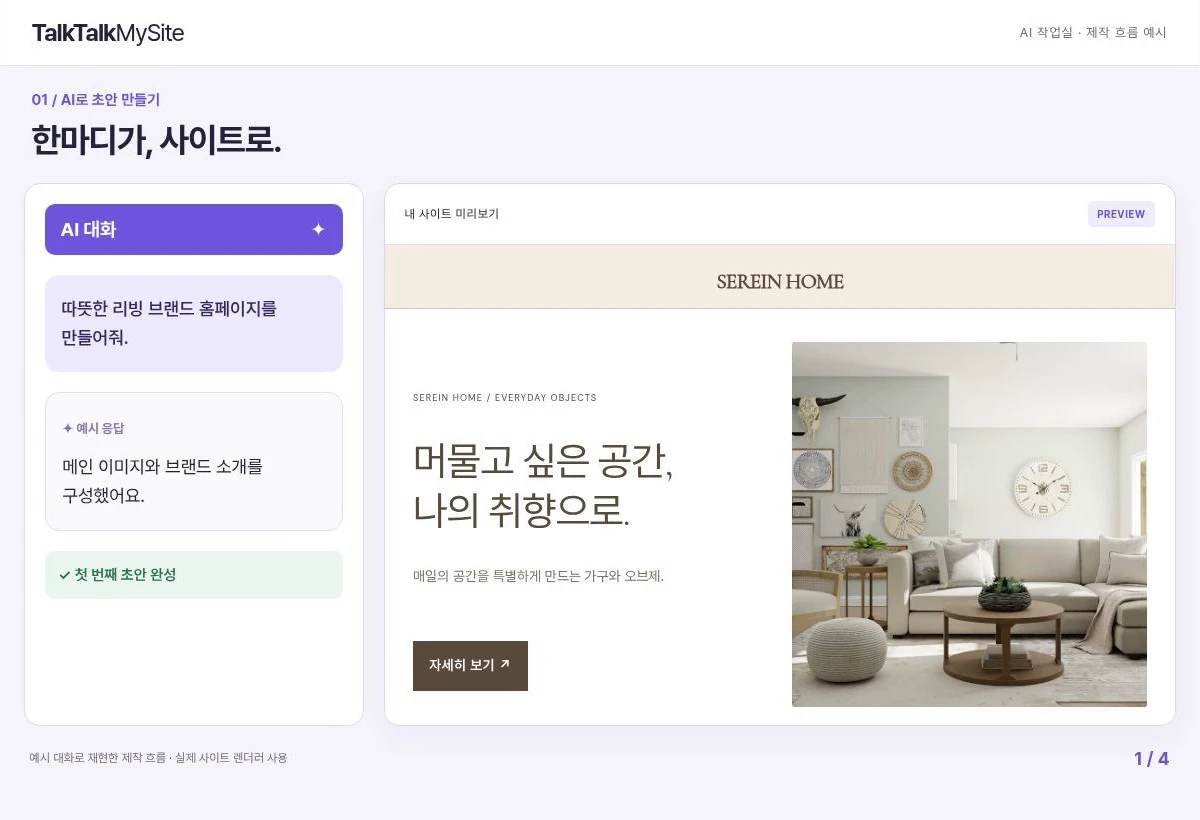
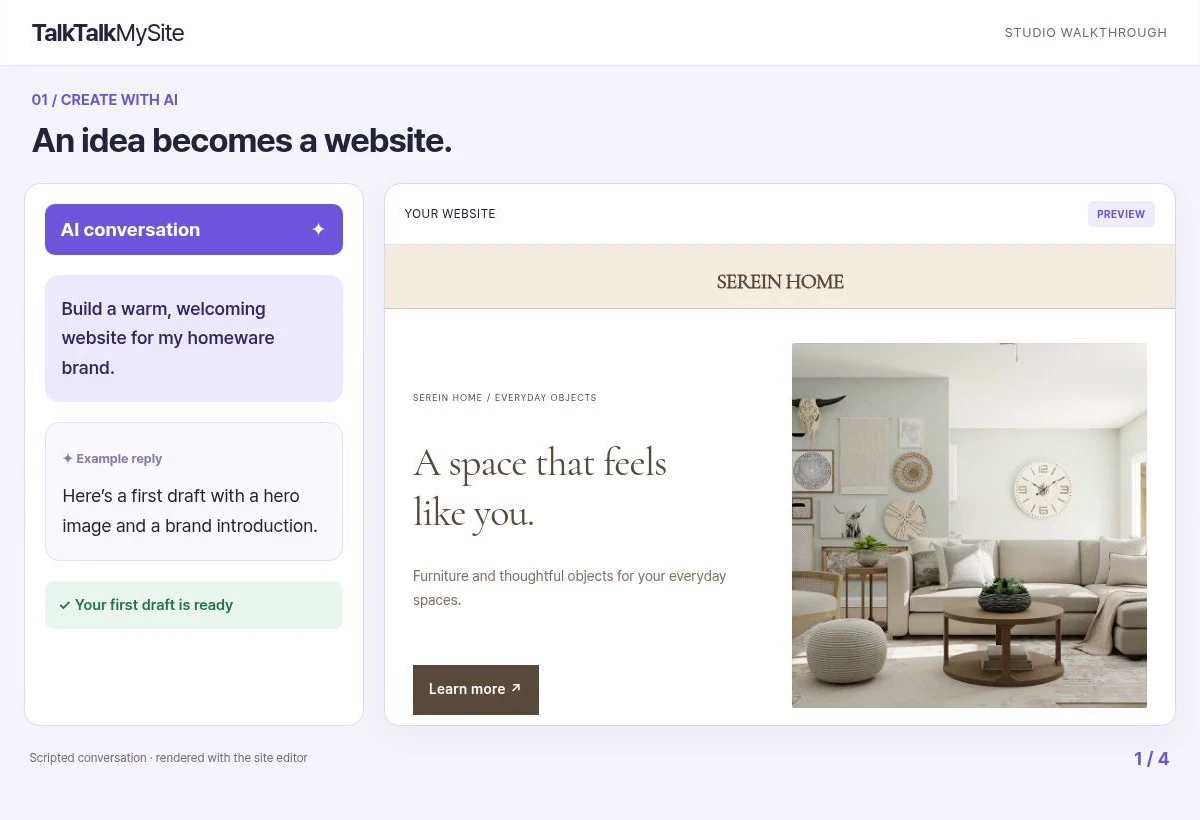
No-code templates can make it easier to get started without coding or design experience, but they do not automatically make the finished information accurate. TalkTalkMySite offers templates and AI chat as a way to begin a first layout while considering the setup and costs involved. Check plan features, AI credits, domain connection, and other setup requirements first. Basic is for a website, Standard for a store, and Premium for multilingual use.
3. First-week checklist for beginners
- [ ] Record current page URLs and mark each page to keep, revise, or remove.
- [ ] Gather service descriptions, intended clients, contact details, and images.
- [ ] Set the order of the homepage, services, process, and contact pages.
- [ ] Add your real copy and images to a template, then review the mobile layout.
- [ ] Configure and test the domain, inquiry form, and any needed payment, login, or shipping features.
- [ ] Before publishing, recheck spelling, links, contact details, dates, and business information.
**Hypothetical example — a one-person management consulting practice:** The owner decides to keep the service overview and consultation request page but remove an outdated event notice. The service page states which businesses the practice serves, the scope of the consultation, and the steps involved. The contact button goes to an email account the owner actually checks. If the existing URL changes, the owner also checks links in shared business cards and introductory materials.
4. A weekly review routine for the owner
Set aside around 15–20 minutes at a consistent time each week. This is a suggested schedule, not a guarantee of results. First, open the website as a visitor and test its main pages and contact route. Next, check for changes to services, schedules, contact details, prices, or terms, and revise anything outdated or potentially misleading. Then review image display, text layout, mobile screens, links, and form submissions. Finally, respond to new inquiries and note what you plan to update next week.
TalkTalkMySite’s visual editing and AI chat can help when you are organizing copy or images yourself. The owner still needs to review and correct the content. Templates and owner editing may help reduce the cost of custom development and routine revisions, but savings are not guaranteed. Neither search rankings nor sales are guaranteed, and the service should not be assumed to provide unlimited use or error-free results. Check your plan, credits, and setup requirements. As a next step, try the AI workspace to build your first page, then review it yourself using the checklist before publishing.
#Consulting #ConsultingWebsiteCreation #ConsultingNoCode #ConsultingTemplates #ConsultingDesign #ConsultingOnlinePresence #WebsiteCreation #NoCodeWebsite #AIWebsiteBuilder #WebsiteTemplates #WebsitePlanning #WebsiteManagement #NoCode #NoCodeBuilder #BuildWithoutCoding #DesignForBeginners #AIAssistedDesign #TemplateCustomization #ResponsiveDesign #MobileFriendly #ContentPlanning #BrandIntroduction #PageStructure #UserExperience #VisualEditing #WebsiteImages #LaunchPreparation #BeginnersGuide #MaintenanceChecklist #OnlineBusiness