Independent Publisher Website Creation: Choosing Pages and Sales Options
Decide where to place your catalog, new-release updates, and direct sales, then review the materials and checks you need. This guide explains how an independent publisher can choose between a website and an online store.
An independent publisher’s website is both a place to introduce books and a point of contact with readers. Instead of trying to launch with every feature, first decide whether your main purpose is presenting your catalog or selling directly. That makes it easier to separate the pages you need from the costs and setup work.
Decide first: information or sales
If you have a small list of titles and mainly want to direct readers to bookstores or other online retailers, you can begin with a website featuring your catalog, publisher information, and contact details. Keep new-release and out-of-print status current, and add event updates if useful. If you plan to take orders and payments directly, consider online store creation: product details, inventory, shipping terms, and payment setup will be needed. Adding a cart when you do not need sales features, or opening a sales page before you are ready to fulfill orders, can create extra work and confuse readers.
Before you start, gather book titles and cover images, author and translator details, descriptions, bibliographic information you intend to publish—such as format and page count—publication status, and contact information. If you will sell directly, also confirm prices, stock, shipping fees and destinations, and the operating policies you will use to explain returns or exchanges. Use only images and text you have the right to publish, and check for typos and broken links before going live.
How to divide the content
Organize the menu around the questions readers ask. Use the catalog to answer “What do you publish?”, a news or events page for “What’s new?”, and retailer links or purchase instructions for “Where can I buy it?” Reusing the same format for each book makes updates easier. Apply status labels such as forthcoming, available, and out of print consistently.
### Hypothetical example: a small independent publisher, “Slow Paper” Suppose Slow Paper publishes a few books each year and primarily sells through bookstores. Its home page introduces the publisher and highlights a new release. Each catalog entry includes a cover, author, short description, and retailer information. An events and announcements page lists dates and changes, while the contact page gives readers an address for inquiries. The publisher does not add payment features until it is ready to sell directly online. This is a hypothetical layout; the right arrangement depends on actual operations.
Choosing a tool and making your own edits
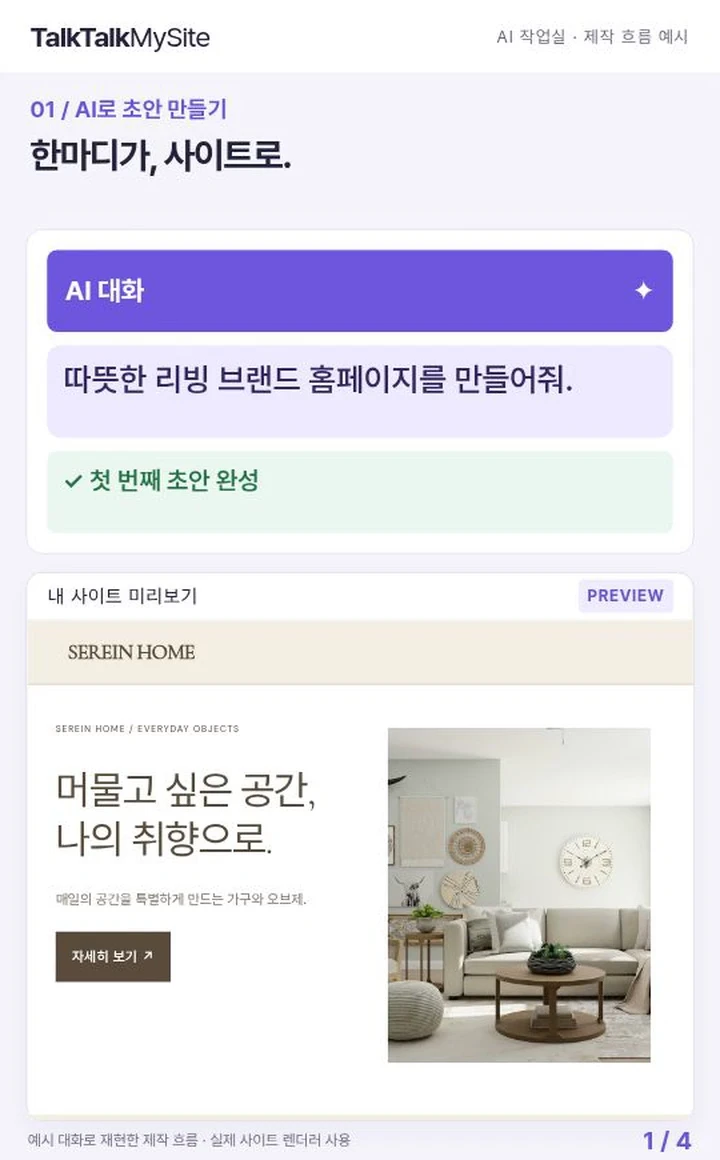
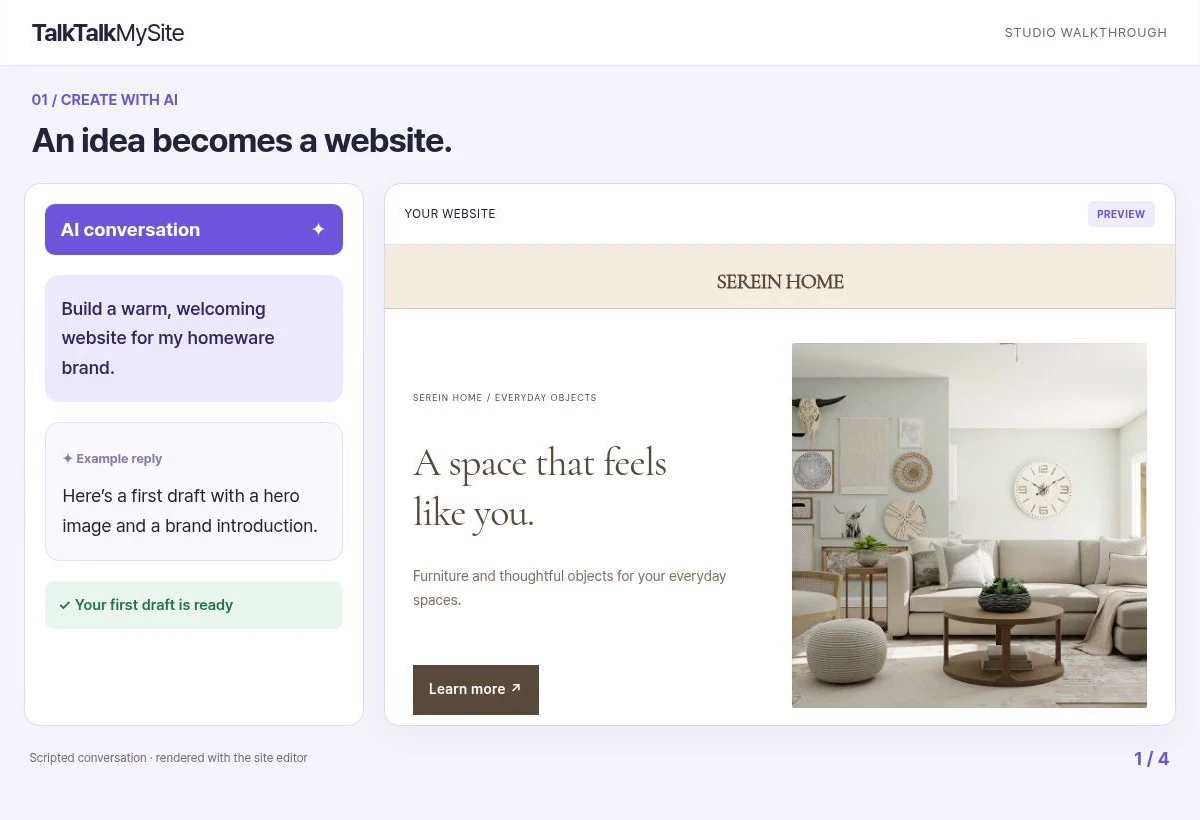
If you have no experience with no-code editing, TalkTalkMySite templates and AI chat can help you draft pages with a lower barrier to getting started. Basic is for a website, Standard is for a store, and Premium is for multilingual use, so compare your needs with the plan scope first. Templates and owner editing may reduce the work involved in custom builds or routine updates, but check plan terms, AI credits, and setup requirements.
After creating the site, the owner still needs to check the copy, images, layout, and business details. Visual editing can make it easy to replace a cover or revise a description, but it does not automatically prevent an incorrect price or link. Payments, social login, domains, and shipping may require separate setup. Search ranking, sales results, unlimited use, and error-free output are not guaranteed.
Pre-launch checklist and next step
- Set your main goal and prioritize either an informational website or a sales-focused store.
- Prepare book details, image permissions, contact information, and sales and shipping information if applicable.
- Check that the menu clearly separates book introductions, new-release updates, and purchase information.
- On a phone, check that text and images are legible and that links and contact details are correct.
- Confirm the required feature setup and plan terms, then publish a small set of pages first.
For your next step, draft the home page and one book introduction. Try the TalkTalkMySite AI workspace to create a first-page draft, then revise it yourself against the actual book details and operating policies. Before publishing, check whether someone unfamiliar with the site can find where to buy a book and how to get in touch.
#IndependentPublisher #IndependentPublisherWebsiteCreation #IndependentPublisherNoCode #IndependentPublisherTemplates #IndependentPublisherDesign #IndependentPublisherOnlinePresence #WebsiteCreation #NoCodeWebsite #AIWebsiteBuilder #WebsiteTemplates #WebsitePlanning #WebsiteManagement #NoCode #NoCodeBuilder #BuildWithoutCoding #DesignForBeginners #AIAssistedDesign #TemplateCustomization #ResponsiveDesign #MobileFriendly #ContentPlanning #BrandIntroduction #PageStructure #UserExperience #VisualEditing #WebsiteImages #LaunchPreparation #BeginnersGuide #MaintenanceChecklist #OnlineBusiness