Travel and Accommodation Website Creation: Search Titles and Booking Guidance
A beginner’s guide to organizing travel and lodging information, writing search titles and descriptions, and answering visitors’ questions clearly.
Decide first: who are you guiding, and what do they need?
A travel and accommodation website is not complete just because it has attractive photos. Visitors should be able to quickly understand trip details, lodging conditions, and how to book. First decide whether you are providing accommodation information for individual travelers or creating a store to sell activities or package trips. Write down your main audience, primary offering, booking or inquiry method, and service area in one sentence. This makes it easier to define the pages you need.
Prepare search titles and page descriptions
A page title should state its subject clearly, while its description should summarize what visitors can learn there. For example, a title might be “Gangneung Seaside Lodging | Rooms and Booking Guide,” with the description “Check room types, check-in information, and how to inquire about a booking.” These are hypothetical copy examples, not a promise of search rankings. Include a location or offering naturally, and make sure the wording matches the actual page. Do not copy the same title and description across every page; distinguish lodging information, rooms, and travel offerings.
Gather the correct business and property names, location and contact details, current room or product information, photos you have the right to use, prices and inclusions, and operational guidance about booking and cancellations. If you need payment processing or connections to other services, check availability and any separate setup requirements. Features such as domains, payments, social login, and shipping may require setup depending on your needs.
Build pages that answer visitors’ questions
On the homepage, explain who the travel or lodging service is for and show the main options. On a lodging page, organize room types, guest capacity, amenities, location, and check-in and check-out information. On a travel offering page, explain the itinerary, what is and is not included, conditions of use, and how to inquire. Check that published details reflect how the business actually operates.
**Hypothetical example — Solbaram Guesthouse:** The homepage explains the location and how to view rooms. The room page lists capacity, amenities, and check-in time. Its FAQ includes “Is parking available?” and “How can I ask about changing a booking?” The owner writes answers that match policies they have checked. Do not imply that availability is updated automatically unless that is how the actual booking process works; explain the real process clearly.
Build and review
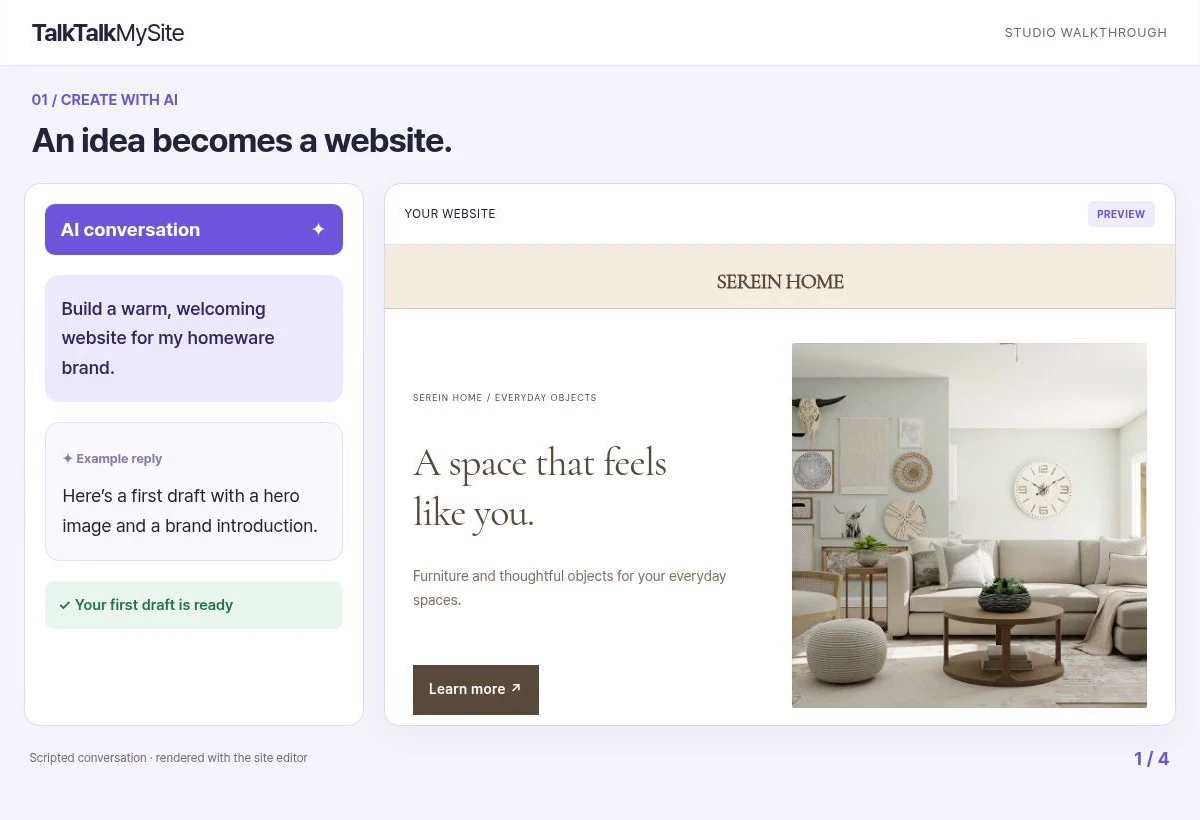
TalkTalkMySite offers no-code templates and AI chat to help you start a draft, making it practical to assemble a first page without coding or design experience. Begin with only the pages you need, such as an introduction, room details, and contact information, then use the AI workspace to draft the copy. Basic is for a website, Standard for a store, and Premium for multilingual use; check the features included in each plan, AI credits, and any setup requirements.
After creating the pages, the owner should personally check and edit the wording, images, layout, and business details. Templates and owner editing can help reduce the work involved in custom builds or routine updates, but they do not guarantee lower costs, search visibility, or more bookings. Before publishing, check: □ Do the title and description match the page? □ Are the contact details, location, prices, and dates current? □ Is the content easy to read on mobile? □ Are the inquiry or booking steps and any required setup clear? As a next step, try the AI workspace and build one lodging introduction page first.
#TravelandAccommodation #TravelandAccommodationWebsiteCreation #TravelandAccommodationNoCode #TravelandAccommodationTemplates #TravelandAccommodationDesign #TravelandAccommodationOnlinePresence #WebsiteCreation #NoCodeWebsite #AIWebsiteBuilder #WebsiteTemplates #WebsitePlanning #WebsiteManagement #NoCode #NoCodeBuilder #BuildWithoutCoding #DesignForBeginners #AIAssistedDesign #TemplateCustomization #ResponsiveDesign #MobileFriendly #ContentPlanning #BrandIntroduction #PageStructure #UserExperience #VisualEditing #WebsiteImages #LaunchPreparation #BeginnersGuide #MaintenanceChecklist #OnlineBusiness