Sporting Goods Website Creation: Image Rights and a Weekly Checkup
A practical guide to creating a website or store for a sporting goods business. Check image permissions, write useful alt text, and follow a repeatable weekly review routine.
Sporting Goods Website Creation involves more than displaying products. You need to confirm that you have permission to use each image, help visitors understand your products, and regularly verify that ordering and business information are accurate. First decide whether you need an informational website focused on your brand or an online store that accepts payments and handles shipping.
1. Prepare image permissions and alt text
Even if you took a photo yourself, check the terms that apply to the photographer and product imagery. For images supplied by a wholesaler or manufacturer, ask the contact whether website and advertising use is allowed, whether edits are permitted, and whether the image can be reused. Keep a record of the response. Finding an image online and crediting its source does not by itself grant permission, so do not use images whose rights you cannot confirm.
For each product, choose images that show the front, the product in use, and relevant details, and use clear file names. Alt text should briefly describe what is actually visible and identify the product’s key distinguishing feature. For example: “Side view and studs of a blue adult soccer cleat.” Do not add performance claims or effects that the image does not show. For a purely decorative image, avoid forcing in redundant descriptions.
2. Choose a format and gather materials
If you are new to running a site, start with the answers visitors need rather than the number of pages. Gather product categories, sizes and colors, materials, care instructions, stock-check information, and shipping and return details. Also prepare your store address and hours, contact details, logo, brand introduction, and approved photos. If you plan to take online payments, review payment methods, shipping setup, and the information needed for each product separately.
**Hypothetical example:** “One Step,” a neighborhood running shop, starts with a website showing its location, guidance on choosing running shoes, and contact information. It plans to expand to an online store if it sees demand for online orders. The owner confirms with suppliers that shoe photos may be used on the web and keeps the size chart and stock information current.
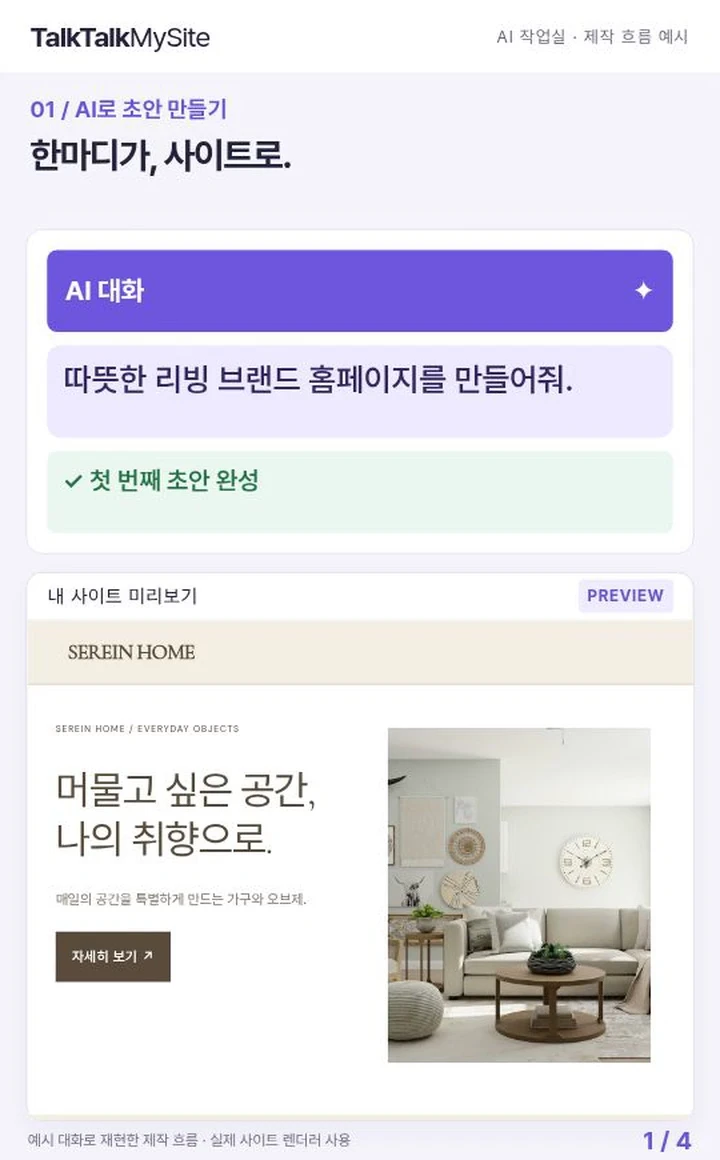
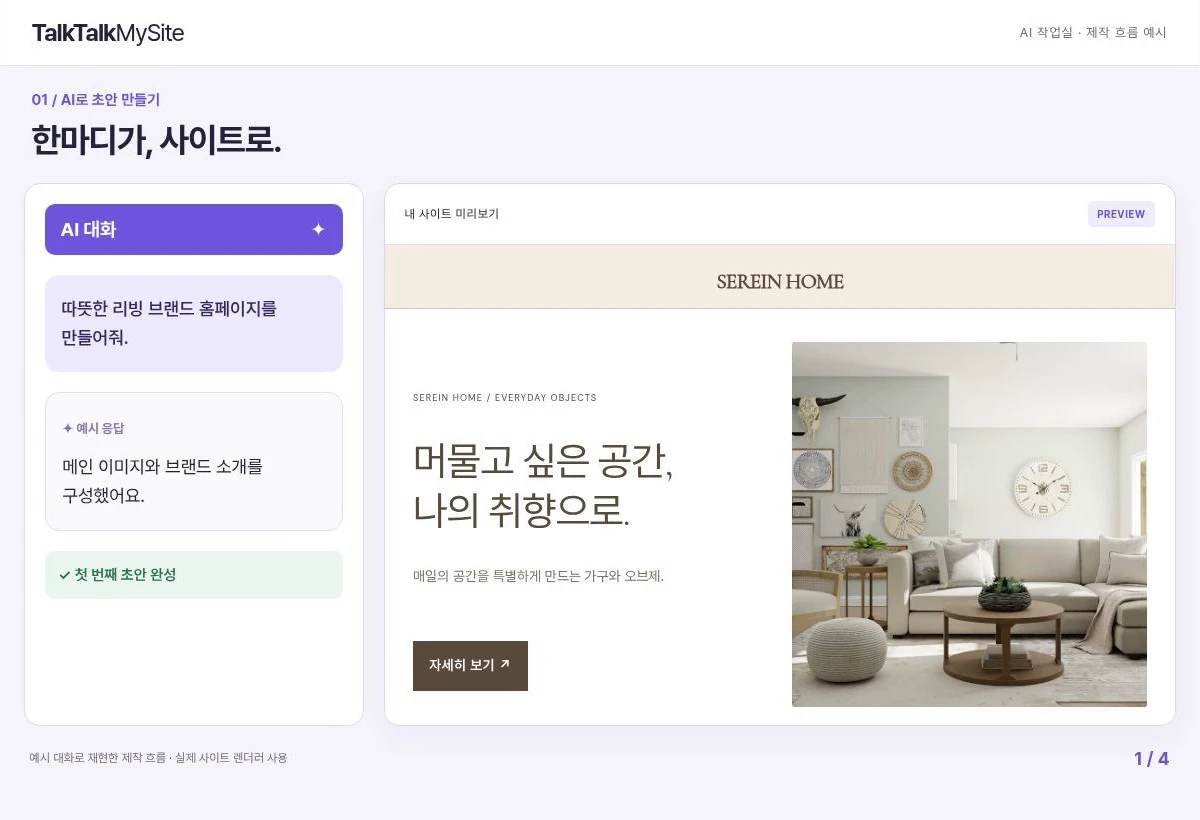
TalkTalkMySite offers no-code templates, AI chat, and visual editing for getting started without coding or design experience. Consider Basic for a website, Standard for a store, or Premium for multilingual use, and check the plan, AI credits, and setup requirements first.
3. A weekly review routine
Use the same sequence once a week to make it less likely that you will overlook something.
- **Step 1—Products and images:** Check that listed products, prices, sizes and colors, stock information, and images match. Replace images with unclear permissions or hold them back from publication.
- **Step 2—Descriptions and accessibility:** Check that alt text accurately describes each image and that product information contains no outdated details or unsupported claims.
- **Step 3—Ordering flow:** If you have a store, walk through the process from selecting a product to reviewing the payment instructions. Payments and social login require setup; domains and shipping also need to be connected and checked separately.
- **Step 4—Business details and layout:** Verify contact information, opening hours, and shipping and return instructions. Check that text and buttons are easy to see on both phone and computer screens. Record changes with the date.
4. Keep the workload manageable and take the next step
With TalkTalkMySite, you can draft a page using a template and AI chat, then visually edit the text and images yourself. Templates and owner editing may help reduce custom-build and routine update costs, but they do not guarantee a particular cost or outcome. Owners must check content, layout, and business details; use is not necessarily unlimited, and mistakes cannot be ruled out.
Try the AI workspace and build your first page. Prepare image permissions and product information, establish a weekly checklist, and then review the appropriate plan and payment and shipping setup. Once the page answers visitors’ practical questions, publish it and keep it current through your own weekly checks.
#SportingGoods #SportingGoodsWebsiteCreation #SportingGoodsNoCode #SportingGoodsTemplates #SportingGoodsDesign #SportingGoodsOnlinePresence #WebsiteCreation #NoCodeWebsite #AIWebsiteBuilder #WebsiteTemplates #WebsitePlanning #WebsiteManagement #NoCode #NoCodeBuilder #BuildWithoutCoding #DesignForBeginners #AIAssistedDesign #TemplateCustomization #ResponsiveDesign #MobileFriendly #ContentPlanning #BrandIntroduction #PageStructure #UserExperience #VisualEditing #WebsiteImages #LaunchPreparation #BeginnersGuide #MaintenanceChecklist #OnlineBusiness