Architecture and Interiors Website Creation: Plan Portfolios and Inquiries
A practical guide for architecture and interior businesses to organize project portfolios, service details, and inquiry paths, with a beginner checklist for building a website or store.
Decide first: what inquiries do you want?
Before starting an architecture and interiors website, choose one primary goal. The structure will differ depending on whether you want to present completed projects and receive consultation requests, sell materials or furnishings, or do both. For consultation-led work, prioritize project examples, service descriptions, and contact details. If you need to sell products, prepare product information and payment and shipping settings as well.
Decide what visitors should understand on the first screen. Briefly state your main focus—residential or commercial spaces—your service area, the work or services you offer, and how to request a consultation. Have the responsible person verify the scope and actual terms of your services. Do not present unconfirmed schedules or costs as promises.
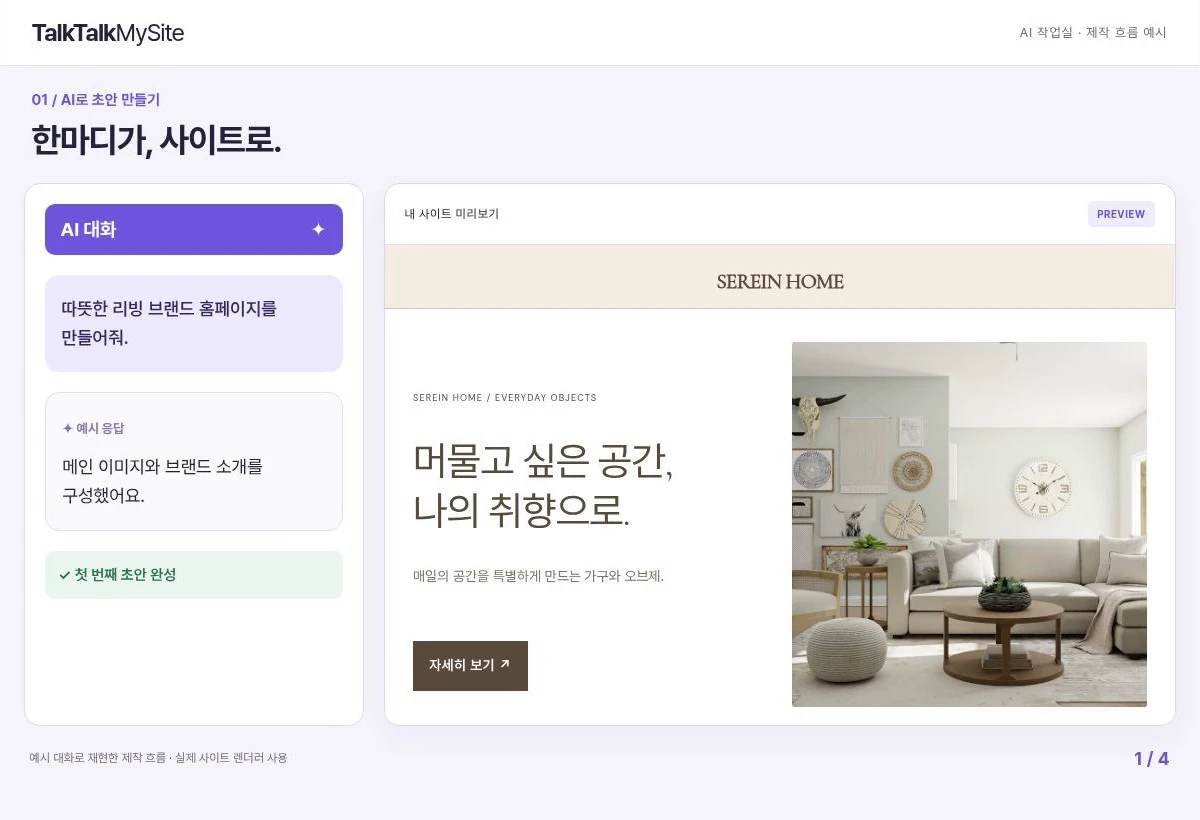
Materials for project pages
Collect photos by project, and first confirm that they may be published and that you have the necessary permission to use them. Add verified information to each case, such as project type, the level of location detail you can disclose, your scope of work, and completion timing. Rather than listing photos alone, explain the client’s challenge and the approach taken so visitors can compare it with their own needs. Do not publish sensitive details such as client names or addresses without permission.
Preparation checklist: - Logo, hero image, and photos and descriptions for each project - Service scope, service area, inquiry contact details, and hours - Questions to ask before a consultation and the process to explain - If selling: product names, prices, inventory, and shipping terms - Accounts and the person responsible for any needed domain, payment, social login, or shipping setup
Choose an approach for your situation and avoid beginner mistakes
If your focus is project showcases and consultations, with no direct sales, the Basic website option may be a suitable starting point. If you plan to sell products, consider the Standard store option; if you need to provide information in multiple languages, review Premium. Before choosing a plan, check what it includes, AI credits, required setup, and the work involved in ongoing management. Payment, social login, domain, and shipping options may need separate configuration; selecting them alone does not complete setup.
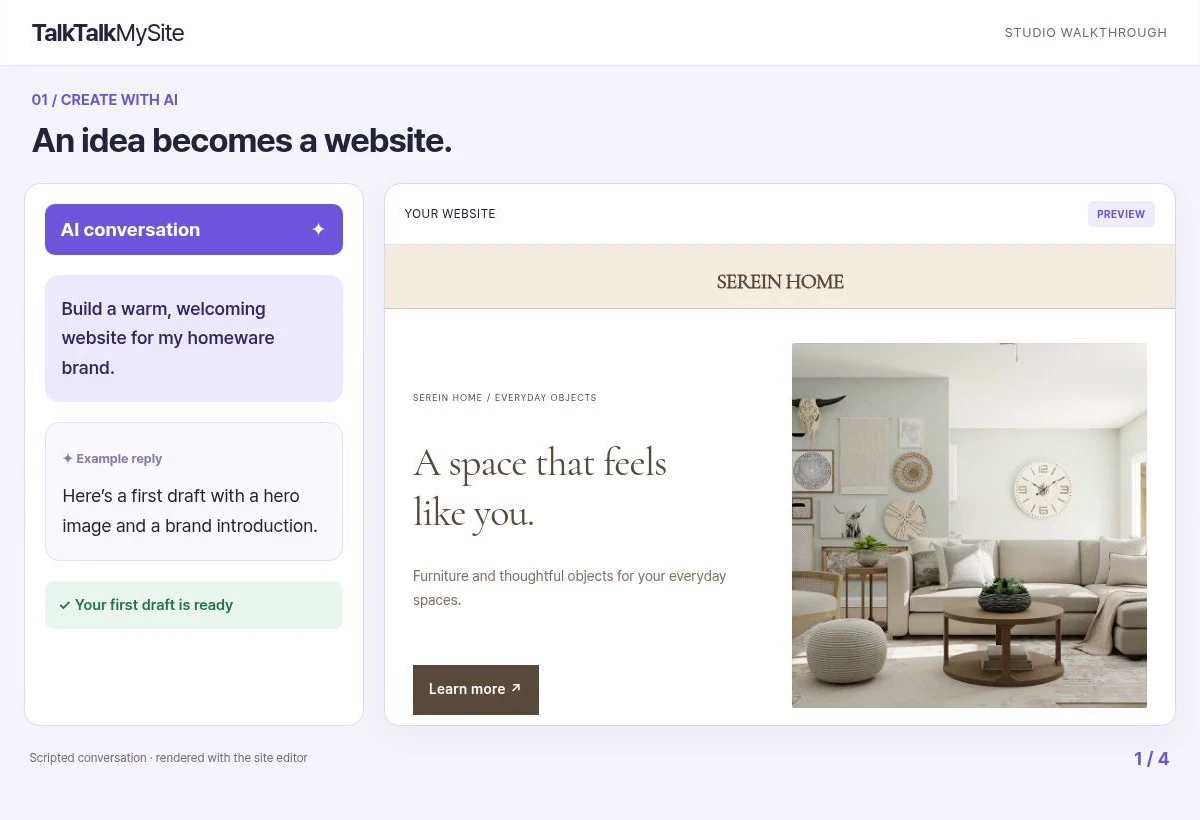
TalkTalkMySite provides no-code templates, AI chat, and visual editing, so you can get started without coding or design experience. Before commissioning a fully custom build, you can use a template to assemble the basic pages and identify what you actually need. However, a template does not guarantee an industry-appropriate result or reduced costs.
Common beginner mistakes include uploading so many photos that key projects are hard to find, using the same description for every project, and failing to verify the contact details on inquiry buttons. Before publishing, have the responsible person check the mobile layout, copy, image order, links, and business details. Owner editing can make routine text and image updates easier to manage, but you remain responsible for checking the accuracy of the information and finished pages.
Hypothetical example and next step
Hypothetical example: Suppose “Ondam Interiors” wants to receive residential remodeling inquiries. The first page highlights its main service area and how to request a consultation. The portfolio menu presents three apartment projects for which publication permission has been confirmed, each with a distinct challenge and approach. If the business is not selling products, it starts with a website setup; if it later decides to sell materials, it can review store features and payment and shipping setup. This is an illustrative hypothetical, not a real business or a claim about actual results.
Open the TalkTalkMySite AI workspace and use a template to build your first page. After drafting it, the owner can use visual editing to manage text and images directly. Before publishing, verify all content and business details, then check plan coverage, AI credits, and required setup again. Search rankings, sales, unlimited use, or error-free results are not guaranteed.
#ArchitectureandInteriors #ArchitectureandInteriorsWebsiteCreation #ArchitectureandInteriorsNoCode #ArchitectureandInteriorsTemplates #ArchitectureandInteriorsDesign #ArchitectureandInteriorsOnlinePresence #WebsiteCreation #NoCodeWebsite #AIWebsiteBuilder #WebsiteTemplates #WebsitePlanning #WebsiteManagement #NoCode #NoCodeBuilder #BuildWithoutCoding #DesignForBeginners #AIAssistedDesign #TemplateCustomization #ResponsiveDesign #MobileFriendly #ContentPlanning #BrandIntroduction #PageStructure #UserExperience #VisualEditing #WebsiteImages #LaunchPreparation #BeginnersGuide #MaintenanceChecklist #OnlineBusiness