Solo Entrepreneur Website Creation: Manage Hours and Contact Details Yourself
A practical guide to website creation for solo business owners who often update hours and contact details. Review what to prepare, a labelled hypothetical before-and-after example, and checks to make before and after publishing.
Decide what you need and gather the details
If you have to ask a developer to make every change to your opening hours or contact information, a website you can edit yourself may reduce routine work. However, you remain responsible for deciding where information appears and checking that it is correct after each update.
Before starting, gather your business name, a one-line description, main phone number, address or service area, opening hours by day, and days off. Prepare a logo and any photos you plan to use. Decide which contact methods customers should actually use, such as phone, text, or email. If you are considering store creation, check the plan structure: Basic is for a website, Standard for a store, and Premium for multilingual use. Payments, social login, a domain, and shipping may require separate setup.
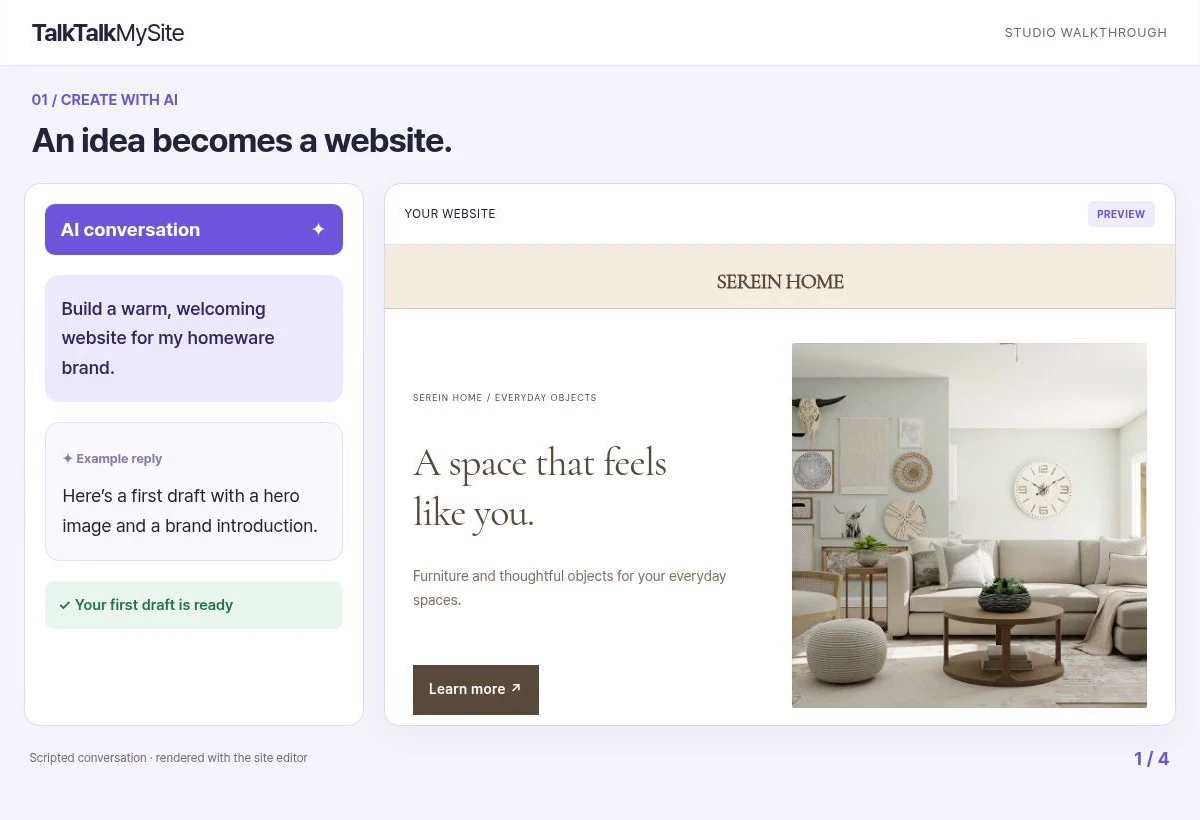
Create your first page with TalkTalkMySite
TalkTalkMySite offers no-code templates, AI chat, and visual editing, so you can get started without coding or design experience. Choose a template that suits your business, then place your introduction, opening hours, and contact details on the first page. Review the plan, AI credits, and any connection setup you need, along with the initial scope and costs.
Once you have a draft, use AI chat to refine the wording and visual editing to update text and images yourself. The tools do not automatically verify that the information is accurate, so you must check your real hours and phone number. Try the AI workspace and build your first page.
Hypothetical example: before and after
**Hypothetical example — “Corner Studio,” a one-person craft workshop,** is open Tuesday through Saturday from 11 a.m. to 6 p.m. and closed on Mondays. Before publishing, its page still showed an old phone number and said “open daily.” Customers could not readily tell whether the workshop would be open when they planned to visit.
**Before:** an outdated number, hours that did not match the actual schedule, and no notice of the closing day. **After:** the owner replaced the number, listed hours by day, and clearly marked Monday as closed. The owner also tested whether the call button connected to the correct number. This is an illustrative hypothetical editing example; it does not guarantee more inquiries or sales.
Pre- and post-publication checklist
- [ ] Check the hours, phone number, and address on desktop and mobile screens.
- [ ] Test that phone, email, and other contact options lead to the intended destination.
- [ ] Look for placeholder text and outdated images that may remain.
- [ ] Decide who will update the page and when to review it if hours or contact details change.
Templates and owner editing can help reduce custom-build and routine update costs, but the outcome depends on the plan, setup, and ongoing work you choose. There is no guarantee of higher search rankings, sales, unlimited use, or error-free operation. As a next step, gather the information you need, draft your page in the AI workspace, and review it on the devices your customers use.
#SoloEntrepreneur #SoloEntrepreneurWebsiteCreation #SoloEntrepreneurNoCode #SoloEntrepreneurTemplates #SoloEntrepreneurDesign #SoloEntrepreneurOnlinePresence #WebsiteCreation #NoCodeWebsite #AIWebsiteBuilder #WebsiteTemplates #WebsitePlanning #WebsiteManagement #NoCode #NoCodeBuilder #BuildWithoutCoding #DesignForBeginners #AIAssistedDesign #TemplateCustomization #ResponsiveDesign #MobileFriendly #ContentPlanning #BrandIntroduction #PageStructure #UserExperience #VisualEditing #WebsiteImages #LaunchPreparation #BeginnersGuide #MaintenanceChecklist #OnlineBusiness