Freelancer Website Creation: Manage Hours, Contacts, and Visitor Questions
A practical guide for freelancers starting a website: gather the right details, organize a page that answers visitor questions, and keep contact information and response hours up to date, with a labelled hypothetical example and checklist.
Decide what to include and gather your materials
A freelancer’s website should quickly answer: “What can I hire you to do?”, “When can I reach you?”, and “What should I send?” Before website creation, define your main services and intended clients, preferred contact method, and the hours when you can realistically respond. Decide whether to publish your scope or pricing, and where to place the contact button on the first page.
Gather service descriptions, examples of your work, the name or business name you use, contact details, response hours, and a list of information you need from prospective clients. If you use images, check that you have permission to use them and that they remain clear on mobile screens. Before publishing, recheck dates and contact details so draft text does not go live unchanged.
Example page that answers visitor questions
The following is a **hypothetical example**. Minseo, an independent translator, puts “Services,” “How it works,” “Frequently asked questions,” and “Contact” on one page. Under services, she lists the language pairs and document types she accepts. Under how it works, she explains the steps from initial inquiry to delivery. Her FAQ uses questions visitors might actually ask, such as “What should I send to get an estimate?”, “When do you usually reply?”, and “Can you take urgent requests?”
The contact section gives an email address or another chosen contact method, realistic response hours, and the details to include, such as document type, length, and desired schedule. Avoid promising a specific reply time unless you can consistently meet it. Clearly distinguish personal information you do not want to publish and requests you cannot accept.
Start with TalkTalkMySite and manage the page yourself
Before commissioning a fully custom build, you can use TalkTalkMySite’s no-code templates and AI chat to draft a page and assess the work involved. This can make it easier to start affordably, but you do not need coding or design experience to begin—and you should not assume AI-generated answers or pages are accurate.
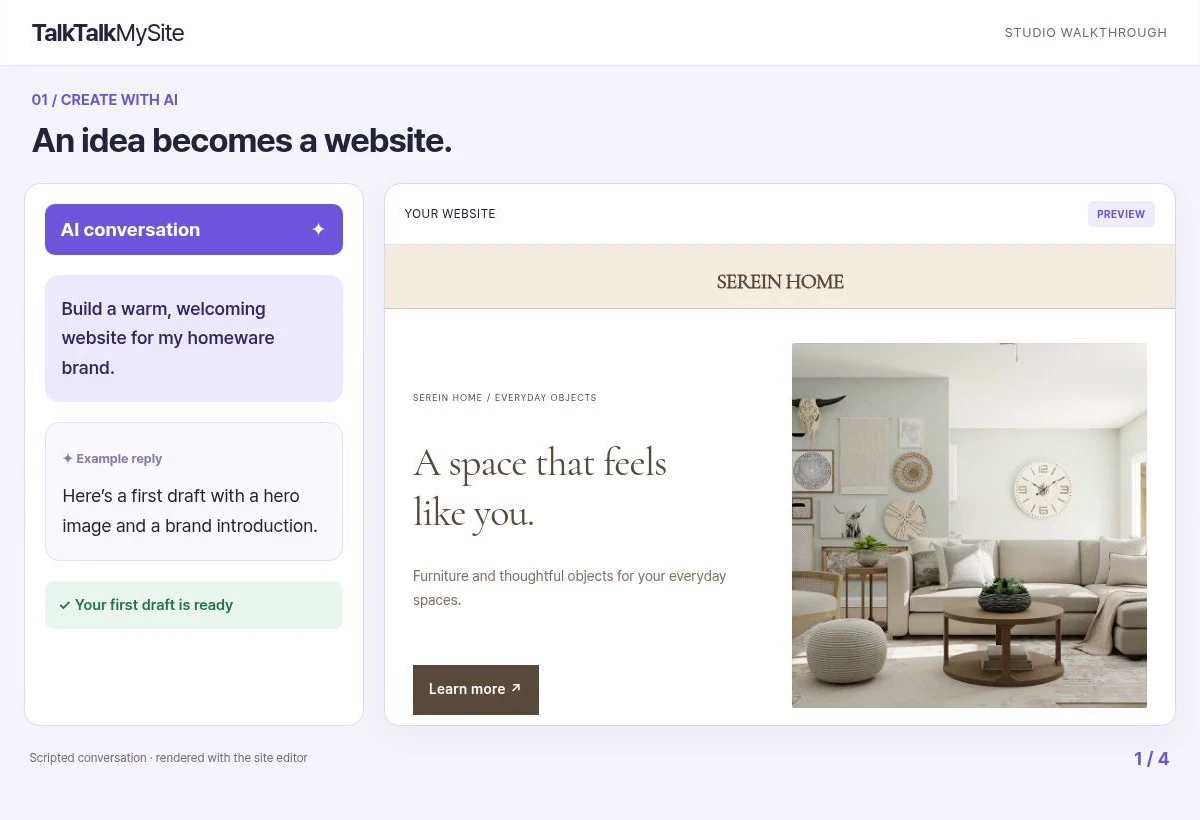
Use visual editing to update service text, images, response hours, and contact details, then review them again before and after publishing. Templates and owner editing may reduce custom-build and recurring update costs, but neither outcomes nor savings are guaranteed. Check the plan, AI credits, and setup requirements. Payments, social login, domains, and shipping require setup when needed. Consider Basic for a website, Standard for a store, and Premium for multilingual use.
Pre-publication checklist and next step
- Are the hours and contact details current and correct?
- Are the contact method and response guidance easy to find on a mobile screen?
- Do the answers match the services you currently offer?
- Have you tested links and input fields yourself and checked for typos and image-use permissions?
Search rankings, inquiries or sales, unlimited use, and error-free results are not guaranteed. Try the AI workspace to create a first page with a service introduction and FAQ. Review the content yourself, check the setup requirements and plan, and then publish.
#Freelancer #FreelancerWebsiteCreation #FreelancerNoCode #FreelancerTemplates #FreelancerDesign #FreelancerOnlinePresence #WebsiteCreation #NoCodeWebsite #AIWebsiteBuilder #WebsiteTemplates #WebsitePlanning #WebsiteManagement #NoCode #NoCodeBuilder #BuildWithoutCoding #DesignForBeginners #AIAssistedDesign #TemplateCustomization #ResponsiveDesign #MobileFriendly #ContentPlanning #BrandIntroduction #PageStructure #UserExperience #VisualEditing #WebsiteImages #LaunchPreparation #BeginnersGuide #MaintenanceChecklist #OnlineBusiness