Solo Entrepreneur Website Creation: Separate Setup and Running Costs
A practical guide for solo founders planning a website or online store: separate one-time setup from recurring costs, compare a labelled hypothetical before-and-after example, and follow a pre-launch checklist.
Separate setup costs from running costs first
For a solo entrepreneur, budgeting for website creation starts with listing one-time work separately from expenses that may recur. Setup items can include choosing a template or creation tool, arranging pages, connecting a domain, and configuring payments or shipping. Running costs may include a service plan, AI credits if needed, domain renewal, payment- or shipping-related charges, and the time you spend updating content. Actual items and amounts depend on your plan and business model, so check them before signing up.
Prepare these materials before you build
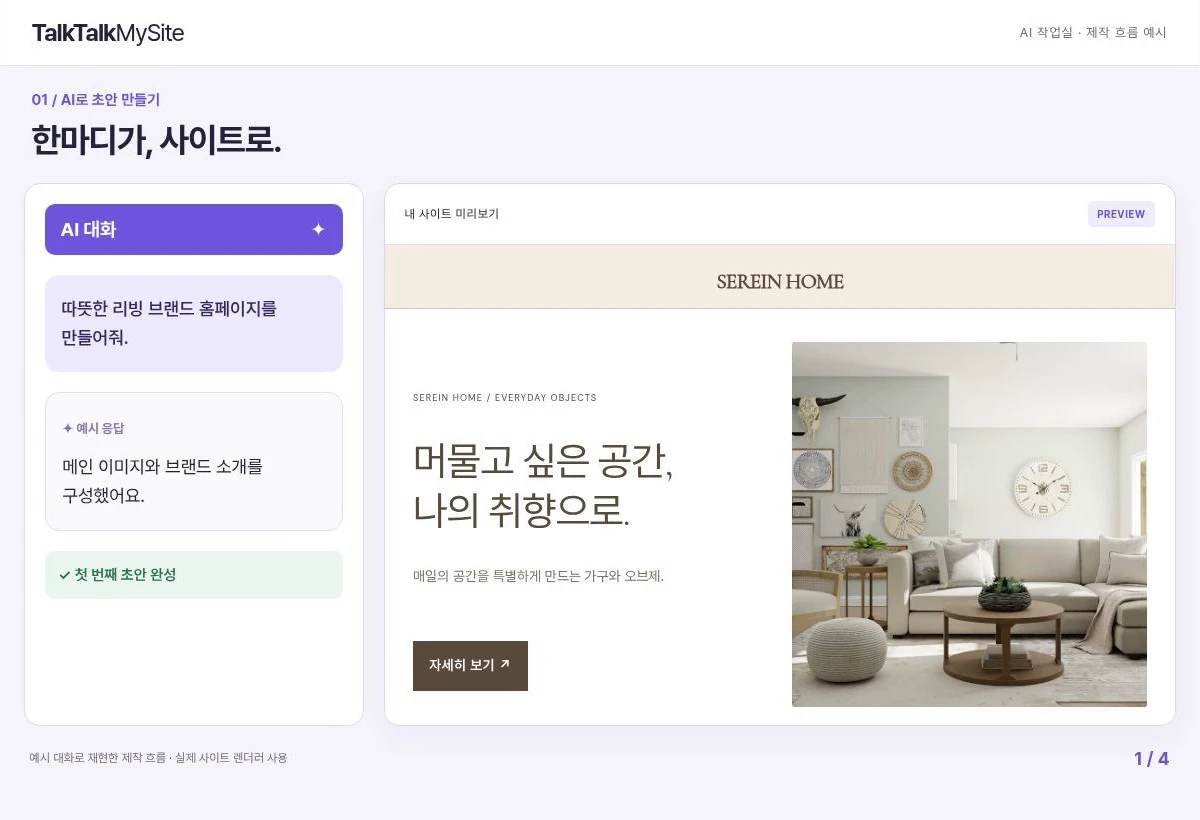
For a straightforward website, prepare a business introduction, service or product descriptions, contact details, operating hours, images you can use, and answers to common questions. For online store creation, also gather product names, prices, options, stock information, and shipping terms. A domain, payment method, social login, or shipping connection may each require separate setup. Before publishing, personally verify that your business details and the terms shown to customers are accurate.
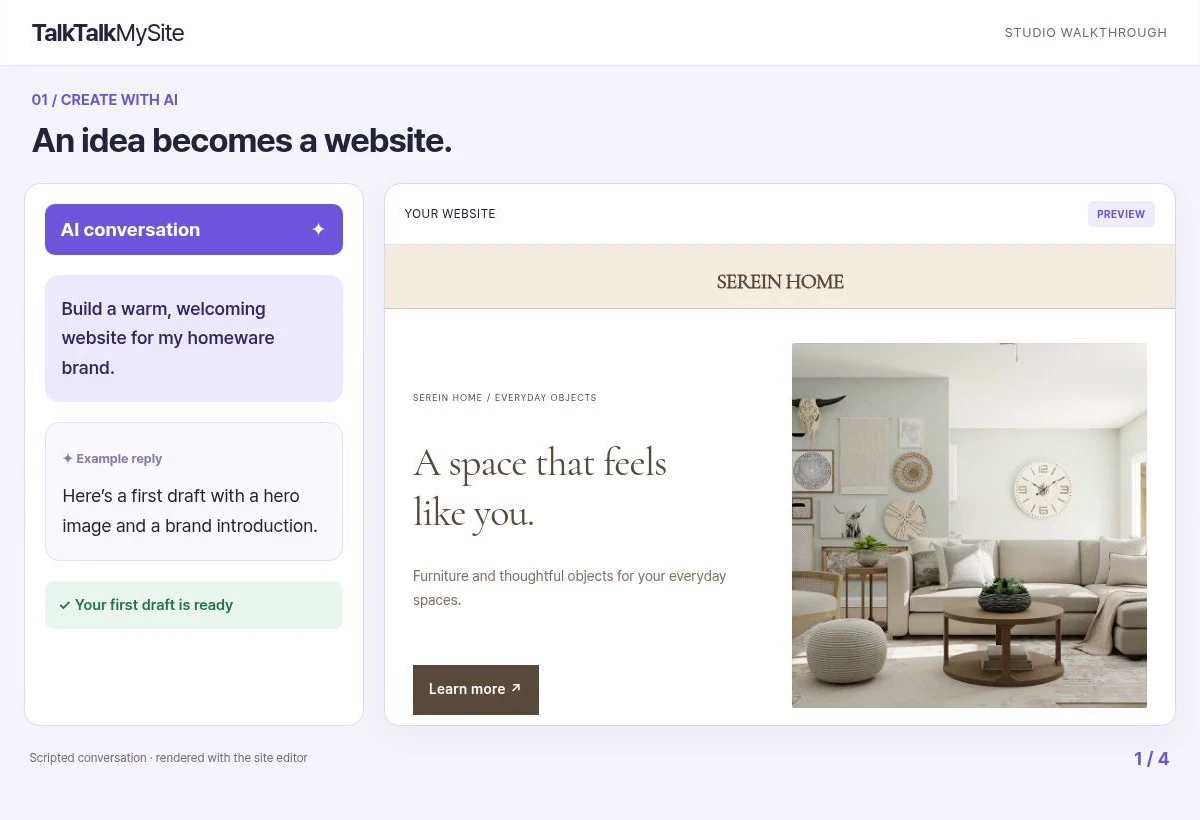
TalkTalkMySite is an option for getting started with no-code templates, AI chat, and visual editing. Coding or design experience is not required to begin, but you are responsible for checking that the template fits your business and completing the settings you need. Consider Basic for a website, Standard for a store, and Premium for multilingual operation; first verify what each plan includes and check AI credit requirements.
Hypothetical example: Daon’s handmade notebook shop revises its budget
**Before:** Daon, a solo founder, put every expense under one line called “website creation.” Product photos and descriptions were not ready, and Daon assumed payment and shipping setup would be included automatically. After launch, it was difficult to tell which tasks were still needed and which costs might recur.
**After:** Daon separated setup items into choosing a template, writing product and information pages, and configuring the domain, payments, and shipping. The running-cost list included checking the service plan, whether the domain needed renewal, and the time required to edit product details and images personally. Daon decided to publish a website with product information and contact details first, then review the store plan and payment settings when online ordering was actually needed. This is an example for identifying overlooked items, not a calculation that guarantees a particular price or saving.
Pre-launch checklist and next step
- Decide which pages and materials you need, then record setup tasks separately from recurring items.
- Check whether the plan, AI credits, domain, payments, social login, and shipping setup fit the way you intend to operate.
- Review text, images, and buttons on a mobile screen, and verify product details and contact information yourself.
- Templates and owner editing may reduce the need for custom development and the burden of routine updates, but they do not make costs disappear or guarantee error-free results.
No approach to building a website can guarantee search rankings or sales. Start by choosing one essential page and gathering its materials, then try TalkTalkMySite’s AI workspace and build your first page. Review the content before publishing and test any required payment or shipping settings so you can make your next decisions with a clearer picture.
#SoloEntrepreneur #SoloEntrepreneurWebsiteCreation #SoloEntrepreneurNoCode #SoloEntrepreneurTemplates #SoloEntrepreneurDesign #SoloEntrepreneurOnlinePresence #WebsiteCreation #NoCodeWebsite #AIWebsiteBuilder #WebsiteTemplates #WebsitePlanning #WebsiteManagement #NoCode #NoCodeBuilder #BuildWithoutCoding #DesignForBeginners #AIAssistedDesign #TemplateCustomization #ResponsiveDesign #MobileFriendly #ContentPlanning #BrandIntroduction #PageStructure #UserExperience #VisualEditing #WebsiteImages #LaunchPreparation #BeginnersGuide #MaintenanceChecklist #OnlineBusiness