Travel and Accommodation Website Creation: Organize Pages and Answer Guest Questions
Learn how to organize an existing travel or lodging website’s addresses and information, answer visitor questions in a useful order, prepare essential materials, and assess a no-code option through a labelled hypothetical example.
1. Start by organizing existing addresses and pages
For travel and accommodation website creation, first look for places where visitors get lost rather than beginning with a new design. List the current site addresses and note the purpose of each page: for example, room details, rates and inclusions, directions, nearby travel information, and booking inquiries. Update outdated event notices and combine duplicate pages where appropriate, keeping only information visitors need. If you change an existing address, bookmarks or links from other websites may stop working. Mark the pages that need new addresses and plan how each old address will connect to its replacement.
Gather room photos and descriptions, the precise location and transit directions, check-in and check-out times, occupancy limits, amenities, what the rate includes, and how to ask about bookings or cancellations. If operations vary by season or some restrictions apply, record the relevant dates. Assign someone to verify any information that is not yet confirmed. Keep a single reference for key facts so different pages do not show conflicting rates or opening hours.
2. Answer visitor questions in the order they arise
It is easier to build pages around a visitor’s decisions than around an introduction to the business. On the home page, briefly show the accommodation’s location and distinguishing features, who it suits, and how to make a booking inquiry. On room pages, present photos, occupancy, bed arrangements, and inclusions together. On the rates page, clearly explain the applicable dates and how to check for extra charges. Put the address and public transit or parking information on the directions page. Explain what details to include in an inquiry and how visitors will receive a response on the booking page.
Before publishing, check: - Can a first-time visitor quickly understand where the accommodation is and whom it suits? - Can visitors find the dates, guest count, and room conditions to ask about availability? - Do the photos accurately represent the actual rooms and facilities? - Are the contact method and essential details easy to read on a phone? - Do buttons, phone numbers, and map links work as intended?
3. Hypothetical example and a no-code option
Hypothetical example: Solbaram House, a small lodging property in the hills, has room descriptions, nearby attractions, and booking instructions scattered across several pages. The owner lists the existing addresses, combines duplicate attraction information, and standardizes occupancy limits and check-in times across room pages. The home page shows the location and inquiry method; each room page presents photos, occupancy, and inclusions; and the booking page asks visitors to provide their dates and guest count. This is an example of page organization, not verified business information. The property owner must confirm and enter actual rates and operating conditions.
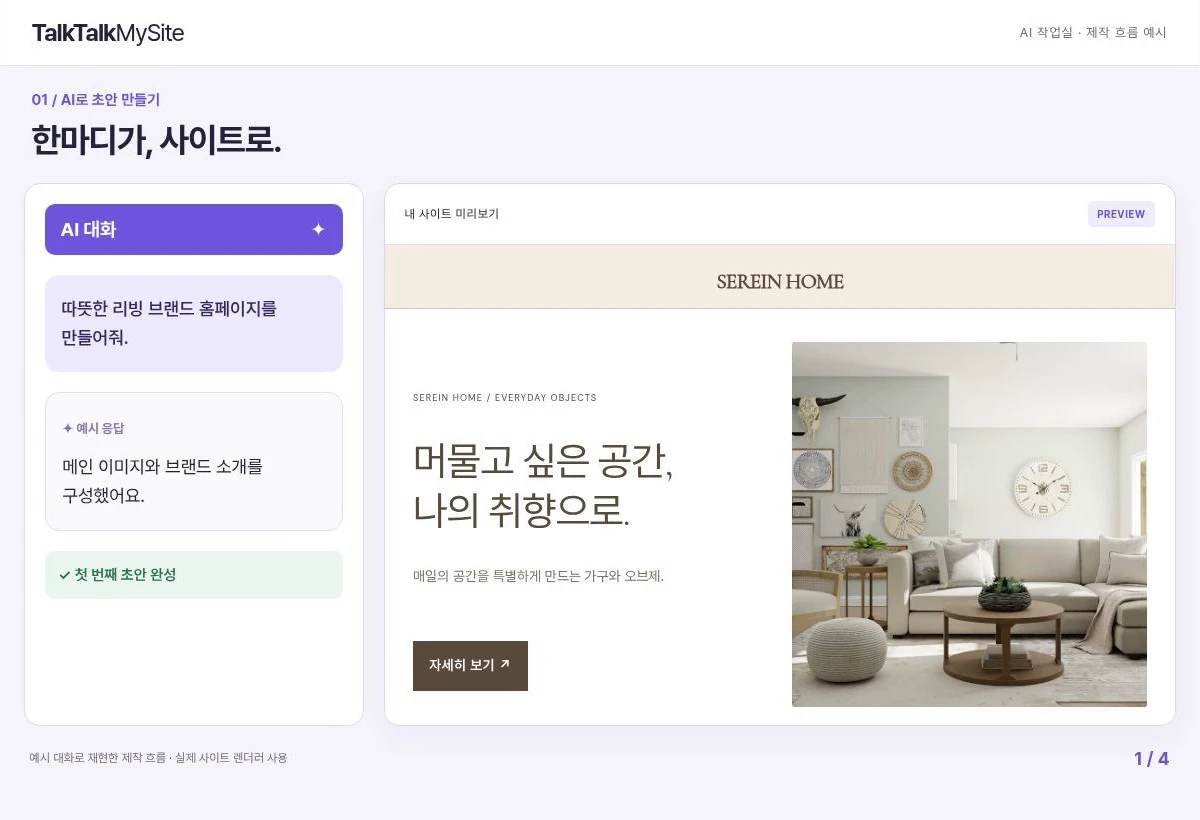
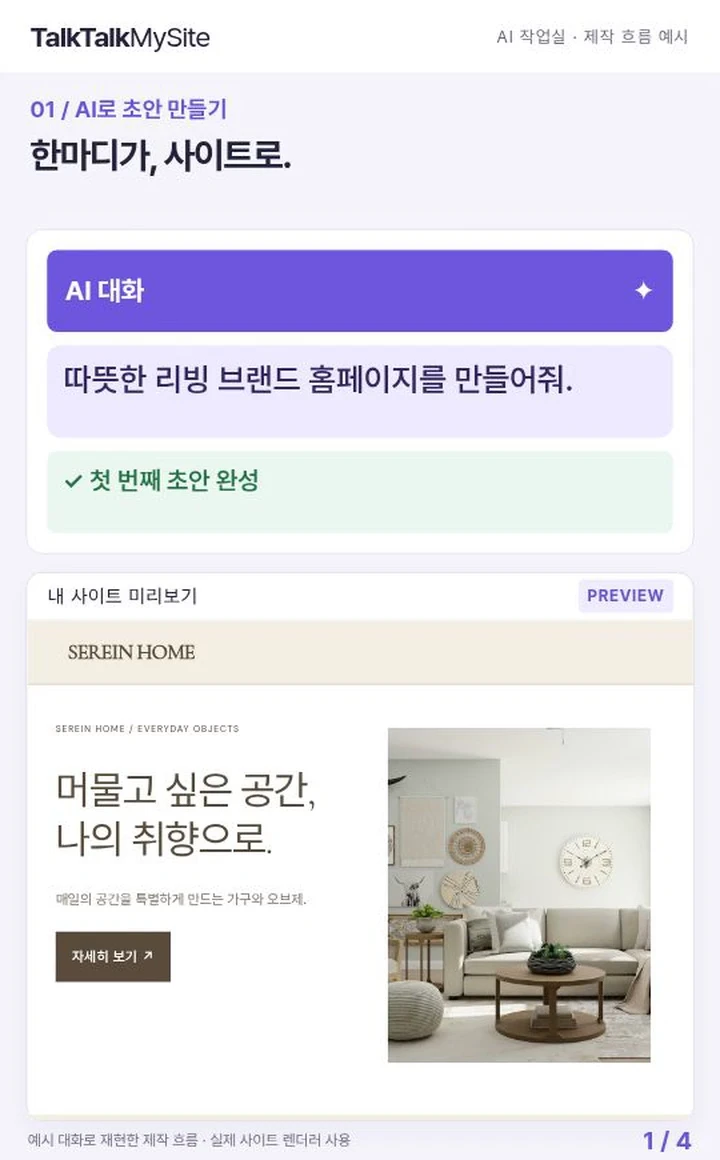
TalkTalkMySite offers templates and AI chat as a no-code way to start with an initial page without coding or design experience. Choose a template suited to lodging, then use AI chat to draft page wording; check the accuracy of room details and claims yourself. You can then use visual editing to update text and images and manage operating information directly.
4. Check requirements before publishing and choose a next step
When moving or creating a site, payments, social login, and domain connections may require separate setup, depending on your needs. If you plan to accept reservations or payments, decide which functions you need and who will configure them. Check plan details, AI credits, and any setup requirements as well. Templates and owner editing can reduce the work involved in custom builds or routine updates, but they do not guarantee lower costs, search rankings, bookings, or sales. Check usage limits and the possibility of mistakes, then test the mobile layout and every link yourself before publishing.
As a next step, make a list of current addresses and pages, and note who will verify each uncertain fact and by when. Then try TalkTalkMySite’s AI workspace to build a first page. Before publishing, compare the location, rates, conditions, and photos against confirmed information, and check whether the site genuinely answers visitors’ questions.
#TravelandAccommodation #TravelandAccommodationWebsiteCreation #TravelandAccommodationNoCode #TravelandAccommodationTemplates #TravelandAccommodationDesign #TravelandAccommodationOnlinePresence #WebsiteCreation #NoCodeWebsite #AIWebsiteBuilder #WebsiteTemplates #WebsitePlanning #WebsiteManagement #NoCode #NoCodeBuilder #BuildWithoutCoding #DesignForBeginners #AIAssistedDesign #TemplateCustomization #ResponsiveDesign #MobileFriendly #ContentPlanning #BrandIntroduction #PageStructure #UserExperience #VisualEditing #WebsiteImages #LaunchPreparation #BeginnersGuide #MaintenanceChecklist #OnlineBusiness