Cultural Event Website Creation: Separate Setup and Running Costs
Learn how to separate launch expenses from ongoing costs, choose features for your event, and prepare the information you need before building a festival, exhibition, or performance website.
Cultural event details can change frequently, including dates, venues, and programs. When budgeting for website creation, list the cost of building the site separately from the costs that continue after launch. The right choice depends less on event size than on how often information changes, whether you need online registration or payments, and whether you need to serve visitors in multiple languages.
Separate setup costs from running costs
Initial costs may include a template or custom build, the first page and site structure, writing and uploading content, connecting a domain, and configuring payments or shipping. Ongoing costs may include a plan, domain renewal, AI credits, time spent updating content, and services or support related to payments and shipping. Check what is included and what requires separate setup for the specific plan and services you choose.
In your budget, label each item as “initial,” “recurring monthly or annually,” or “only when needed.” If your event mainly takes place in person and you do not sell online, you may not need to add store features right away. If you plan to sell tickets or merchandise online, first review the payment flow and order handling. If orders require delivery, check the shipping setup too.
Choose features for your situation
For a one-off event or small exhibition focused on visitor information, a basic website may be enough. If selling products is central, consider a store. If international visitors need information in several languages, assess whether multilingual support is necessary. TalkTalkMySite offers no-code templates, AI chat, and visual editing, so you can get started without coding or design experience. Basic is for a website, Standard for a store, and Premium for multilingual use; check the detailed terms, plan, and AI credits yourself before starting.
**Hypothetical example:** Suppose a neighborhood cultural center is holding a weekend photography exhibition and will collect admission fees at the venue. It starts with a website containing an introduction, dates and location, program, travel information, and contact details. Adding online sales or multilingual features only when they are genuinely needed can make the budget and management workload easier to control. This is an illustrative hypothetical, not a promise about any particular cost or outcome.
Prepare materials and check before publishing
Before you begin, gather the event name and introduction, confirmed dates and venue, program, contact method, and the images you plan to use, including confirmation that you have permission to publish them. Do not present undecided information as final; agree on who will confirm it and when it will be updated.
- [ ] Are the date, venue, and participation instructions visitors need first easy to find?
- [ ] Are the text, images, and menu readable on a phone?
- [ ] If you need registration, payments, social login, a domain, or shipping, have you configured and tested each one?
- [ ] Are contact details, opening hours, prices, and cancellation information current?
Common mistakes include focusing on the look of the first screen while missing essential visitor information, choosing features before their need is clear, and assuming easy editing means no review is needed. Templates and owner editing can help reduce reliance on custom builds and the burden of routine updates, but owners still need to check content, layout, and business details. Search rankings, sales results, unlimited use, and error-free operation are not guaranteed.
Start small and manage updates yourself
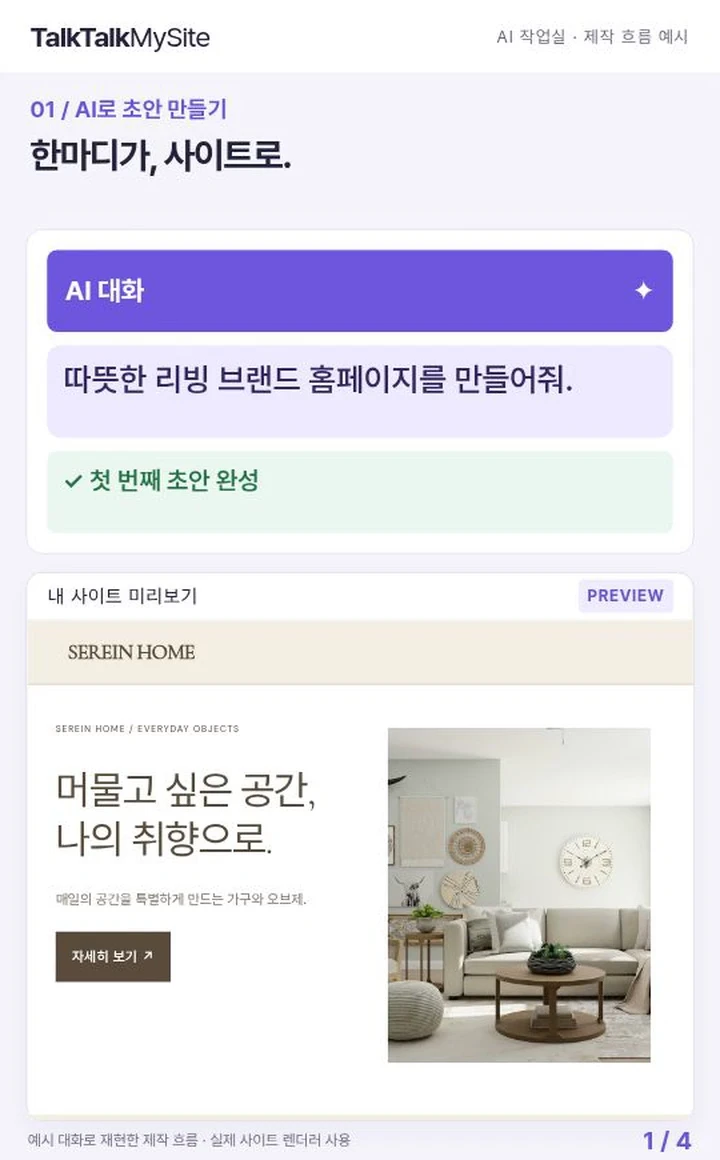
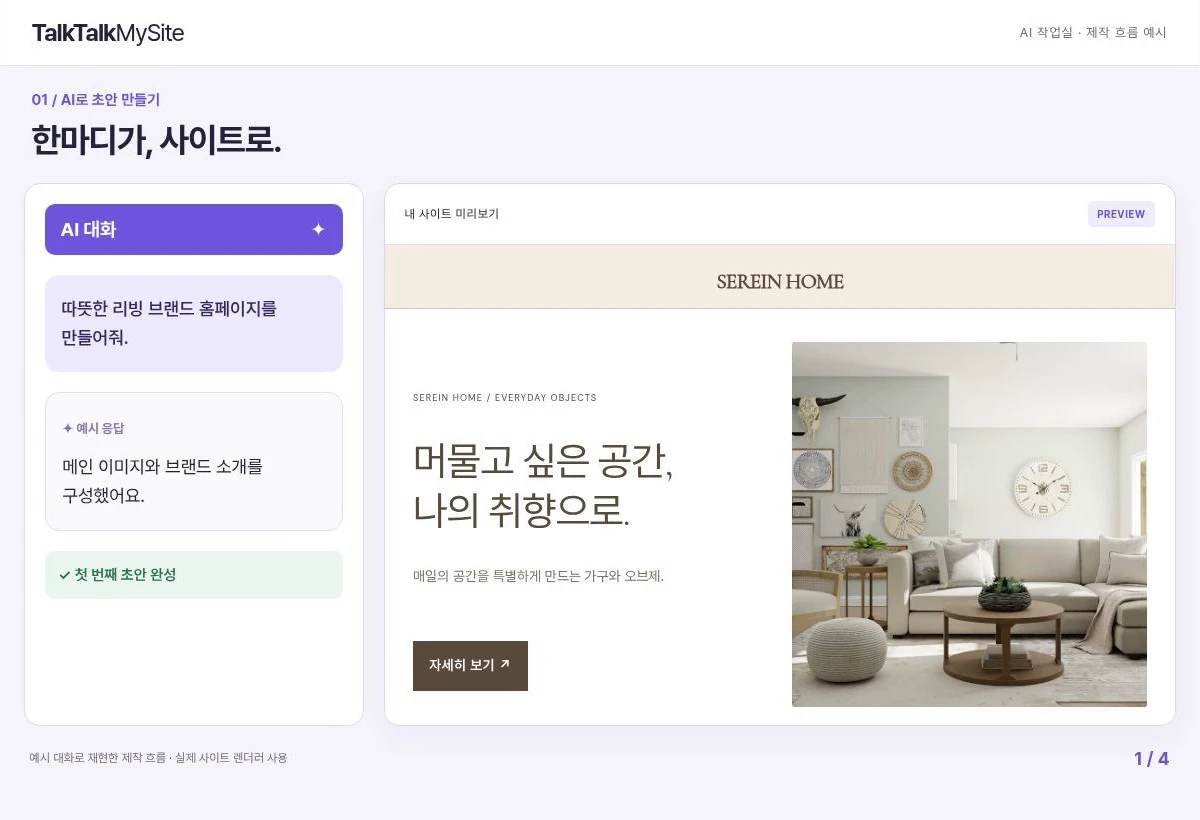
Use TalkTalkMySite templates and AI chat to draft the first page structure, then check the required features, plan, AI credits, and setup needs before you proceed. With visual editing, you can manage event text and images yourself, making it easier to update information when dates or details change instead of depending on an outside builder for every revision. You still need to review the site before publishing.
Your next step is to gather your materials and answer in one sentence: “Do we only need event information, or do we also need sales or multilingual content?” Try the AI workspace to build a first page, review it on a phone, and decide who will be responsible for updates and what information should be made public.
#CulturalEvent #CulturalEventWebsiteCreation #CulturalEventNoCode #CulturalEventTemplates #CulturalEventDesign #CulturalEventOnlinePresence #WebsiteCreation #NoCodeWebsite #AIWebsiteBuilder #WebsiteTemplates #WebsitePlanning #WebsiteManagement #NoCode #NoCodeBuilder #BuildWithoutCoding #DesignForBeginners #AIAssistedDesign #TemplateCustomization #ResponsiveDesign #MobileFriendly #ContentPlanning #BrandIntroduction #PageStructure #UserExperience #VisualEditing #WebsiteImages #LaunchPreparation #BeginnersGuide #MaintenanceChecklist #OnlineBusiness