Local Workshop Website Creation: A Checklist for Separating Setup and Running Costs
First decide whether you need an informational site or online sales, then separate creation and operating expenses and gather the materials for a realistic first budget.
For a local workshop, separate the cost of getting a website made from the costs of maintaining it afterward. Start by choosing its purpose. If you mainly need directions, class information, and inquiries, an informational website may be enough. If you want to sell work online, you will also need an online store and setup for products, payments, and shipping.
1. Separate setup costs from running costs
For setup, list template selection and page organization, preparing photos and copy, and the work needed to configure a domain, payments, social login, and shipping. Running costs may include your plan, AI credits, domain maintenance, updates to product or class information, and handling inquiries. The actual items and terms depend on the plan and features you choose, so check them before starting. If you expect to hire outside help, record separately which tasks that help will cover.
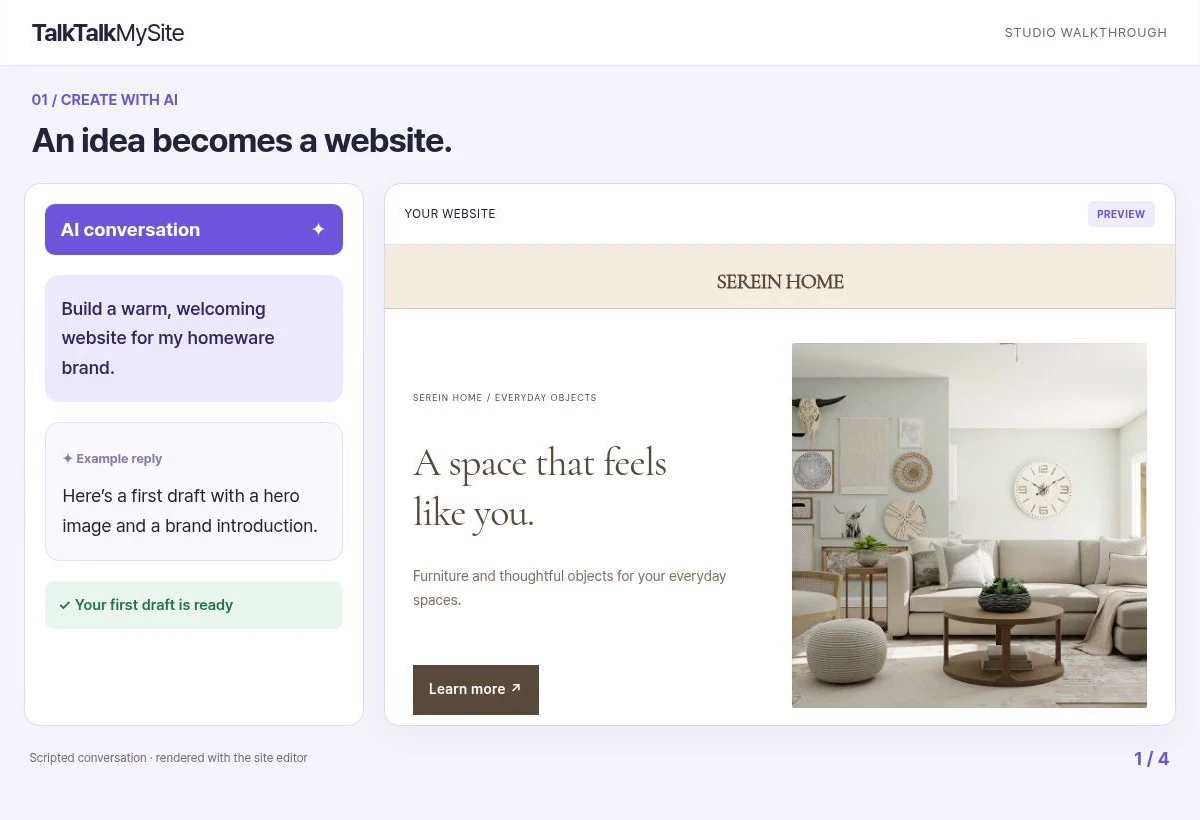
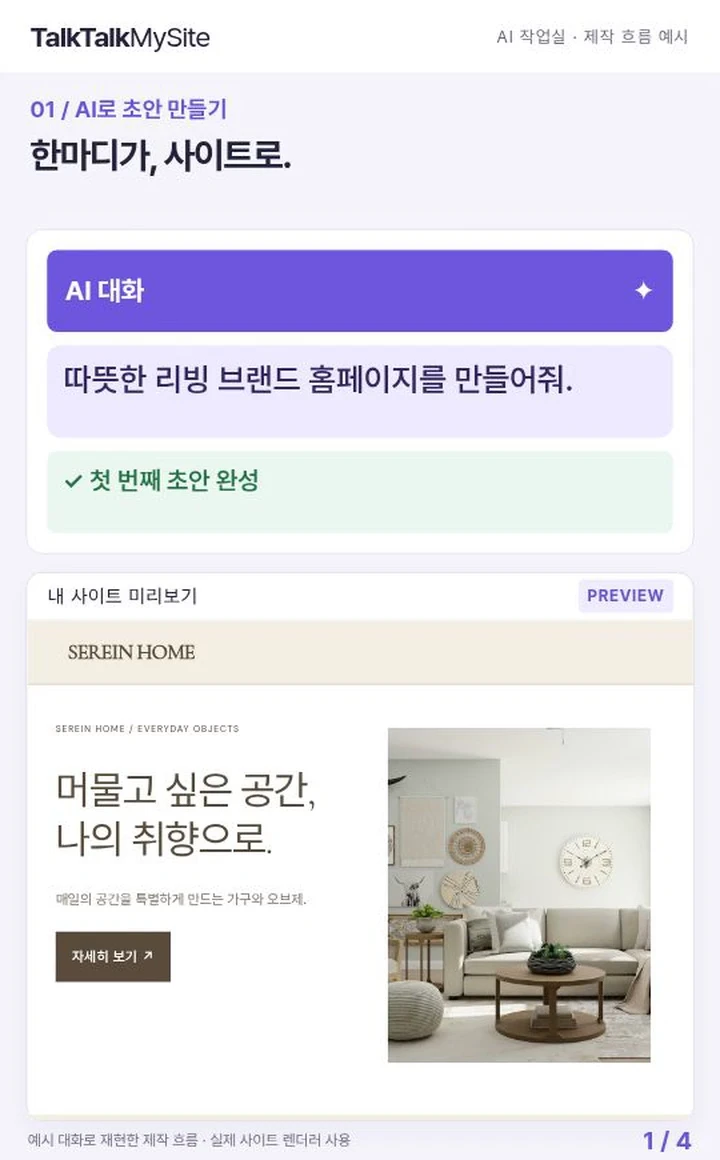
Templates and owner editing can help reduce the work involved in custom builds or routine updates. They do not guarantee lower costs or eliminate mistakes. TalkTalkMySite offers no-code templates, AI chat, and visual editing, so you can get started without coding or design experience. However, the workshop owner still needs to check the content, layout, and business details.
2. Gather these materials before building
- Workshop name, contact details, address, opening hours, and directions
- A short description of what makes the workshop distinctive, plus names and descriptions of featured work or classes
- Photos of your work and space that you are able to use, with descriptions for each
- Contact and class-booking instructions, along with customer-facing information about operations such as cancellations or shipping
- If selling, product details, prices, your approach to tracking stock, and the information needed for payment and shipping setup
- A plan choice and domain plan, plus a list of operating items to review each month
You do not need to wait until every detail is perfect. Gather the information essential for the first page, then add the rest in order of priority. Basic is for a website, Standard for a store, and Premium for multilingual use. Payments, social login, domains, and shipping need to be configured for your chosen approach; do not assume these are automatically ready.
3. A first-build checklist you can follow now
- Choose one main goal: decide whether to prioritize visitor information, class inquiries, or sales of your work.
- List the pages you need: select the information visitors should find, such as workshop introduction, work or products, classes and booking, location, and contact details.
- Check your materials: make sure your contact, address, and business information are current, and that you can use the photos and copy you have gathered.
- If selling, decide whether you need payments, shipping, and login features. Write down each setup step and who will manage it.
- Test the mobile layout yourself, including copy, images, buttons, and the contact method; check that business details are accurate.
- Add recurring items to a monthly review list: check your plan, AI credits, domain, and information that needs updating.
Hypothetical example and next step
Hypothetical example: “Woodgrain Workshop” decides to start with a website giving its location, weekend woodworking class details, and contact information. It will consider online sales after reviewing demand and what preparation they require. First, it gathers photos and copy for introduction, classes, and location pages, and checks whether Basic fits its purpose. If it starts selling later, it will review Standard and the operating needs for payment and shipping setup and product information management.
With TalkTalkMySite, use a template to make the first page, prepare a draft with AI chat, then edit it yourself to fit your workshop. Before you begin, check the plan, AI credits, and required setup; before publishing, review all information for accuracy. Search rankings, sales, unlimited use, and error-free results are not guaranteed. Try the AI workspace and build your workshop’s first introduction page.
#LocalWorkshop #LocalWorkshopWebsiteCreation #LocalWorkshopNoCode #LocalWorkshopTemplates #LocalWorkshopDesign #LocalWorkshopOnlinePresence #WebsiteCreation #NoCodeWebsite #AIWebsiteBuilder #WebsiteTemplates #WebsitePlanning #WebsiteManagement #NoCode #NoCodeBuilder #BuildWithoutCoding #DesignForBeginners #AIAssistedDesign #TemplateCustomization #ResponsiveDesign #MobileFriendly #ContentPlanning #BrandIntroduction #PageStructure #UserExperience #VisualEditing #WebsiteImages #LaunchPreparation #BeginnersGuide #MaintenanceChecklist #OnlineBusiness