Restaurant Website Creation: Three First Pages That Answer Guests’ Questions
A practical guide for restaurant owners planning their first website. Learn how to shape the home, about, and contact pages, gather the right materials, and answer visitor questions through a labelled hypothetical example.
Decide first: what visitors want to know
A restaurant website should help visitors take their next step, not just look attractive. Guests commonly ask: “What do you serve?”, “Where are you, and when are you open?”, and “How can I make a reservation or contact you?” Divide the answers among the home, about, and contact pages; you do not need a complicated site to get started.
Before building, gather your business name and logo, signature dishes and prices, food and venue photos, address and opening hours, and contact details. Decide whether you will take reservations or offer online ordering or payments. If menu and opening information changes often, decide who will update it and when.
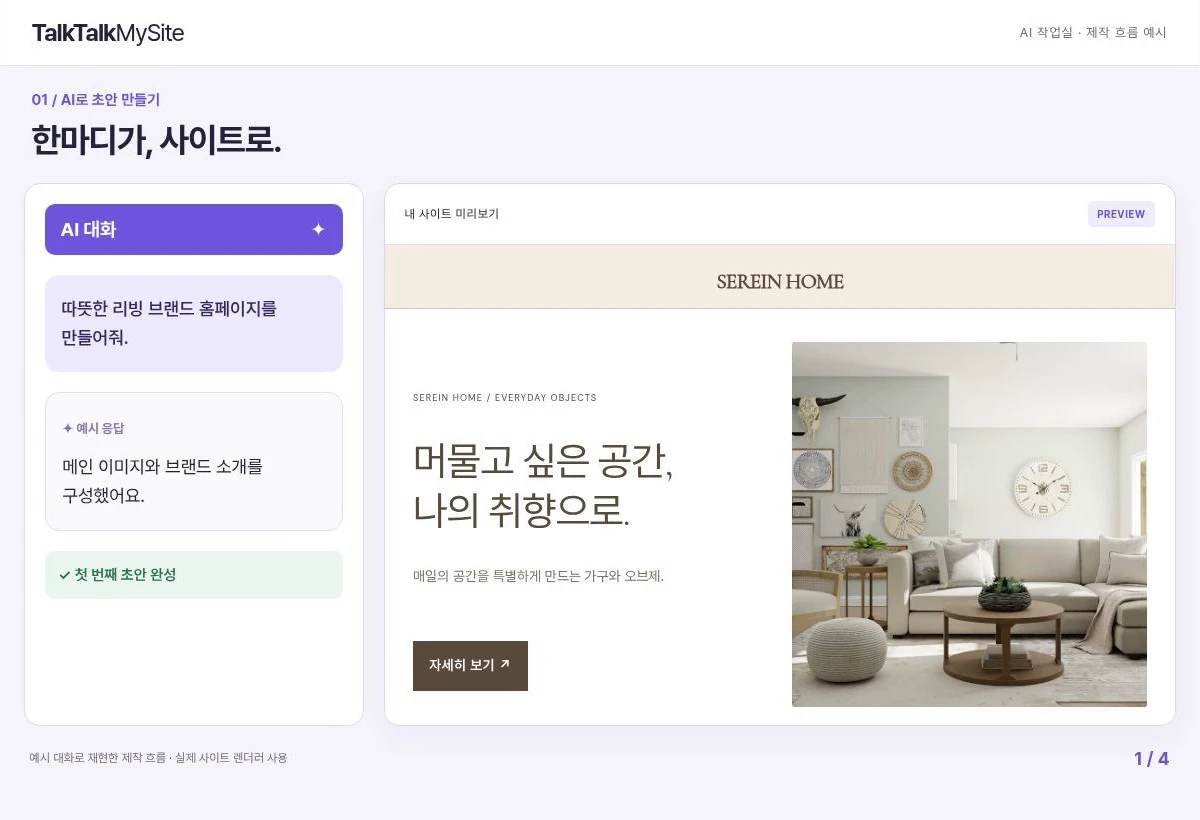
Give each of the three pages a clear role
**Home page:** Describe what makes the restaurant distinctive in one sentence, then feature a representative food photo, key menu items, location, and opening hours. Make the buttons for useful actions—such as viewing the menu or making a reservation—clear and limited to one or two.
**About page:** Explain what kind of food you serve and how you prepare it. Keep the copy brief and focus on facts guests need, such as ingredients, cooking methods, or the atmosphere. Useful information that helps someone decide whether to visit is better than vague promotional language.
**Contact page:** List your address, phone number or other contact method you actually use, opening hours, and days closed. Add parking or public-transport directions only if you have verified them. If you use a contact form, keep its fields simple and make clear whether it is for reservation requests or general questions. If replies may take time, set expectations about response time.
Hypothetical example: “Corner Soup’s” first website
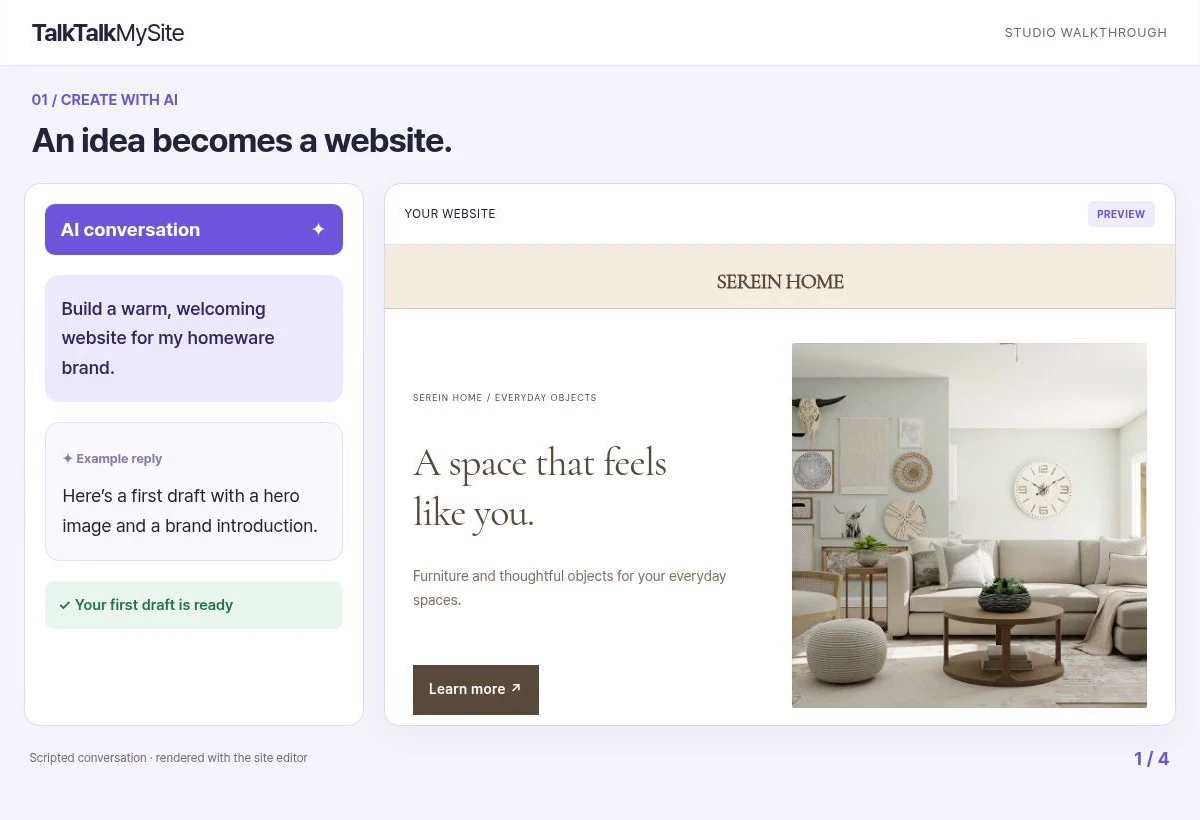
This is a hypothetical example for illustration. “Corner Soup” is a small restaurant serving soup and bread at lunchtime. Its home page says, “Soup and freshly baked bread for lunch every day,” and features signature dishes and real venue photos. The about page describes the menu and atmosphere. The contact page gives the verified address, opening hours, and phone contact method. If the restaurant does not take reservations, it does not add a reservation button; if it has no ordering feature, it does not imply that online orders are available.
TalkTalkMySite offers no-code templates, AI chat, and visual editing for getting started without coding or design experience. Use a template to lay out the basic pages and AI chat to refine draft copy, breaking restaurant website creation into manageable first steps.
Check before publishing, then take the next step
- Can visitors find the menu, address, and opening hours easily on a phone?
- Do the photos and copy match the actual menu, prices, and way the business operates?
- Are the phone number, contact method, and closed days correct?
- If you need reservations, payments, or a connected domain, have you checked the required setup and materials?
With TalkTalkMySite, owners can also edit text and images themselves after publishing to reflect menu or hours changes. Owners still need to review the content, layout, and business details. Payments, social login, domains, and shipping require setup when needed. Basic is for a website, Standard for a store, and Premium for multilingual use; check plan details, AI credits, and setup requirements. Unlimited use, error-free operation, search rankings, and sales are not guaranteed. Try the AI workspace and draft your first home page.
#Restaurant #RestaurantWebsiteCreation #RestaurantNoCode #RestaurantTemplates #RestaurantDesign #RestaurantOnlinePresence #WebsiteCreation #NoCodeWebsite #AIWebsiteBuilder #WebsiteTemplates #WebsitePlanning #WebsiteManagement #NoCode #NoCodeBuilder #BuildWithoutCoding #DesignForBeginners #AIAssistedDesign #TemplateCustomization #ResponsiveDesign #MobileFriendly #ContentPlanning #BrandIntroduction #PageStructure #UserExperience #VisualEditing #WebsiteImages #LaunchPreparation #BeginnersGuide #MaintenanceChecklist #OnlineBusiness