Pilates Studio Website Creation: Place Photos and Build Pages Around Visitor Questions
Arrange existing studio photos by purpose, then organize class, booking, and practical information around visitors’ questions. This guide covers the materials to prepare and the limitations to check before starting with no-code tools.
Decide first: What does a visitor need to know?
A Pilates studio website is more than a collection of attractive photos. It should help visitors decide whether a class suits them and how to book. On the first screen, clearly show the studio’s location and audience, main classes, and how to ask a question or make a booking. Then arrange the class types and how they work, instructor introductions, facilities, and practical information so people can find what they need.
Before creating the site, choose one or two typical visitor groups and write down their questions. A beginner may want to know what to bring and what happens in a first class; someone with experience may check the schedule or differences between programs. Decide the scope of your website creation first so you do not add unnecessary pages or photos.
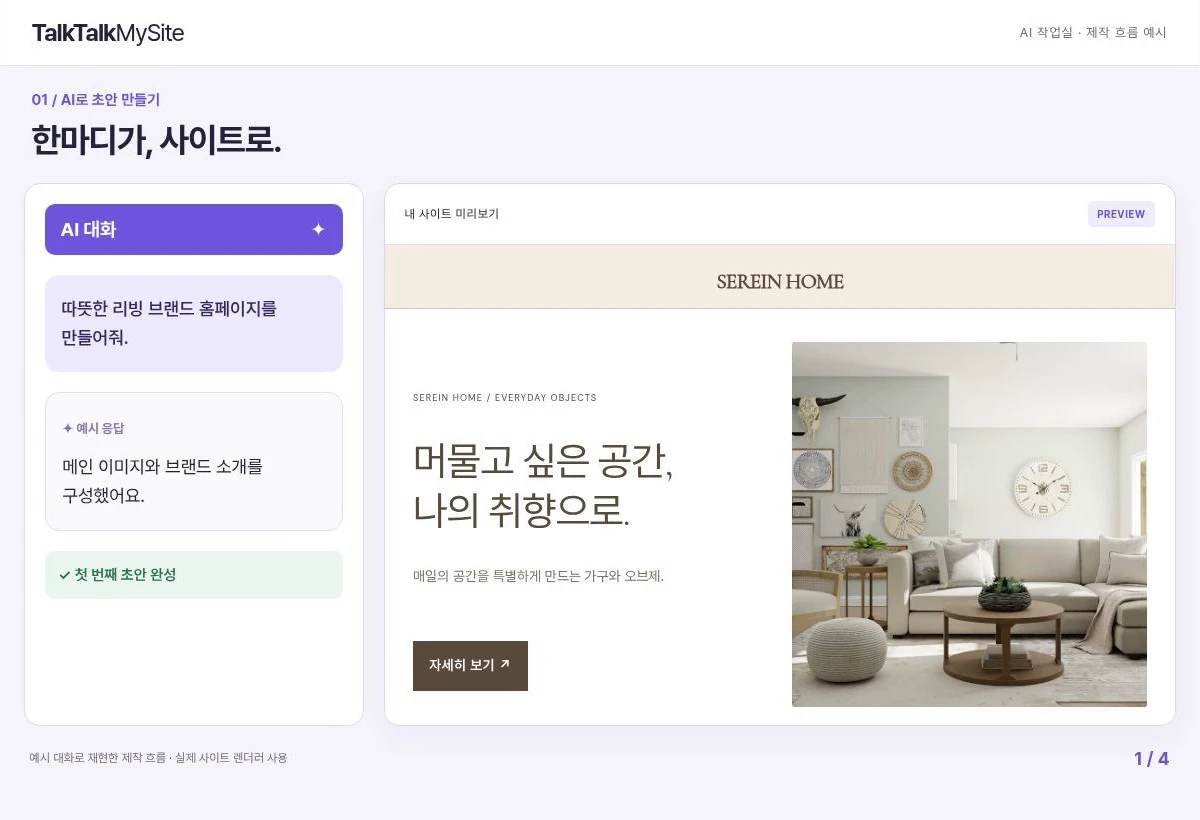
Place existing photos according to their purpose
Prepare your logo; photos of the studio exterior and interior, equipment, classes, and instructors; class descriptions; opening hours; location; and contact and booking instructions. Instead of uploading everything you have, choose images with reasonable lighting and focus that accurately show the actual space and classes. Use one representative image on the first screen to convey the studio’s atmosphere, facility photos in the facilities section, and movement or class photos alongside class information. Add a short caption to make clear what each image shows.
Mixing photos with different proportions in one section can make the page look cluttered. Check the crop preview in the editing tool and adjust images so faces and equipment are not cut off. If you do not have enough photos, retaking the few essential shots is better than repeating similar images. When taking photos, check whether members have given permission, and do not present scenes that differ from your actual operations as representative images.
Example page structure that answers visitor questions
**Hypothetical example — “Ongyeol Pilates”** is a small studio whose main goal is to receive inquiries from beginners. Its first screen says, “Small-group classes for people just starting out,” and explains how to ask about classes. The classes page describes the differences, intended audience, and format of introductory, private, and group classes. The instructor page presents qualifications or experience accurately, after verifying the details. The practical information page gathers frequently requested details such as opening hours, location, and how to change a booking. If the studio does not accept online payments, it should not imply that payment functionality is available; instead, it should explain the inquiry or booking process clearly.
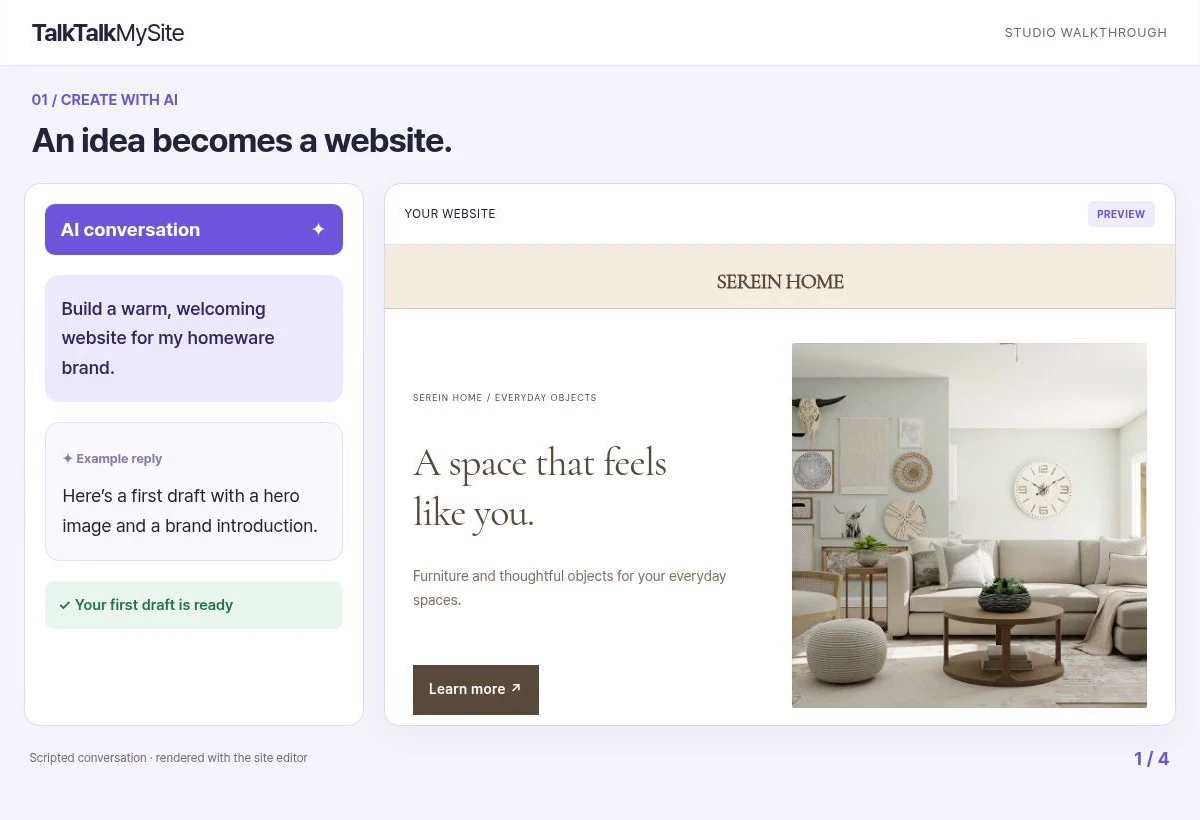
After building the pages, follow the visitor’s path and ask: “Can a beginner join?”, “Where is the studio, and how do I book?”, and “What should I check before class?” If answers are hard to find or instructions contradict each other, revise the wording and navigation.
Start with no-code tools and review the details yourself
TalkTalkMySite is a practical starting point for a Pilates studio’s first website, using no-code templates, AI chat, and visual editing. You can get started without coding or design experience, but first check the plans, AI credits, and setup requirements, then decide on the scope. Basic is for a website, Standard for a store, and Premium for multilingual use. Payments, social login, domains, and shipping may require separate setup.
Once you have a draft, you can edit the text and images yourself and verify that opening hours, location, and class information are accurate. Templates and owner editing may help reduce custom-build and recurring update costs, but they do not guarantee results or savings. Before publishing, also check image cropping, booking instructions, and contact details on a phone screen.
- Prepare: a logo, selected photos, class and instructor details, location and opening hours, and inquiry or booking steps.
- Check: whether the wording matches the actual service, image focus and cropping, the mobile layout, and any required payment or domain setup.
- Next step: Explore the TalkTalkMySite AI workspace and create a first page using a representative photo and one visitor question. Review all content and business details yourself before publishing.
Search visibility, sales, unlimited use, and error-free results are not guaranteed. Start by completing the essential pages to a publishable standard, then improve them gradually based on real questions.
#PilatesStudio #PilatesStudioWebsiteCreation #PilatesStudioNoCode #PilatesStudioTemplates #PilatesStudioDesign #PilatesStudioOnlinePresence #WebsiteCreation #NoCodeWebsite #AIWebsiteBuilder #WebsiteTemplates #WebsitePlanning #WebsiteManagement #NoCode #NoCodeBuilder #BuildWithoutCoding #DesignForBeginners #AIAssistedDesign #TemplateCustomization #ResponsiveDesign #MobileFriendly #ContentPlanning #BrandIntroduction #PageStructure #UserExperience #VisualEditing #WebsiteImages #LaunchPreparation #BeginnersGuide #MaintenanceChecklist #OnlineBusiness