Bakery Website Creation: Choosing Detail Pages and a Weekly Check Routine
A practical sequence for deciding which bakery items need their own detail pages, preparing the required materials, and checking your website or store each week.
First, choose which items need detail pages
You do not need a separate page for every bakery product. A detail page is useful when customers need different information for a particular item or repeatedly ask questions before ordering. For example, a cake may require explanations of size, flavor, pickup date, and how to place a reservation. For individual breads that change every day, a single page with featured items and a daily update may be enough.
Use these questions to decide: - Do prices, contents, reservation steps, or pickup arrangements differ by item? - Is there important information about allergens, storage, or order deadlines? - Would customers need to find or share the item by name? - Can you keep its photos and information up to date?
More pages also mean more content to maintain. Start with detail pages for the items that get frequent orders or questions, and list the rest on a menu page.
Materials to prepare before building
For each page, note the item name, price, contents, when it can be ordered, pickup method, and storage guidance. Prepare photos that show what the product actually looks like and give customers a sense of its size. Check that your opening hours, address, and contact details are current, too. If you plan to accept reservations or payments, check the required payment setup and order confirmation process. If you offer delivery, review the shipping setup as a separate task. Social login may also require configuration.
**Hypothetical example — a neighborhood bakery called “Milhyang”**: The bakery often receives cake orders and repeated questions about size and pickup dates, so it creates a cake detail page. It lists its daily-changing salt bread on the menu page with the price and whether it is available that day. This is a hypothetical example; make the decision according to how your own shop operates.
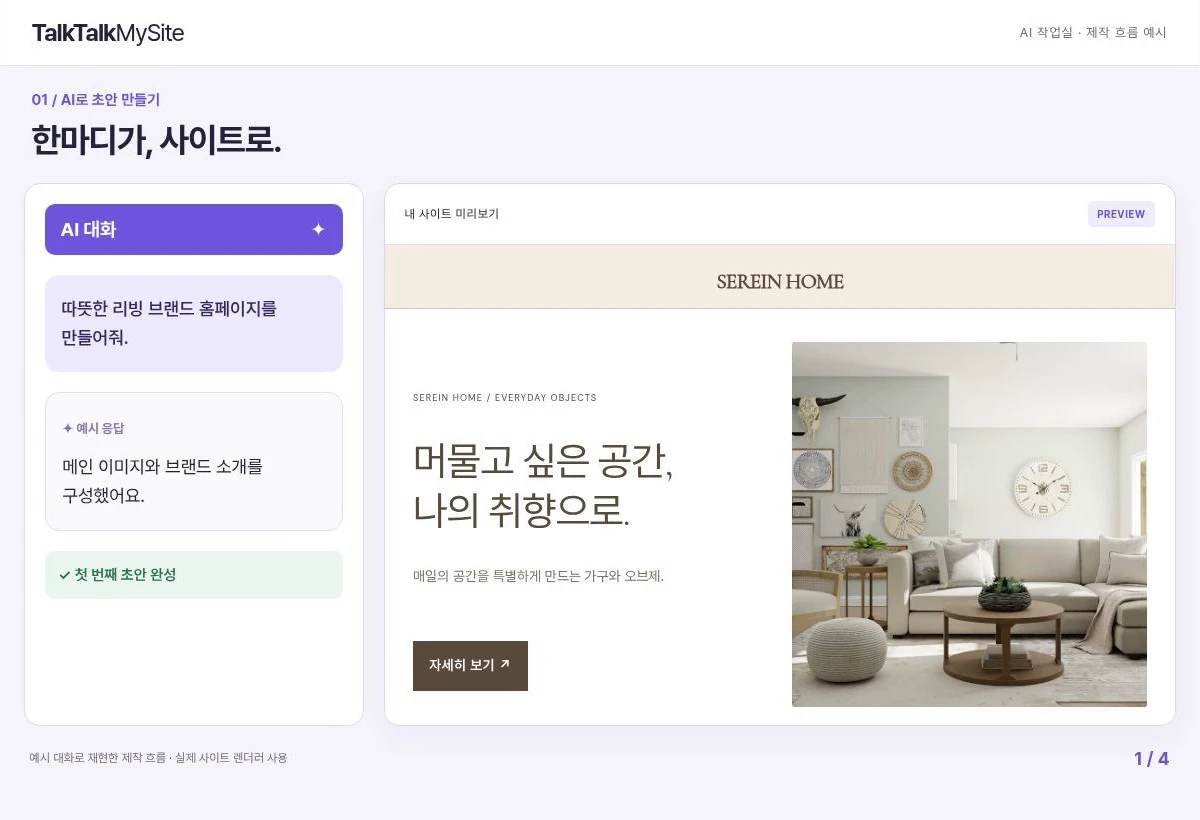
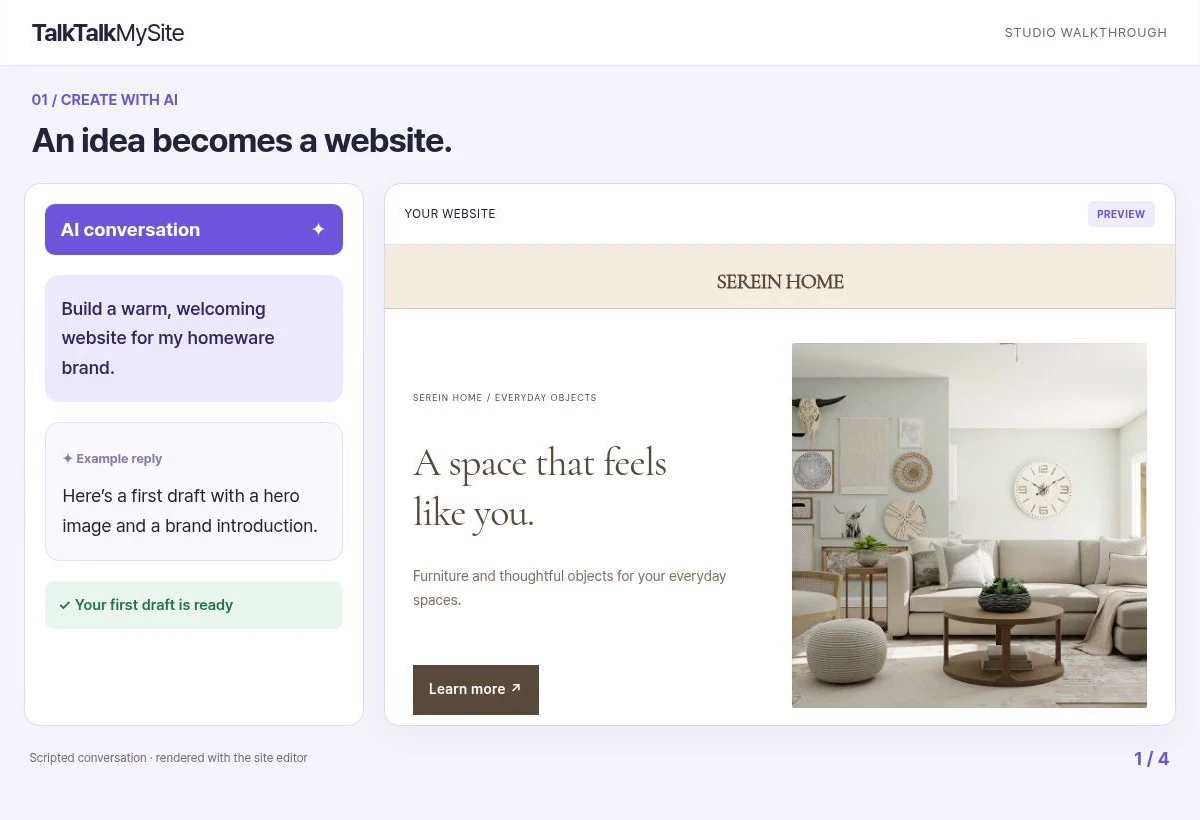
TalkTalkMySite offers a way to start with no-code templates, AI chat, and visual editing. You can get started without coding or design experience, but you still need to choose a suitable template and review the store information and page structure yourself.
A weekly check routine for the owner
- **1. Business information:** Check that opening hours, closing days, address, and contact details are correct.
- **2. Menu and availability:** Update discontinued or sold-out items, prices, contents, and order deadlines.
- **3. Ordering flow:** Check that reservation, payment, and pickup instructions match your real operations. If you need payment, social login, a domain, or shipping, check that each required setup works.
- **4. Page display:** View the site on a phone. Check that text, photos, buttons, and navigation are easy to use. Fix outdated photos or broken-looking layouts.
- **5. Customer perspective:** See whether a first-time visitor can find the right item and how to order. Use recurring questions to improve the information you provide next time.
With TalkTalkMySite, owners can edit text and images themselves using visual editing, making routine menu changes easier to manage. However, editing tools do not automatically catch every typo or outdated detail, so review each update before publishing.
Plan the scope and take the next step
The plans are structured around a website with Basic, a store with Standard, and multilingual operation with Premium. Check which plan fits the functions you need. Before starting, review the plan details, AI credits, and whether payments, shipping, or other setup will be required. Templates and owner-led editing can help reduce the burden of custom development and recurring updates, but they do not guarantee lower costs, search rankings, or sales. Do not assume usage is unlimited or that mistakes will never happen.
For your next step, pick one featured item and gather the information and photos it needs. Try the TalkTalkMySite AI workspace to build a first page, then review the wording and ordering instructions yourself so they match your bakery’s actual operations.
#Bakery #BakeryWebsiteCreation #BakeryNoCode #BakeryTemplates #BakeryDesign #BakeryOnlinePresence #WebsiteCreation #NoCodeWebsite #AIWebsiteBuilder #WebsiteTemplates #WebsitePlanning #WebsiteManagement #NoCode #NoCodeBuilder #BuildWithoutCoding #DesignForBeginners #AIAssistedDesign #TemplateCustomization #ResponsiveDesign #MobileFriendly #ContentPlanning #BrandIntroduction #PageStructure #UserExperience #VisualEditing #WebsiteImages #LaunchPreparation #BeginnersGuide #MaintenanceChecklist #OnlineBusiness