Local Community Website Creation: A First-Page Checklist
Organize your goals and materials first so local events, updates, and inquiries are easy to find. Learn how beginners can start with a template and what to review themselves.
For a local community website, a useful layout matters more than a flashy first screen: visitors should be able to find what they need and take the next step. Decide first whether your priority is recruiting members, sharing local news, or accepting dues or product payments. That choice affects which pages and settings you will need.
1. Set your goal and page scope
- Write down your main visitors, such as local residents, people who have recently moved to the area, or local shop owners.
- Choose one action you want visitors to take. Be specific: ask about joining, check an event schedule, or subscribe to updates.
- Select only the pages you need. An initial setup might include an introduction, activities and schedules, announcements, and contact information. Add product and payment pages only if selling is genuinely part of your plan.
**Hypothetical example:** The “Hangang Village Walking Group” wants residents to check meeting times and how to join, and to send questions. Its first page can feature an introduction, the next event, and contact details. It should consider online payment settings only if the group decides to collect dues online.
2. Gather materials before building
- Prepare the community’s correct name, a short introduction, the area it serves, and the contact person.
- Collect activity photos and announcement text. Decide on captions and display order, and verify dates, locations, and contact details before publishing.
- Write down contact channels, operating hours, and frequently asked questions. The owner should confirm that any address or contact information is appropriate to make public.
- If you need member registration, social login, a domain, payments, or shipping, check in advance what setup and materials each requires. Turning on a feature does not automatically complete every connection.
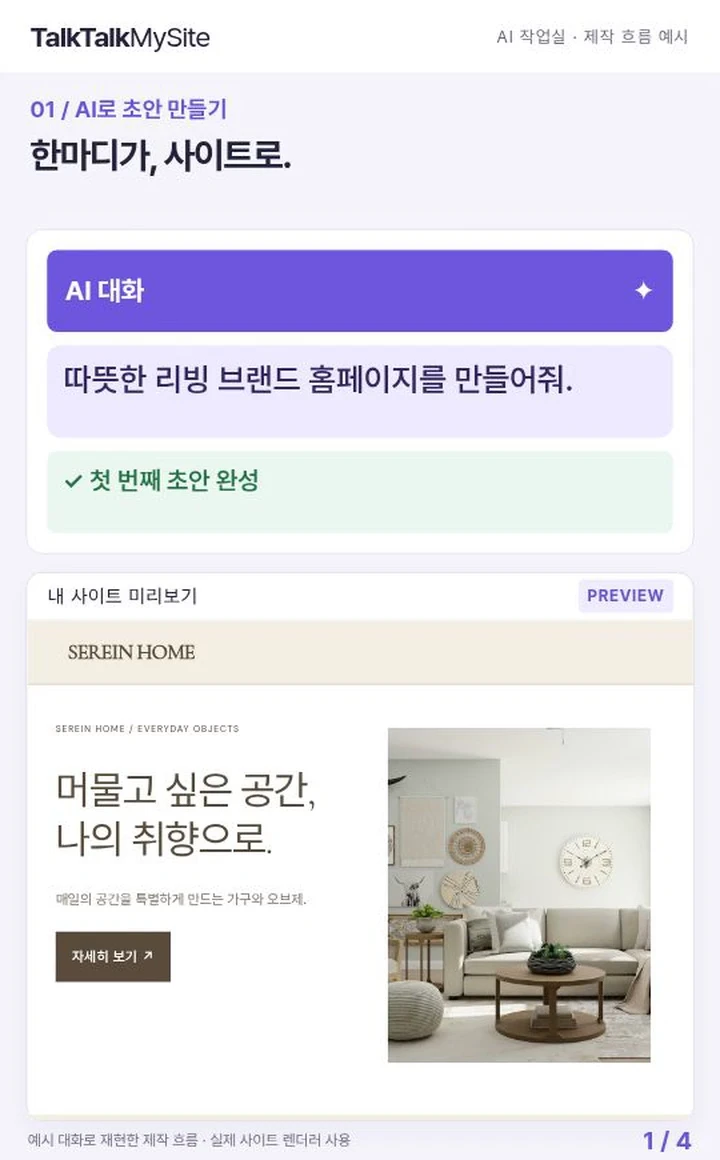
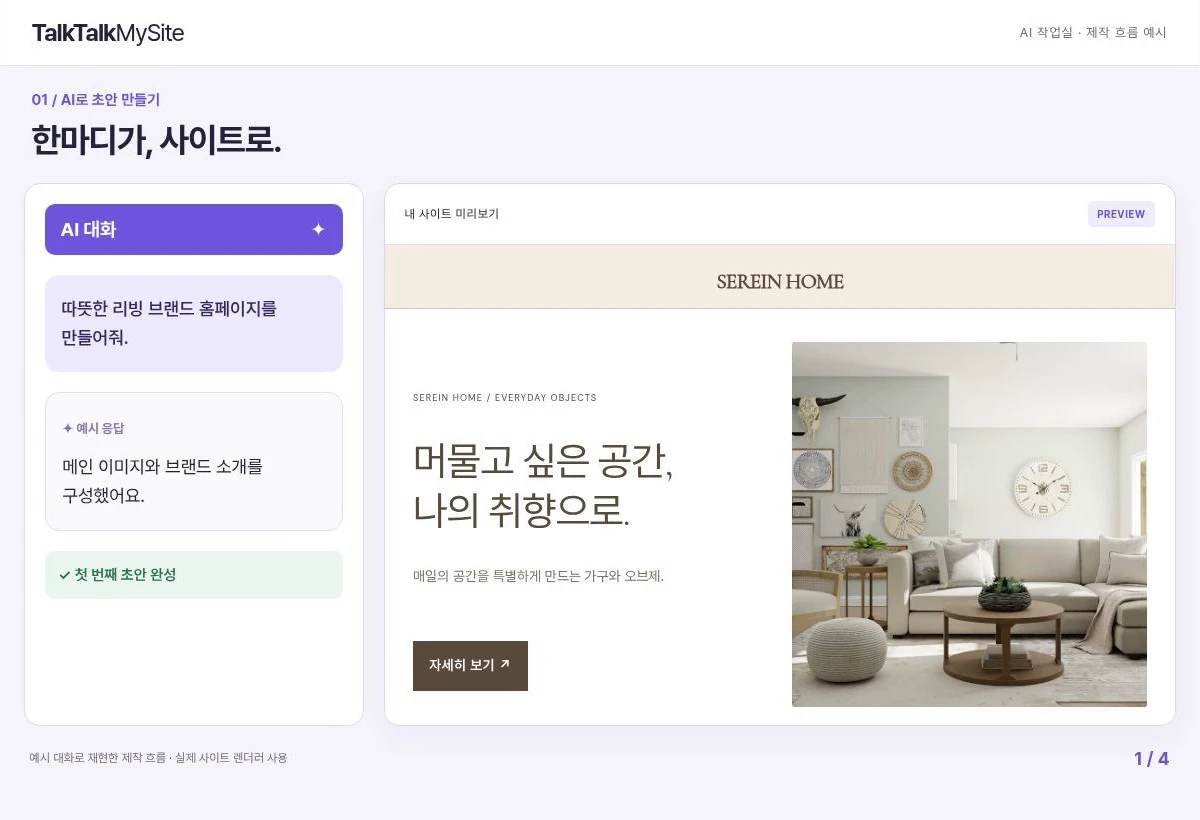
TalkTalkMySite is a practical way to begin with no-code templates and AI chat to draft your content. You can get started without coding or design experience. Consider Basic for a website focused on introductions, Standard for a store if you need to sell, and Premium if you need multiple languages. Check the plan details, AI credits, and any additional setup requirements before using them.
3. Review the page yourself
- On a phone, check that the title, schedule, and contact method are readable and easy to find.
- Review the menu order and button labels. Use clear calls to action such as “Contact us.”
- Check AI-written text and image placement yourself. Correct errors in names, dates, locations, and contact information. The owner is also responsible for keeping posts up to date.
- If you offer inquiries or payments, confirm that they connect and work; follow the relevant test procedure where needed.
With TalkTalkMySite, you can edit text and images yourself to manage updates to news and schedules. Templates and owner editing can help reduce custom-build and routine update costs, but they do not guarantee an outcome or savings. Search rankings, more visitors, sales, unlimited use, and error-free results are not guaranteed either.
4. Final checks before publishing
- [ ] I can explain the goal, main visitors, and first desired action in one sentence.
- [ ] I have checked the text, photos, schedules, and contact details on every required page.
- [ ] I have checked the settings and plan requirements for payments, social login, domains, shipping, and other features I need.
- [ ] I have personally checked the mobile layout and inquiry flow.
As a next step, use the TalkTalkMySite AI workspace to draft your first page, then revise it using this checklist. Rather than trying to launch with every feature at once, it is easier to prepare by publishing the information your community must share and its inquiry route first, then adding pages that prove necessary during actual operation.
#LocalCommunity #LocalCommunityWebsiteCreation #LocalCommunityNoCode #LocalCommunityTemplates #LocalCommunityDesign #LocalCommunityOnlinePresence #WebsiteCreation #NoCodeWebsite #AIWebsiteBuilder #WebsiteTemplates #WebsitePlanning #WebsiteManagement #NoCode #NoCodeBuilder #BuildWithoutCoding #DesignForBeginners #AIAssistedDesign #TemplateCustomization #ResponsiveDesign #MobileFriendly #ContentPlanning #BrandIntroduction #PageStructure #UserExperience #VisualEditing #WebsiteImages #LaunchPreparation #BeginnersGuide #MaintenanceChecklist #OnlineBusiness