Startup Website Creation: Pages That Answer Visitors’ Questions
A practical guide for startups creating a first website. Organize pages around customer questions, gather the materials you need, and decide what your team will maintain.
Decide first: Whose questions will the site answer?
When planning startup website creation, begin with what visitors want to know rather than the number of pages. Customers commonly ask: “What do you offer?”, “How does it help with our problem?”, “Can we trust it?”, and “What should we do next?” Once you identify the information that answers these questions, it becomes easier to narrow down the pages and navigation you need.
An initial structure might include Home, Service, How It Works or Pricing, About, FAQ, and Contact. If you will sell products, also plan the product list and ordering and payment process required for store creation. Instead of trying to include everything from day one, publish the pages that answer customers’ main questions, then improve them based on inquiries and feedback. This is usually easier to manage.
Materials to prepare and tasks to handle
Before building, gather verified information such as a service description, customer benefits, steps for using the service, contact methods, a logo and images, and company details. If you make claims or include figures, check their evidence and whether they are current before publishing. Payments, social login, domain connections, and shipping may require separate setup, so identify what you need and who will handle it in advance.
Checklist: - List visitors’ main questions and the page that will answer each one. - Choose a title, key explanation, and next action for every page. - Confirm image usage rights, contact details, addresses, and other business information. - Check navigation and contact paths on a mobile screen. - Assign someone to review and update content after launch.
You can get started without coding or design experience, but that does not mean every result will be correct automatically. The owner must review the wording, layout, and business details.
Hypothetical example: A scheduling service for small teams
As a hypothetical example, consider a startup preparing a scheduling tool for small teams. The Home page briefly explains the customer problem—team schedules are scattered and difficult to manage—and describes the service’s role. The Service page outlines the main user flow. How It Works lists the steps to get started, while the FAQ explains how to invite team members and contact support. The Contact page clearly states how to get in touch and what information to provide. This example is for illustration only and does not describe actual product features.
Start with no-code, then review and grow
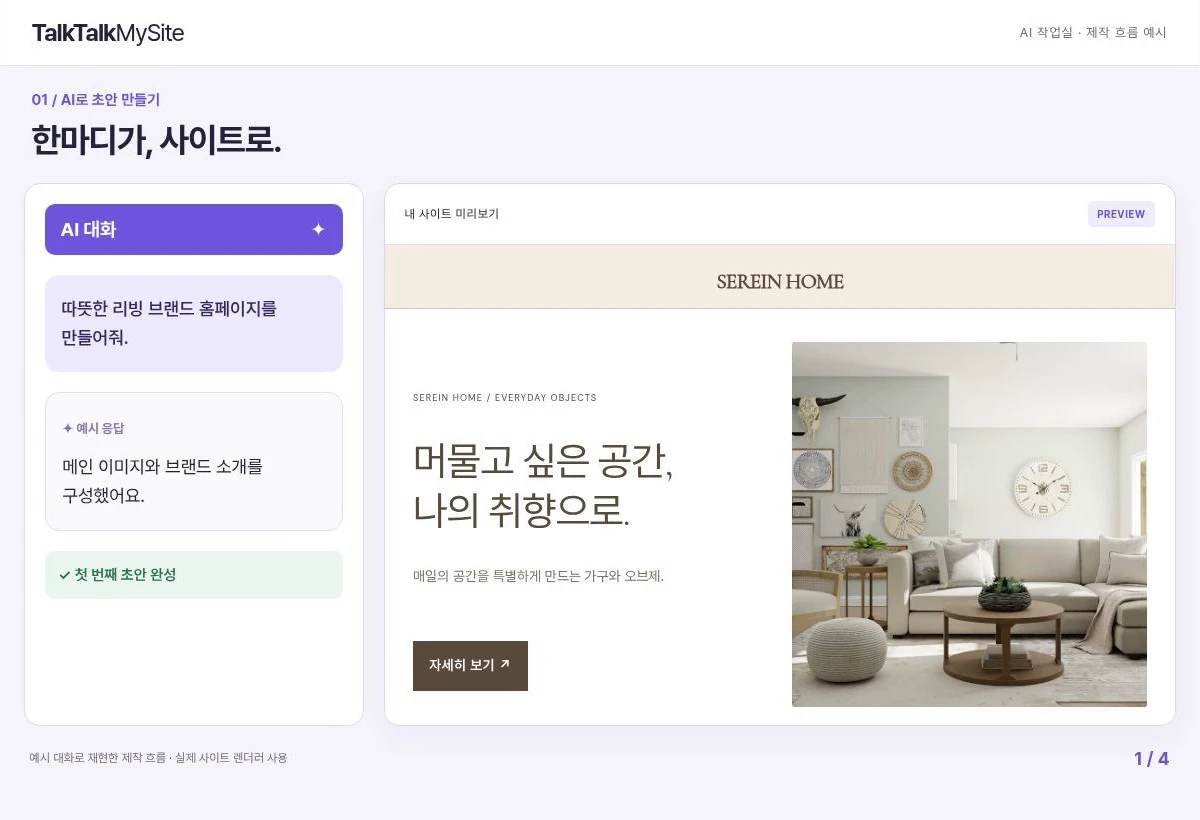
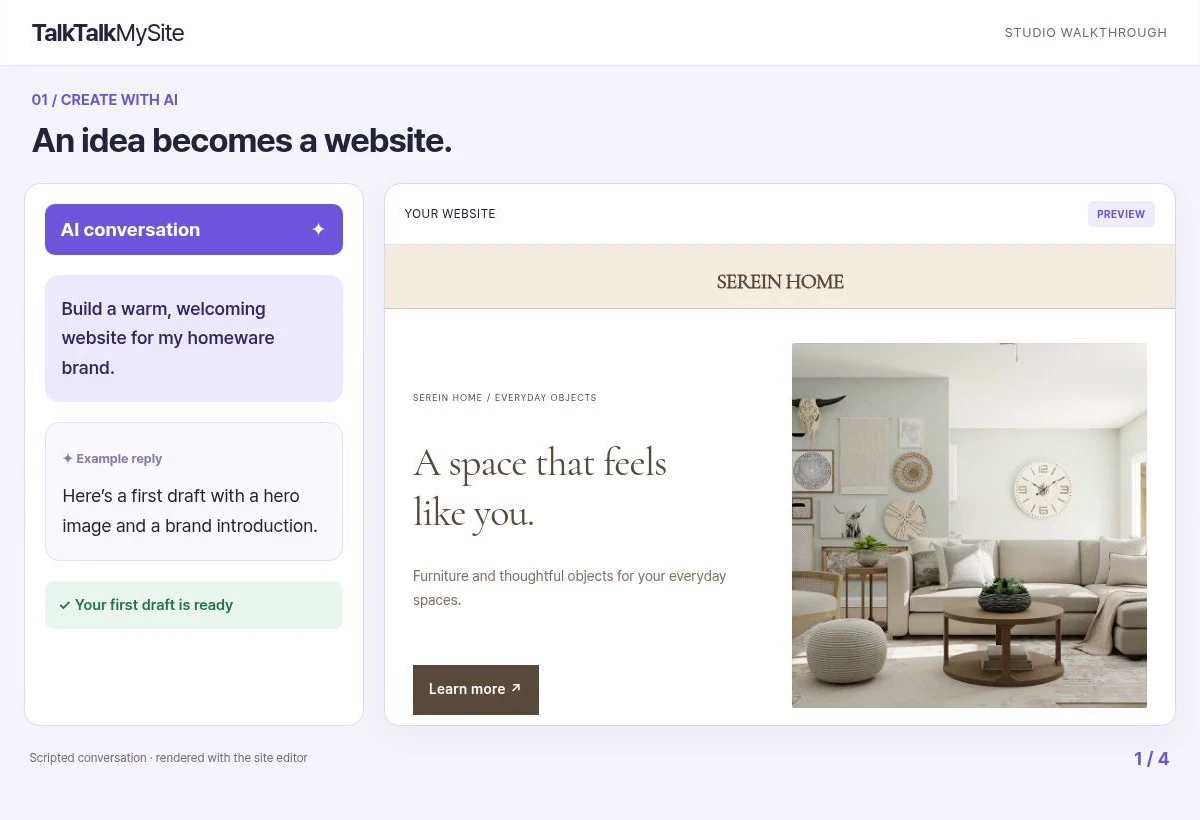
TalkTalkMySite is an option for building a first page with no-code templates, AI chat, and visual editing. Basic is suited to a website, Standard to a store, and Premium to multilingual use. Before starting, check what each plan includes, AI credits, and any setup requirements. Payments, social login, domains, and shipping may need additional configuration.
At the beginning, use a template and AI chat to put together a draft page with an affordable starting approach. Once the site is in use, you can manage it by editing text and images yourself. This may help reduce costs associated with custom development and routine updates, but it does not guarantee savings, search rankings, or sales. Do not assume that usage is unlimited or that errors will never occur. Try the AI workspace and build your first page. Before publishing, review the content, layout, and business details yourself, and confirm that any required features have been set up.
#Startup #StartupWebsiteCreation #StartupNoCode #StartupTemplates #StartupDesign #StartupOnlinePresence #WebsiteCreation #NoCodeWebsite #AIWebsiteBuilder #WebsiteTemplates #WebsitePlanning #WebsiteManagement #NoCode #NoCodeBuilder #BuildWithoutCoding #DesignForBeginners #AIAssistedDesign #TemplateCustomization #ResponsiveDesign #MobileFriendly #ContentPlanning #BrandIntroduction #PageStructure #UserExperience #VisualEditing #WebsiteImages #LaunchPreparation #BeginnersGuide #MaintenanceChecklist #OnlineBusiness