Household Goods Website Creation: Define Visitors and Goals First
Identify who is looking for your products and what they should do before choosing between an informational website and an online store. This guide covers essential materials, setup tasks, and beginner mistakes to avoid.
Before beginning household goods website creation, decide who you want to reach and what you want the site to help them learn or do. Starting with visual polish alone can reveal missing information and navigation needs later, leading to rework. A website generally focuses on presenting your brand and products; an online store also supports product selection and ordering.
Define visitors and one primary goal
Describe likely visitors in concrete terms. Their needs may differ: a household considering a first purchase, an existing customer checking how to use a product, or a business looking for supply information. Then choose the single most important action visitors should take: understand product features, find usage guidance, or place an order.
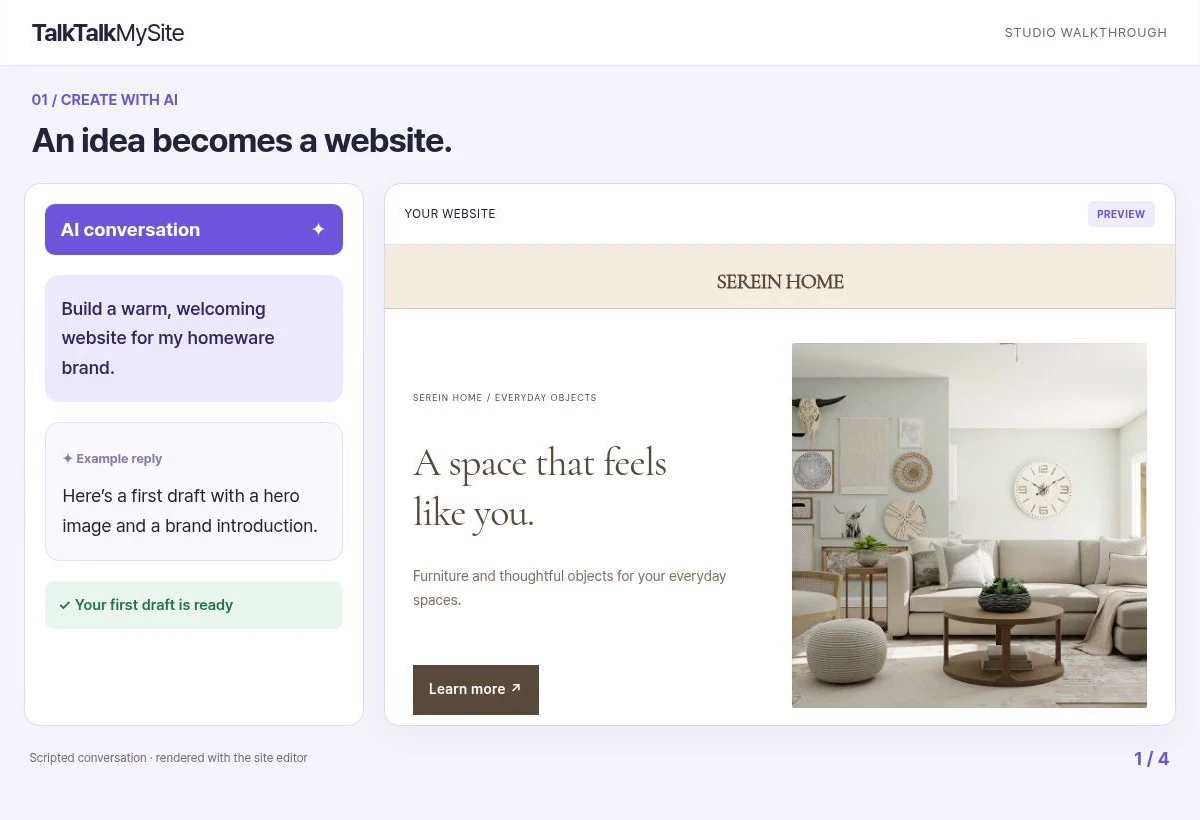
- Visitors: Who will arrive, and what need or problem brings them here?
- Goal: Is the first priority to read, make an inquiry, or buy?
- Scope: Do you need product information only, or also payments and shipping operations?
**Hypothetical example — Tidier Days, an organizing-goods brand:** Its main visitors are people living alone who are considering storage products for the first time. The main goal is to help them compare products by room and then order online. Product comparison and purchasing therefore take priority, while the company introduction stays brief. This example is fictional and for illustration only.
Choose a site type and gather materials
If the priority is explaining your brand, product features, and usage, and orders are handled elsewhere, consider an informational website first. If visitors need to select products and pay on your site, an online store may be a better fit. Separately assess whether multilingual information is genuinely needed by your customers. Adding more menus does not automatically make a site clearer.
Before building, gather your logo, product names and descriptions, accurate prices, options and stock details, product photos, and shipping and inquiry information. Payments, social login, a domain, and shipping functions require setup; selecting them is not the same as configuring them. Decide how the site will be operated and who is responsible, then check the contact details and actual order flow before launch.
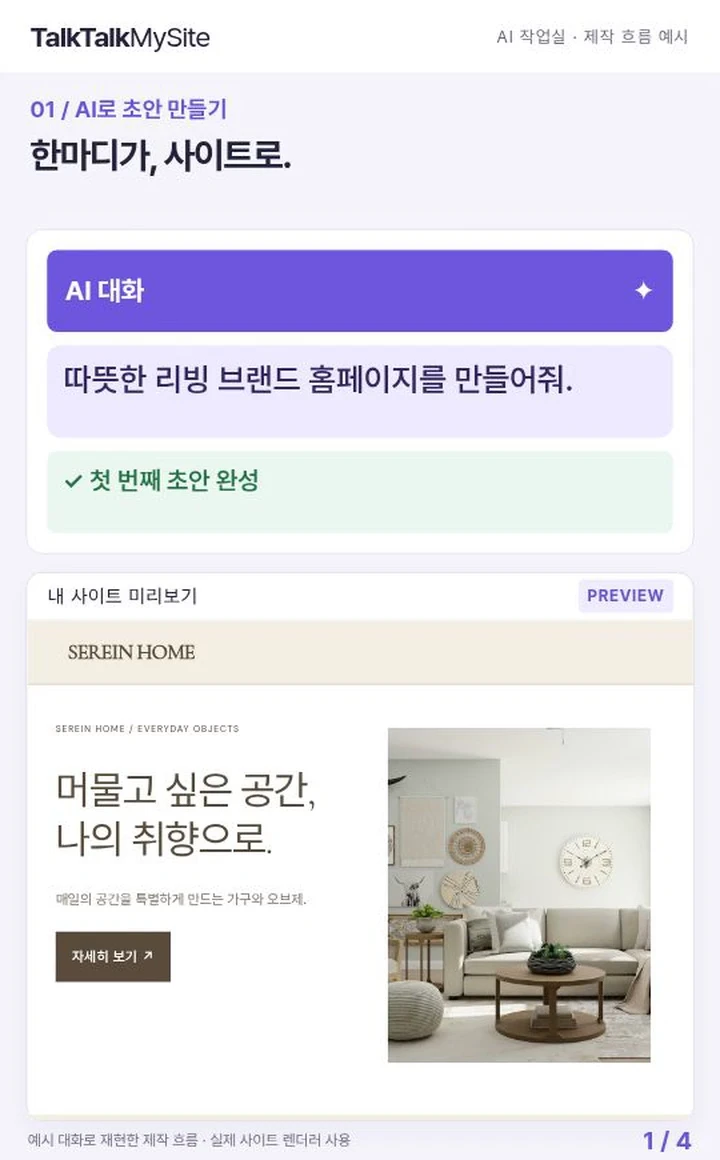
Start with no-code and review the result yourself
TalkTalkMySite provides no-code templates, AI chat, and visual editing, so you can get started without coding or design experience. Its Basic plan is for a website, Standard for a store, and Premium for multilingual use. Review which plan fits your purpose, along with AI credits, plan conditions, and any setup requirements, before you begin.
After creating a draft, the owner still needs to check the wording, images, layout, and business details. Templates and owner editing may reduce the cost of custom building and routine updates, depending on the scope of work; they do not guarantee a particular result or savings amount. They do not automatically eliminate mistakes or guarantee search rankings or sales, and usage should not be assumed to be unlimited.
Avoid common mistakes and take the first steps
Rather than writing lengthy descriptions for every product, answer the questions shoppers actually have before buying. Prioritize details that help them choose, such as intended use, dimensions, and care instructions. Do not publish unverified performance claims or leave options unclear. Avoid creating too many menus or asking every visitor to take the same action.
- Write one sentence describing your visitors and another stating their primary action.
- Choose between a website and an online store, then collect the essential materials.
- Try the TalkTalkMySite AI workspace and draft your first page.
- Edit the text and images yourself, check required settings and pages—including payments, domain, and shipping where applicable—and review them before publishing.
You do not need to perfect the whole site at once. Begin with a page that serves your main goal and an operating process you can verify. Check how inquiries or orders work, then improve the content in response to real visitor questions.
#HouseholdGoods #HouseholdGoodsWebsiteCreation #HouseholdGoodsNoCode #HouseholdGoodsTemplates #HouseholdGoodsDesign #HouseholdGoodsOnlinePresence #WebsiteCreation #NoCodeWebsite #AIWebsiteBuilder #WebsiteTemplates #WebsitePlanning #WebsiteManagement #NoCode #NoCodeBuilder #BuildWithoutCoding #DesignForBeginners #AIAssistedDesign #TemplateCustomization #ResponsiveDesign #MobileFriendly #ContentPlanning #BrandIntroduction #PageStructure #UserExperience #VisualEditing #WebsiteImages #LaunchPreparation #BeginnersGuide #MaintenanceChecklist #OnlineBusiness