Local Community Website Creation: A First Redesign Checklist
Organize your existing website address and content first, then review the menus, contact options, and operating details local residents need. Follow a beginner-friendly no-code redesign sequence with realistic checks.
1. Decide Before Redesigning
Local community website creation starts with helping residents find useful information, not simply choosing an attractive screen. Decide who the site is for first: for example, residents, newcomers to the area, or organizers of local groups. Then choose one or two specific things visitors should be able to do, such as check event dates, ask about a group, or read an announcement.
If you already have a website, record its current address and the address you plan to use separately. Decide whether to keep the domain or switch to a new one, and remember that connecting a domain requires its own setup. If the address will change, find out where the old one is being used. Make a list that includes business cards, notices, and social accounts so you do not overlook a reference.
2. Checklist for Content and Menus
Putting these materials in one folder before you start will make the work easier: - Organization name, introduction, contact details, hours, and service area - Logo and usable photos, with captions and confirmation that you may use them - Announcements, events, and group information to keep, update, or remove - Email address or phone number for inquiries, plus the person responsible and response process - Required menus and their order of importance
Rather than creating many menus at the outset, organize them around visitor needs, such as “About,” “News & Events,” “Groups,” and “Contact.” You can postpone menus that have no assigned maintainer or content that can be kept current. If a business also operates the community site, check its business name, offerings, and whether payments or shipping are needed. Payments, social login, and shipping each require setup checks when applicable.
3. Build the First Page Without Code
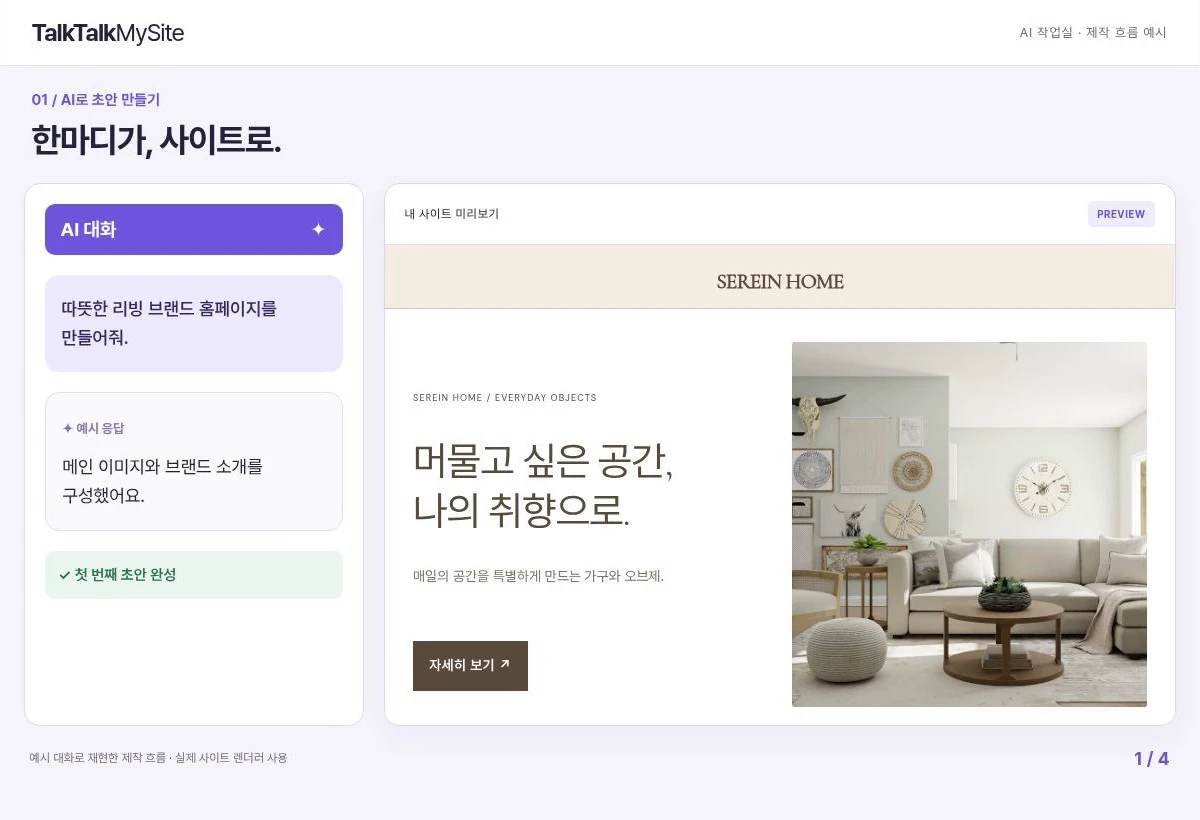
You can get started without coding or design experience, but the owner still needs to review the content and layout. TalkTalkMySite provides templates, AI chat, and visual editing, so you can try arranging the required menus and pages before considering custom development. Before using it, check the plan, AI credits, and setup requirements. Basic is for a website, Standard for a store, and Premium for multilingual use; choose according to what you actually need.
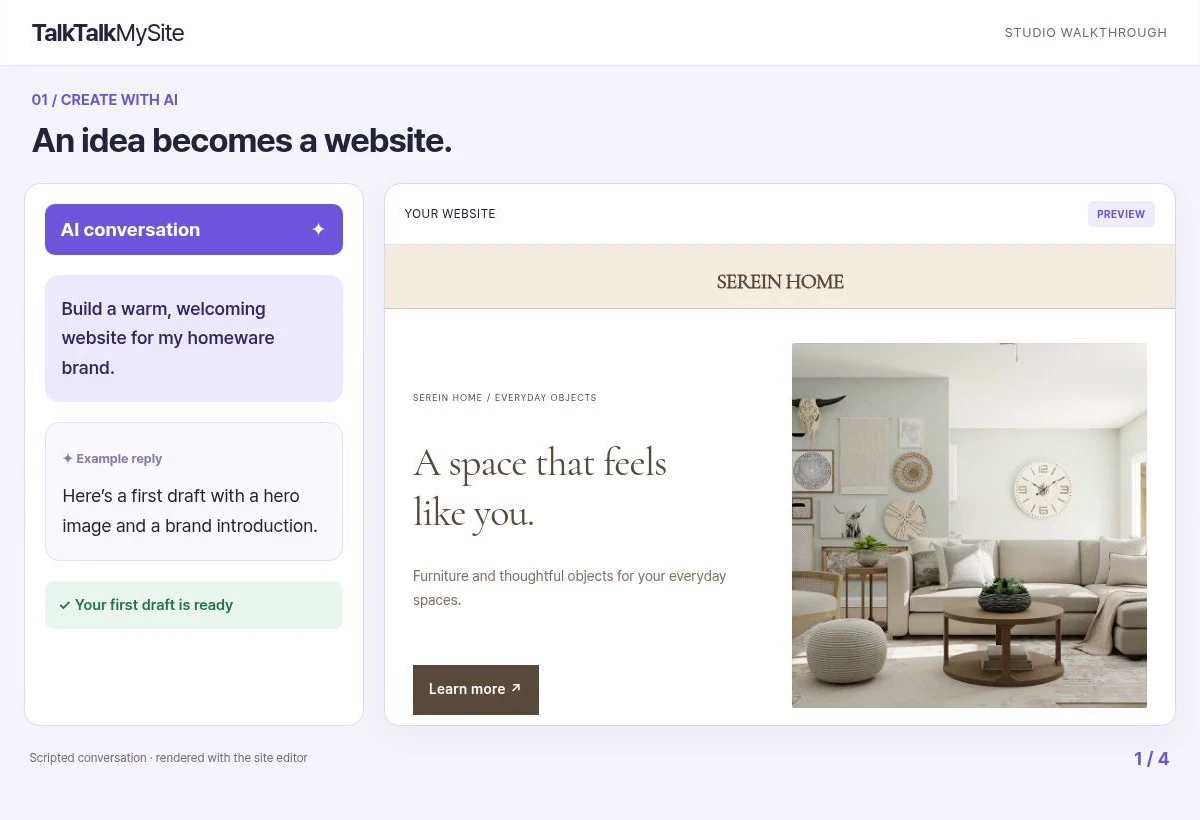
On the first page, prioritize who the organization serves, the most important current announcement or event, and how visitors can get in touch. In TalkTalkMySite, choose a template, begin a draft with AI chat, and then edit the page visually. Owners can subsequently change text and images themselves to manage routine updates. Review AI-generated wording and layouts for accuracy as well.
4. Checks Before Publishing and What to Do Next
- Check on a phone that the menu and text are readable and the buttons work.
- Have the responsible person verify addresses, contact details, dates, locations, and links.
- Remove outdated announcements and duplicate information; make sure images explain the content clearly.
- If you use an inquiry form, test that messages arrive and that someone is assigned to respond.
- Confirm setup for any required items, such as a domain, payments, social login, or shipping.
Templates and owner editing may help reduce the cost of custom development and routine changes, but they do not guarantee savings, search rankings, more visitors, or sales. Do not assume usage is unlimited or error-free; review the plan, AI credits, and setup requirements. The next step is to create one first page from your prepared materials and review it together from both the operator’s and residents’ perspectives. Try the AI workspace to build a first page.
[Hypothetical example] Suppose “Daon-dong Residents’ Group” mainly needs to share event dates and receive questions about its groups. It keeps only current announcements and starts with “About the Group,” “This Month’s Events,” and “Contact.” Before publishing, the person responsible verifies dates and contact details and tests the inquiry process on a phone. This is an illustrative hypothetical example.
#LocalCommunity #LocalCommunityWebsiteCreation #LocalCommunityNoCode #LocalCommunityTemplates #LocalCommunityDesign #LocalCommunityOnlinePresence #WebsiteCreation #NoCodeWebsite #AIWebsiteBuilder #WebsiteTemplates #WebsitePlanning #WebsiteManagement #NoCode #NoCodeBuilder #BuildWithoutCoding #DesignForBeginners #AIAssistedDesign #TemplateCustomization #ResponsiveDesign #MobileFriendly #ContentPlanning #BrandIntroduction #PageStructure #UserExperience #VisualEditing #WebsiteImages #LaunchPreparation #BeginnersGuide #MaintenanceChecklist #OnlineBusiness