Event Planner Online Store Creation: Weekly Product, Option, and Stock Checks
Event products often have changing sales dates and inventory. Learn how to organize product names, options, and quantities consistently, what to prepare, and what to review each week.
Prepare before listing event products
An event planner’s online store may include not only tickets but also merchandise, activity passes, and bundles, each with different sales terms. Start with a table listing each product’s sales period, price, fulfillment method, and available quantity. Prepare product photos, descriptions, and a contact method for questions. For products with options, write down both the attribute customers choose, such as color or size, and the available choices.
Put the event name and product type first in each product name, then add only the details needed to distinguish it. For example, “Springlight Market Admission Ticket” and “Springlight Market Commemorative Tote” make clear what customers are buying. Use consistent option names, such as “Color,” and list choices clearly, such as “Ivory, Navy.” Enter stock based on the quantity actually available for sale. If terms differ—for example, a preorder versus on-site pickup—state them clearly in the description.
Organize a no-code store
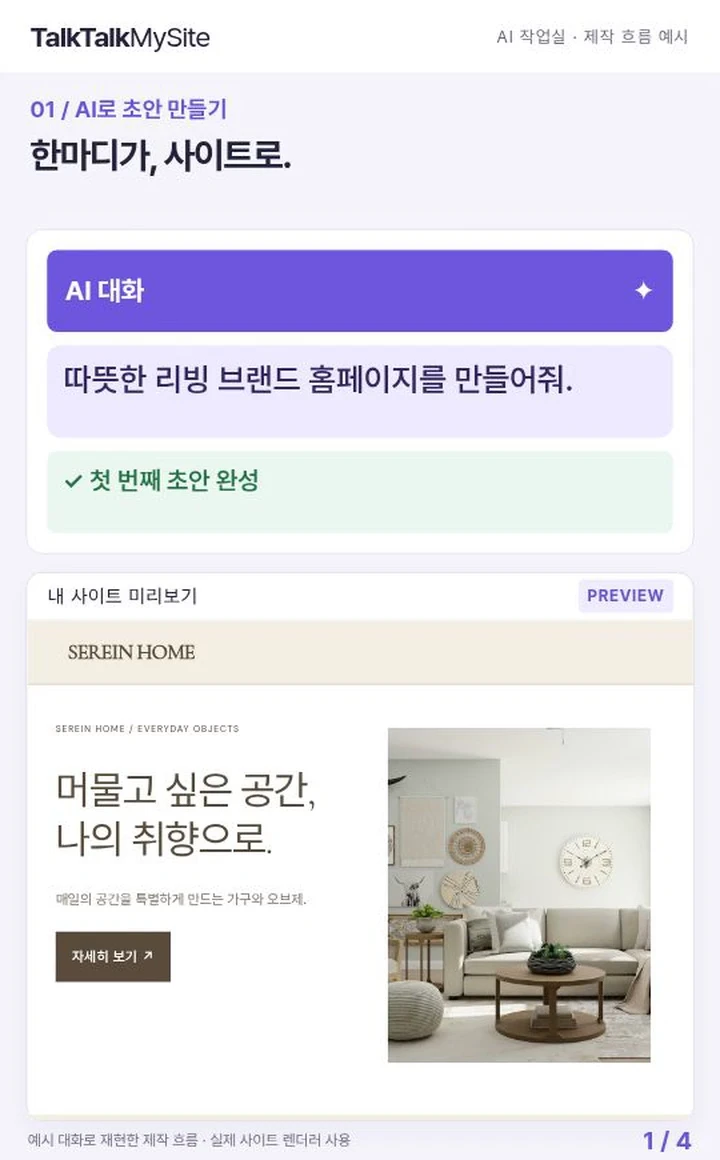
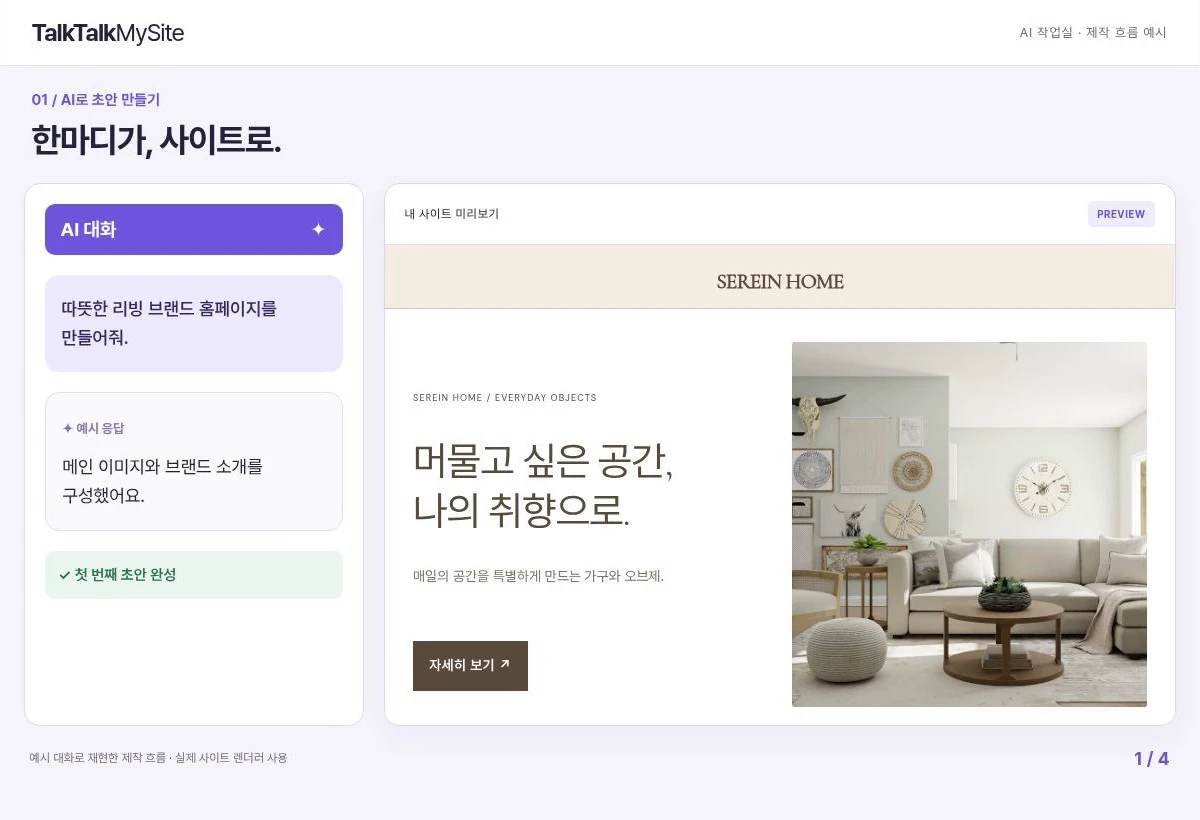
TalkTalkMySite offers templates, AI chat, and visual editing, so you can start creating a store without coding or design experience. Begin by using a template to lay out the pages needed for product listings and purchase information. You can also use AI chat to refine draft copy. This is a practical way to explore what you need before considering custom development.
After building the pages, the owner still needs to review and update product names, descriptions, images, and layout. TalkTalkMySite’s visual editing makes it easy to work on text and images yourself, but editing does not automatically prevent every mistake. Basic is for a website, Standard for a store, and Premium for multilingual use; review the plans against your needs. Payments, social login, domains, and shipping require setup. Check the plan, AI credits, and initial setup requirements before getting started.
The operator’s weekly review order
1. Compare active listings with the event schedule; check whether ended or upcoming products have the right visibility status.
2. Review product names, prices, option names, and choices; correct duplicates or omissions.
3. Compare actual remaining quantities with listed stock, then check sold-out and back-in-stock status.
4. Confirm that images, pickup or shipping information, and contact details match current operations.
5. Review the purchase flow yourself and note any unclear or missing information, from selecting an option through the order instructions.
**Hypothetical example:** For “Springlight Market Commemorative Tote,” list “Ivory” and “Navy” as color options and track the available quantity for each separately. If the weekly check finds more Navy stock listed than is actually available, correct the quantity and review the sold-out indicator and event information at the same time. This is an example; apply the process to your actual sales terms.
Pre-launch checklist and next step
- [ ] Have you prepared each product’s name, photo, price, sales period, and stock quantity?
- [ ] Are option names and choices consistent across products?
- [ ] Have you checked the required setup for payments, domains, shipping, and your plan?
- [ ] Have you assigned a person and weekday for the weekly review?
Templates and owner editing can reduce the work involved in custom builds and routine updates, but they do not guarantee lower costs, search rankings, or sales results. They do not mean unlimited use or zero mistakes, either. As a next step, try the TalkTalkMySite AI workspace to draft a product-list page, then add one real product and test your purchase information and stock-check process.
#EventPlanner #EventPlannerOnlineStoreCreation #EventPlannerNoCode #EventPlannerTemplates #EventPlannerDesign #EventPlannerOnlinePresence #OnlineStoreCreation #NoCodeStore #AIStoreBuilder #StoreTemplates #EcommercePlanning #StoreManagement #NoCode #NoCodeBuilder #BuildWithoutCoding #DesignForBeginners #AIAssistedDesign #TemplateCustomization #ResponsiveDesign #MobileFriendly #ContentPlanning #BrandIntroduction #PageStructure #UserExperience #VisualEditing #WebsiteImages #LaunchPreparation #BeginnersGuide #MaintenanceChecklist #OnlineBusiness