Household Goods Online Store Creation: Prepare Products and Photos First
A beginner’s guide to organizing product details and photos before no-code store creation, then choosing a setup that fits how your household goods brand sells.
Decide first: a website or an online store?
If your priority is to introduce your brand, show product information, and receive inquiries, a website may be enough to start. If customers need to add products to a cart and pay online, choose an online store. TalkTalkMySite offers no-code templates, AI chat, and visual editing, so you can get started without coding or design experience. Basic is for a website, Standard for a store, and Premium for a multilingual site. Compare plans based on the selling functions and languages you need, and check what each plan includes, its AI credits, and any setup requirements.
Gather product details and photos in one place
For each product, make a table with its name, a one-sentence description, materials, dimensions, colors and options, care instructions, price, and stock—everything customers need to make a choice. Leave out unverified claims and vague wording, and check that option differences and stock status are accurate. Prepare a main image from the front and supporting images that show size, texture, and how the item is used for storage. Clear file names that identify the product and scene make images easier to manage. Check that photos do not mislead customers about real-life color or size.
**Checklist:** Prepare a list of featured products and options, accurate prices and stock, images you have permission to use, a main image for each product, draft shipping and returns information, and contact details. Payments, social login, domains, and shipping may need separate setup. Test and check each relevant setting before opening the store.
Choose a layout for your situation, with a hypothetical example
If you have only a few products and are just introducing a flagship item, prioritize a simple home page and product pages centered on those products. If options or stock management matter, plan product categories and selectable options first. If customers need information in multiple languages, consider a multilingual plan. **Hypothetical example:** Suppose a storage goods brand called “Damdame” sells three types of baskets. First, it records each basket’s dimensions, color options, material, care instructions, and stock in a table. It prepares front-view photos and images showing the baskets in actual storage use. It starts with a store that presents its main products and shipping information, then checks its payment and shipping setup.
Avoid mistakes and take the next step
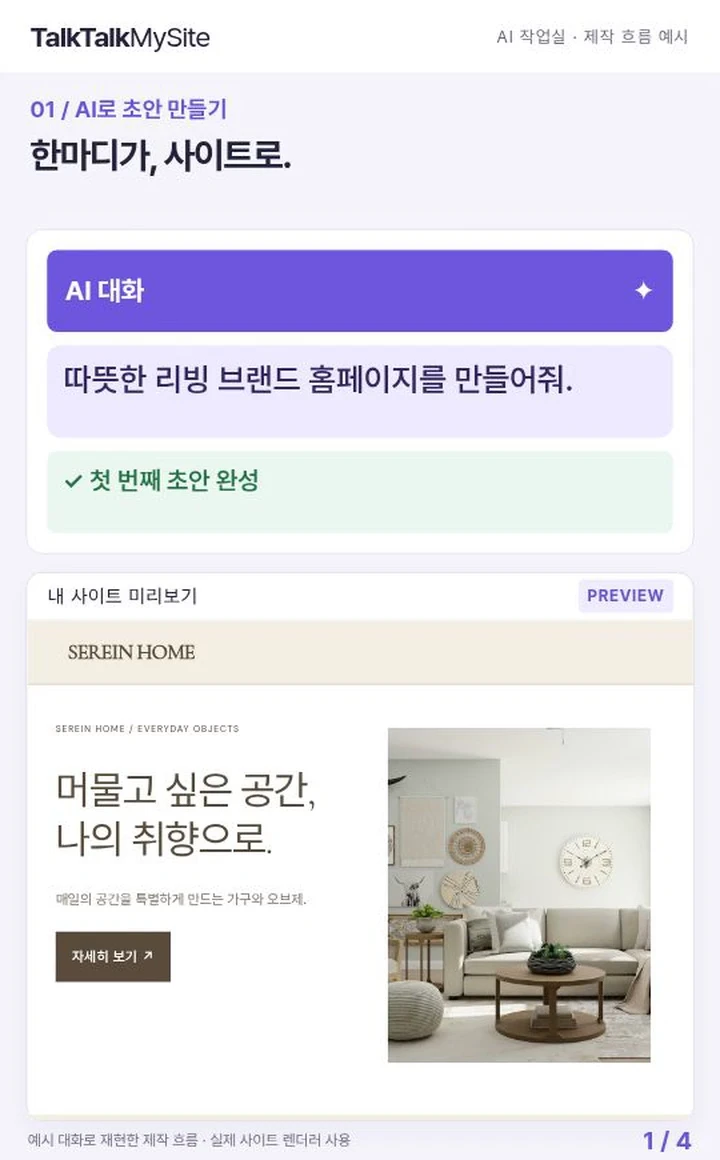
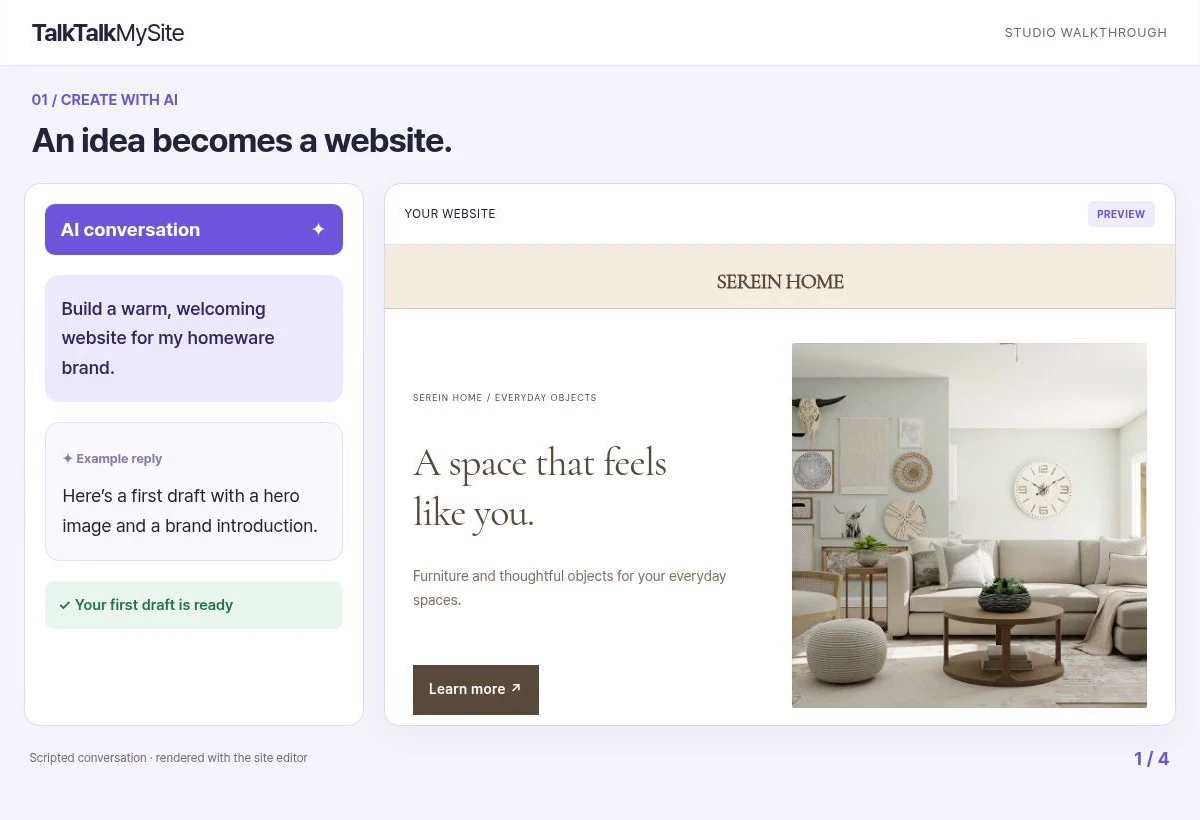
A common mistake is uploading photos first and sorting out options, prices, or shipping details later, or publishing template text without reviewing it. Check text and images on mobile, as well as the purchase steps and contact details. Templates and owner editing can help reduce the costs associated with custom builds and routine updates, but they do not guarantee results or savings. Owners still need to check content, layout, and business details; the service does not automatically prevent every mistake. Start affordably with TalkTalkMySite templates and AI chat, then manage your text and images yourself with visual editing. Try the AI workspace to build your first page, review your product information and settings, and then publish.
#HouseholdGoods #HouseholdGoodsOnlineStoreCreation #HouseholdGoodsNoCode #HouseholdGoodsTemplates #HouseholdGoodsDesign #HouseholdGoodsOnlinePresence #OnlineStoreCreation #NoCodeStore #AIStoreBuilder #StoreTemplates #EcommercePlanning #StoreManagement #NoCode #NoCodeBuilder #BuildWithoutCoding #DesignForBeginners #AIAssistedDesign #TemplateCustomization #ResponsiveDesign #MobileFriendly #ContentPlanning #BrandIntroduction #PageStructure #UserExperience #VisualEditing #WebsiteImages #LaunchPreparation #BeginnersGuide #MaintenanceChecklist #OnlineBusiness