Preparing Products and Photos for a Pilates Studio Store
A practical starting guide for Pilates studios considering online sales of passes, socks, or small exercise accessories. Organize product details and photos, choose an appropriate site setup, and check common mistakes before launch.
A Pilates studio store serves a different purpose from a class-information website. First decide whether you will sell class passes online, physical products such as grip socks or bands, or both. If you have only a few products, you might begin with a website that explains how to ask about them. Consider store creation when you are ready to handle payments and, for physical goods, fulfillment. Defining this scope early makes the build easier to plan.
Gather product details in one place
For every item, record its name, price, options, how stock will be checked, and any delivery or usage conditions. For a class pass, clearly state its validity period, how to book, who can use it, and any restrictions. For an exercise accessory, verify its dimensions, material, colors, and usage cautions. Do not fill in undecided details by guesswork; mark them as items to confirm before publication.
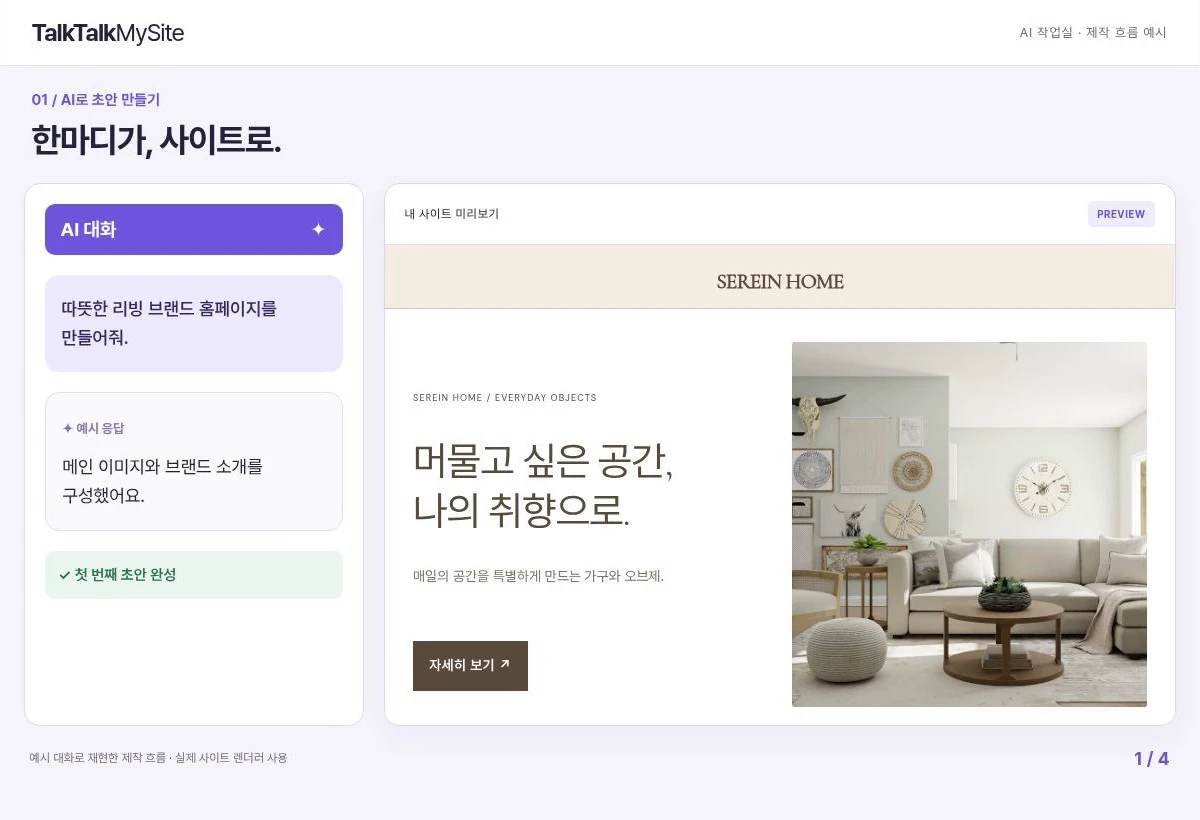
Prepare a main photo and any necessary supporting images for each product, then check that the colors and contents shown match what you actually sell. Using a consistent background and lighting can make a group of listings look more orderly. If you put prices or promotional wording directly on an image, you may need to recreate it when those details change. Information that changes often is generally easier to maintain in the product description.
Choose a setup for your situation
If your first priority is introducing products, the studio location, class types, and contact options, a Basic website may be enough to start. If taking online orders and managing products are central, consider whether the Standard store option is a better fit. If you need information in multiple languages for international customers, you can consider Premium; also decide what needs translating and who will maintain each language version.
TalkTalkMySite offers no-code templates, AI chat, and visual editing, so you can get started without coding or design experience. That does not mean the result should be published without review. Owners still need to verify product descriptions, page layout, and business details. Payments, social login, domains, and shipping require their own setup before use. Before choosing a configuration, check which elements it includes and what steps you must complete yourself.
Hypothetical example and pre-launch checklist
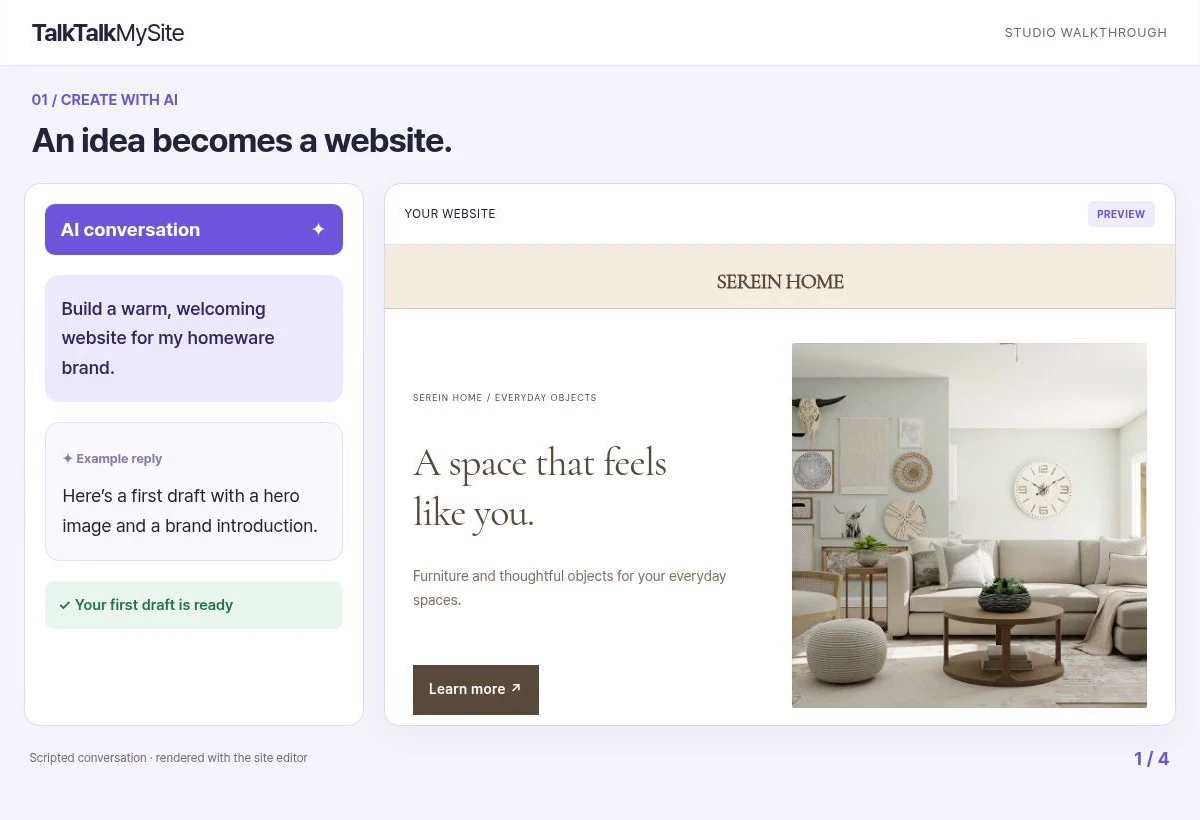
Hypothetical example: Suppose “Breathe Pilates” plans to sell two types of grip socks and a class pass that requires booking. The studio first documents the socks’ colors, sizes, and stock-check process, along with the pass’s validity period and booking conditions. It prepares full-view and in-use photos of the socks, plus clear information explaining the pass conditions customers need to know. Then it tests an order to confirm whether physical products can be shipped and how payment for the pass fits with the booking process. This is an example only; it does not mean that any particular payment or booking feature connects automatically.
- Are product names, prices, options, stock, and usage or delivery conditions confirmed?
- Do the photos accurately represent the products and remain easy to view on a phone?
- Have you checked payment, social-login, domain, and shipping setup wherever needed?
- Have you decided who handles order notifications and questions, and what to say when an item is out of stock?
- Before launch, have you personally tested how a customer finds a product and places an order?
Choosing a template before product information is ready can lead to repeated page edits. On the other hand, delaying publication until every photo and description feels perfect also delays operational testing. Start by preparing a small set of listings, test the ordering flow, and improve it based on how the studio operates. A no-code tool does not guarantee search rankings or sales, prevent every mistake, or mean that use is free and unlimited.