Local Workshop Website Creation: Prepare Translations, Products, and Weekly Checks
Organize workshop descriptions and product details in each language, then work through setup checks and a weekly routine. A practical website and store creation guide for beginners.
1. Decide first: who will you serve, and in which languages?
When planning a local workshop website, decide who it is for and what you will manage before choosing a template. Decide whether the site will simply share your location and hours or also accept online orders for your work. If you need a multilingual website, begin with languages you can actually support. Assign someone to prepare and review translations for menus, product descriptions, and shipping information.
Gather your workshop name and contact details, address and hours, introduction, product photos, product names, prices, stock levels and options, shipping regions, and shipping costs. Put draft copy for each language in a table. Check that measurements, dates, material names, and production times match across languages. Machine translation or AI drafts can be convenient, but an owner must review whether the wording sounds natural and the information is accurate.
2. Organize product details and choose how to build
Using the same order of information for every product makes listing and translation easier. Fill in each item: work name, materials and dimensions, colors or options, production time, care instructions, price, stock, and shipping terms. For made-to-order items, clearly state what can be customized and the expected schedule. Check that photos represent the actual color and size without misleading customers, and confirm you have permission to use them.
**Hypothetical example — ‘Ongi Ceramics Workshop’** prepares its introduction and product details in Korean and English. For a mug, its product sheet records the material, capacity, color options, production time, packaging, and shipping information. After editing the English copy, the owner compares prices, options, and shipping terms in both languages to ensure they match. This is a hypothetical example, not a promise of results.
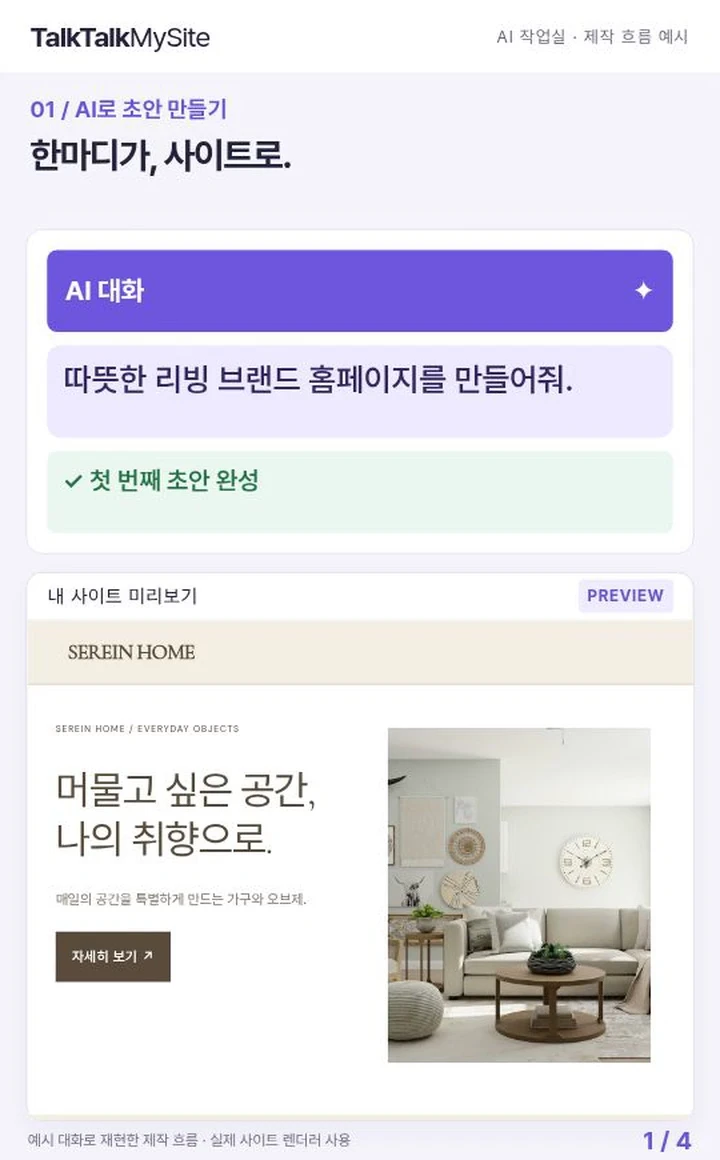
TalkTalkMySite is a no-code option for getting started with templates and AI chat, even without coding or design experience. Basic is for a website, Standard is for a store, and Premium is for multilingual use, so review which scope fits your needs. Check each plan’s included features, AI credits, and setup requirements. Then try the AI workspace and build your first page.
3. Check before publishing and edit the site yourself
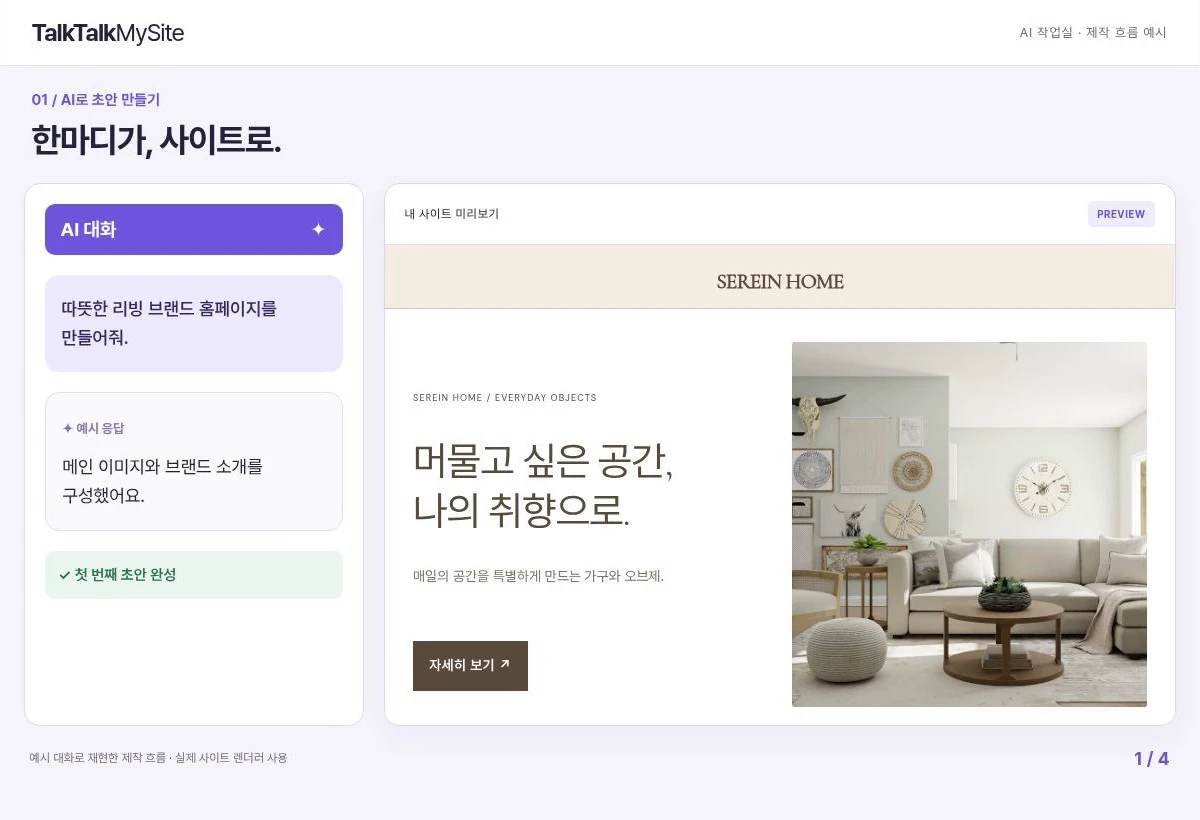
After building the pages, review them on a phone and computer. Check the menu, clipped text, images, language switching, contact information, and business details. If you will accept payments, configure payment setup; if you need account access, check social login setup. You may also need to set up a domain and shipping separately. Review the test order or inquiry process, and confirm that your instructions and terms are correct before accepting real orders.
TalkTalkMySite’s visual editing lets owners manage text and images themselves, which can make it easier to keep information current. However, it does not make every translation or configuration flawless automatically. Templates and owner editing can help reduce the burden of custom building and recurring updates, but they do not guarantee lower costs, search rankings, or sales.
4. A weekly routine to repeat
Set aside 20–30 minutes once a week and check in this order. The actual time will depend on how many products you have and how much has changed.
- Confirm that stock, prices, options, and production times reflect current operations.
- Update photos, descriptions, and visibility for new or sold-out work.
- Compare product details, announcements, and shipping terms across Korean and other language versions.
- Check contact details, business hours, payment and shipping information, and the order process.
- Open key pages on a phone to check links and layout, then record the date of your review and any outstanding tasks.
Start by publishing an introduction page and a few representative products, then expand in steps you can review. Your next step is to take your product sheet and translation drafts to the AI workspace, build your first page, and complete one pre-publication review. Before starting, check the conditions for the relevant plan, paid features, payment, domain and shipping setup, and AI credits.
#LocalWorkshop #LocalWorkshopWebsiteCreation #LocalWorkshopNoCode #LocalWorkshopTemplates #LocalWorkshopDesign #LocalWorkshopOnlinePresence #WebsiteCreation #NoCodeWebsite #AIWebsiteBuilder #WebsiteTemplates #WebsitePlanning #WebsiteManagement #NoCode #NoCodeBuilder #BuildWithoutCoding #DesignForBeginners #AIAssistedDesign #TemplateCustomization #ResponsiveDesign #MobileFriendly #ContentPlanning #BrandIntroduction #PageStructure #UserExperience #VisualEditing #WebsiteImages #LaunchPreparation #BeginnersGuide #MaintenanceChecklist #OnlineBusiness