B2B Manufacturer Website Creation: Organize Content for Easy In-House Editing
Separate product and sales information into visitor-friendly sections. Review what to prepare, what owners can edit, how to choose a site type for different needs, and which mistakes to avoid.
Start with visitors and goals
A B2B manufacturer’s website should help purchasing and technical teams find the information they need quickly, rather than simply listing as many products as possible. First write down who will visit, what questions the site should answer, and what action visitors should take next. Checking specifications, requesting a quote, and asking for a drawing or catalog may each need a different route.
Before website creation, gather company information and contact details, product names, uses, specifications and supporting materials, as well as publishable information about processes, quality, certifications, and delivery scope. Prepare product photos and drawings, then ask the responsible person to confirm that each item is current and approved for public release. Listing questions the sales team receives repeatedly can also help shape the pages.
Divide content into editable units
Keep the navigation concise and organized around visitor needs, with sections such as Company, Products and Solutions, Technology and Quality, Resources, and Contact. Use a consistent order on product pages: product name, primary applications, key specifications, related materials, and how to inquire. Separate company history and lengthy process descriptions into their own pages. On the homepage, make the featured products and next step clear.
Distinguish content that staff can update directly from content that needs review. For product descriptions, photos, and trade show announcements that change often, assign an editor and set a review schedule. For information where errors could have significant consequences—such as specifications, certifications, or delivery capabilities—create a review step for technical or sales staff before publication. Putting everything on one page or placing text inside images makes updates and search less convenient.
Choose an approach for your situation
If your priority is a basic company introduction and inquiry intake, start with a website. Consider store creation when online orders and payments for individual products are genuinely part of your operations. If you need multilingual pages, first decide what will be translated and who will review each language. Payments, social login, domains, and shipping require setup, so do not assume a feature is ready to use just because it appears in a plan or feature list.
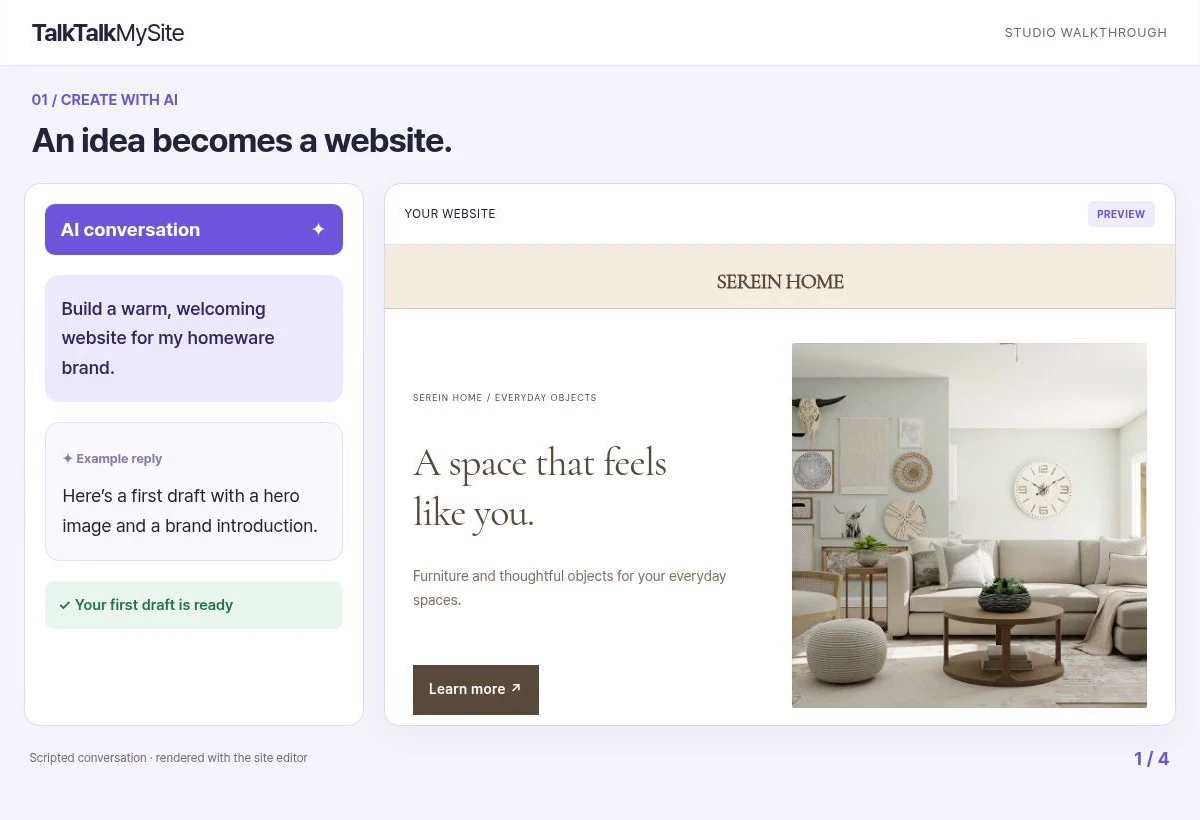
TalkTalkMySite lets you begin with no-code templates and AI chat, then refine pages with visual editing. You can get started without coding or design experience, but the owner still needs to check whether the template fits the product structure and sales process and whether company details are accurate.
Managing text and images yourself makes it easier to handle routine changes in-house. Check plan features, AI credits, and setup requirements first. Templates and owner editing may help reduce the cost of custom development or recurring updates, but they do not guarantee savings, search rankings, or sales. Usage is not necessarily unlimited, and mistakes cannot be ruled out.
Hypothetical example and getting-started checklist
Hypothetical example: Hanbit Valve, an industrial valve manufacturer, wants overseas buyers to find product specifications and learn how to request quotes. Rather than adding complex ordering functions immediately, it first creates pages for each product group, provides downloadable materials, and makes the inquiry route clear. If English pages are needed, it decides which products to publish and who will review the translations before defining the multilingual scope. This is an illustration; an actual company’s needs may call for a different structure.
Getting-started checklist: - Write the primary visitor and the website’s first goal in one sentence. - Identify current specifications, photos, publishable materials, and reviewers for each product. - Choose only the scope currently needed: website, store, or multilingual pages. - Check setup for payments, login, domains, and shipping, as well as plans and AI credits. - After publishing, test the inquiry route, mobile layout, links, and content yourself.
As a next step, try the AI workspace to draft your first page, then review one featured product’s information and inquiry route against your actual business requirements. Separating items that staff can edit from those that need review before publication will make it easier to begin managing the site.
#B2BManufacturer #B2BManufacturerWebsiteCreation #B2BManufacturerNoCode #B2BManufacturerTemplates #B2BManufacturerDesign #B2BManufacturerOnlinePresence #WebsiteCreation #NoCodeWebsite #AIWebsiteBuilder #WebsiteTemplates #WebsitePlanning #WebsiteManagement #NoCode #NoCodeBuilder #BuildWithoutCoding #DesignForBeginners #AIAssistedDesign #TemplateCustomization #ResponsiveDesign #MobileFriendly #ContentPlanning #BrandIntroduction #PageStructure #UserExperience #VisualEditing #WebsiteImages #LaunchPreparation #BeginnersGuide #MaintenanceChecklist #OnlineBusiness