Independent Publisher Online Store Creation: Set Shipping, Exchange, and Return Rules
Prepare shipping, exchange, and return information around your books’ weight, packaging, and order-handling capacity. Review the materials, situation-based choices, and common mistakes involved in opening your first store.
Decide first: your books and order-handling process
For independent publications, packaging and shipping costs depend on each book’s weight and format, and on whether customers order multiple copies together. List the dimensions and weight of each book, where inventory is kept, what packaging you will use, and how many orders you can process per day. If you offer preorders or signed copies, decide the expected dispatch date and whether customers can order them together with regular items.
Choose a shipping method you can actually manage. Starting with one option keeps instructions simple, though costs may vary by weight or destination. If you set different rates by condition, explain those conditions clearly so customers can understand the total shipping charge before paying. Rather than advertising free shipping by default, calculate book prices alongside packaging and delivery costs, then set a sustainable policy.
What to include in exchange and return information
Before writing your policy, decide who handles order confirmation, packing, dispatch, and customer inquiries, and when they are available. Include the estimated dispatch window, how you will notify customers of delays, how to request an exchange or return, the request deadline and required order details, and how to package a returned book and handle shipping costs. Conditions can depend on your sales arrangement and applicable rules, so check relevant official guidance before publishing and do not state uncertain terms as facts.
It is helpful to distinguish damaged or incorrectly shipped books from returns for a change of mind rather than giving them one identical process. Explain in plain language what photos or order details are needed in each case and what the customer should do after contacting you. If a product has different conditions—such as a digital item or preorder—make those terms visible on its product page as well as in your general policy.
Choices by situation and mistakes to avoid
- For a small catalog with one title: Start with one shipping rule that is easy to apply consistently, and weigh the book after packing it.
- For frequent multi-book or combined orders: Measure the size and weight of combined packages and test how the shipping conditions appear during checkout.
- For preorders or signed copies: State the expected dispatch date and explain separately how orders containing both preorder and regular items will be handled.
Avoid presenting an unconfirmed dispatch date as definite, reducing the return process to a vague sentence, or showing different conditions on the product and policy pages. Before publishing, check the product page, cart, and policy page on a mobile screen.
Build and check your first page
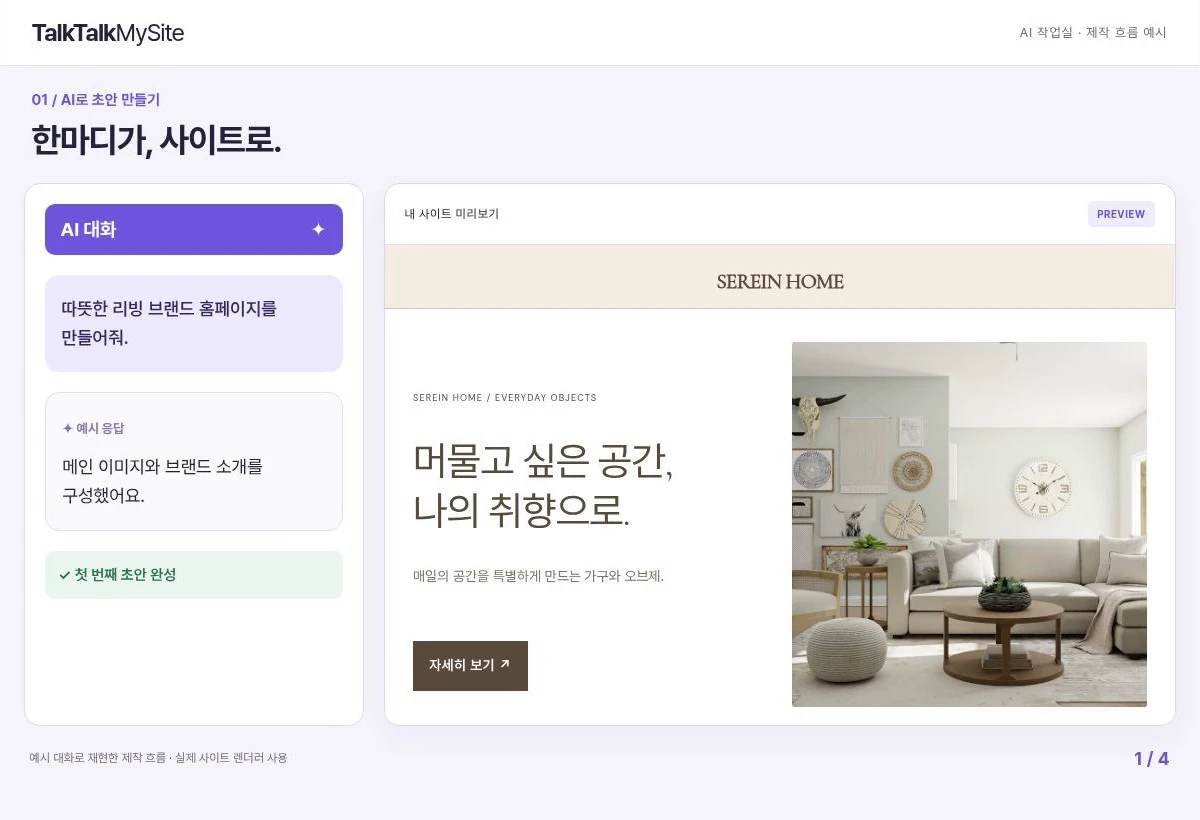
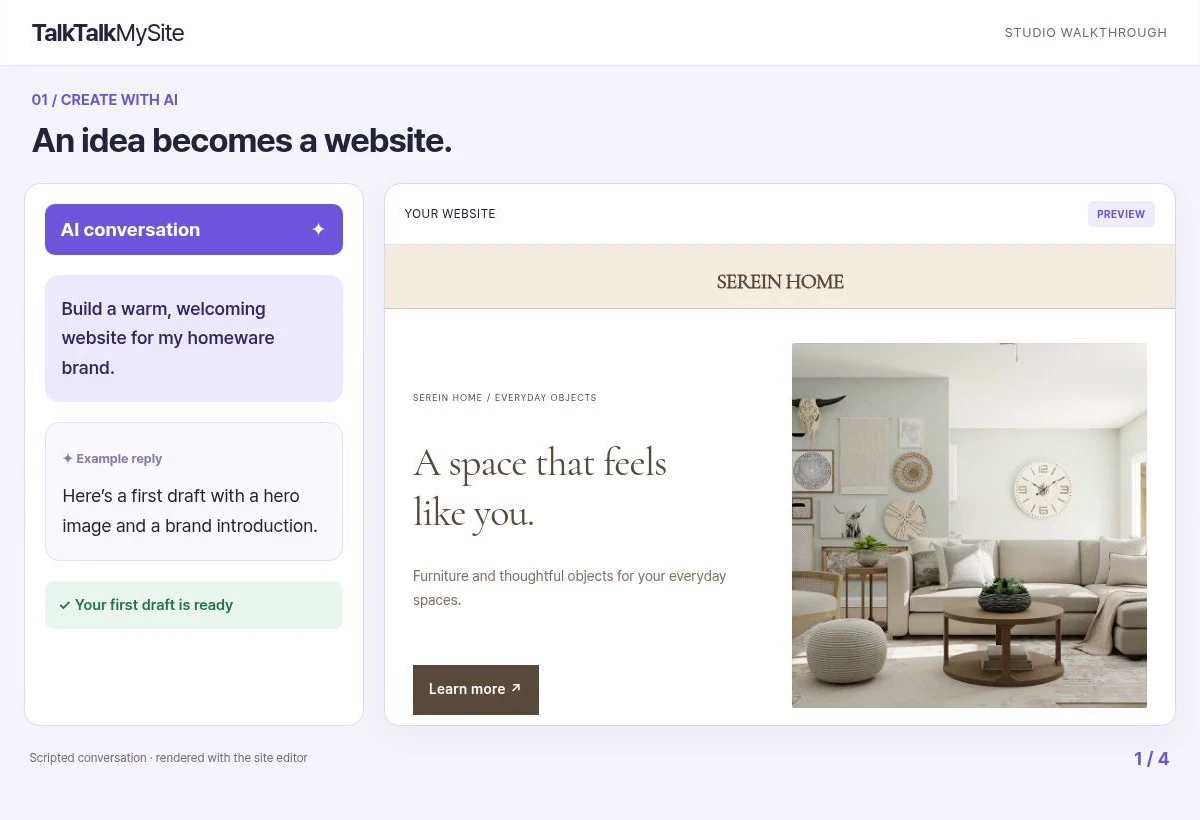
Gather cover and interior photos with permission to use them, titles, author names, prices, inventory details, packed weights, a contact method, and draft shipping and exchange/return text. TalkTalkMySite is a practical way to start within a manageable scope: its no-code templates and AI chat can help you assemble an initial page without coding or design experience. Basic is for a website, Standard for a store, and Premium for multilingual use; check the plan, AI credits, and setup requirements against your sales and language plans.
Afterward, you can edit text and images yourself to manage book details and shipping information easily. Payments, social login, domains, and shipping require setup, and the owner must review the content, layout, and business details. Templates and owner editing can help reduce the burden of custom builds or recurring changes, but they do not guarantee lower costs, sales, or search rankings, and they cannot promise that no mistakes will occur. Try the AI workspace, create a first page featuring one book and its shipping information, and check the full order journey before opening your store.
#IndependentPublisher #IndependentPublisherOnlineStoreCreation #IndependentPublisherNoCode #IndependentPublisherTemplates #IndependentPublisherDesign #IndependentPublisherOnlinePresence #OnlineStoreCreation #NoCodeStore #AIStoreBuilder #StoreTemplates #EcommercePlanning #StoreManagement #NoCode #NoCodeBuilder #BuildWithoutCoding #DesignForBeginners #AIAssistedDesign #TemplateCustomization #ResponsiveDesign #MobileFriendly #ContentPlanning #BrandIntroduction #PageStructure #UserExperience #VisualEditing #WebsiteImages #LaunchPreparation #BeginnersGuide #MaintenanceChecklist #OnlineBusiness