Local Retail Online Store Creation: Plan Categories and the Buying Journey
Plan clear product categories, gather the details you need, and follow a weekly review routine so local shoppers can find products and place orders with confidence.
Decide first: who are you selling to, and what do they need?
Creating an online store for a local retailer is not just a matter of moving products onto the web. Separate the items regular customers often seek, the details first-time visitors need, and services available only in the physical shop. If you have many products, group them by type or use. If you have a small range, organize them around how customers choose, such as popular items, new arrivals, or in-store pickup. Prefer category names shoppers actually use over internal terminology.
Trace the buying journey from the homepage through finding a product, reviewing its details, adding it to a cart, paying, and checking delivery or pickup instructions. Make purchase conditions easy to spot, including shipping charges, service areas, expected dispatch timing, and how to ask about exchanges. Payments, social login, domain connection, and shipping all require separate review and setup.
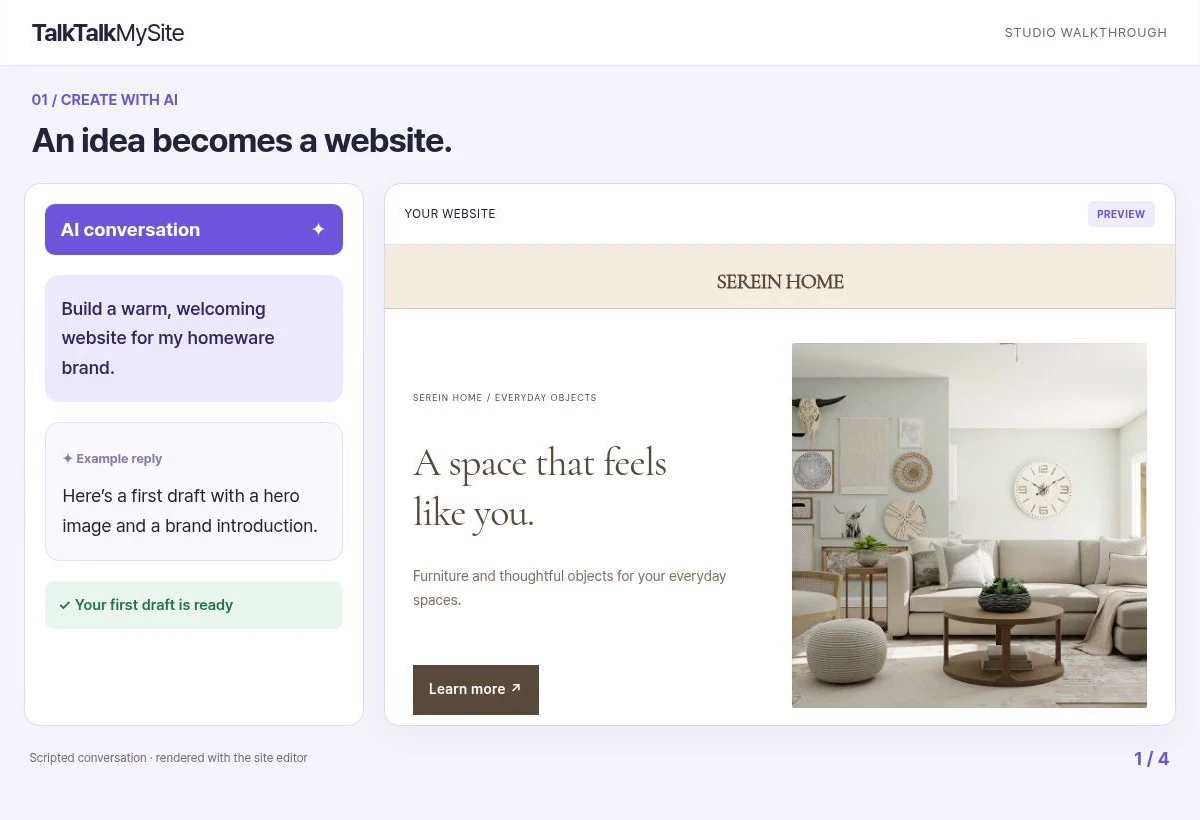
Gather the materials and build the first page
Before you start, put product names, prices, a method for checking stock, options, original product photos, descriptions, delivery or pickup conditions, shop contact details, and opening hours in one place. Decide who will update information when an item sells out or its price changes, and when they will do it. Compare photos and descriptions with the actual product before publishing; mismatches can lead to questions and order errors.
TalkTalkMySite offers no-code templates, AI chat, and visual editing, so you can begin with a basic setup before commissioning a custom build. You can get started without coding or design experience, but the owner still needs to verify that product information and page layouts are accurate. Basic is for a website, Standard is for a store, and Premium is for multilingual use. Check which plan fits your needs, along with its terms, AI credits, and required setup tasks.
Hypothetical example: a neighborhood home-goods shop
For a hypothetical example, suppose “Corner Home Goods” sells kitchenware and cleaning products. The shop groups items under “Kitchen,” “Cleaning,” and “Gifts,” and features popular products and pickup instructions on its homepage. Each product page lists size, material, what is included, price, and how to check stock. If an item is difficult to ship, the page clearly says whether pickup is available. This is only an example: adapt categories to the products you carry and the way your customers look for them.
A weekly review order for the owner
Checking in the same order on the same day each week can help you catch issues. TalkTalkMySite makes it easy to edit text and images visually, so you can handle routine updates to product details and shop notices yourself.
- Review orders and questions, then compare unresolved requests with stock and out-of-stock labels.
- Check that prices, options, descriptions, and photos match the products you actually sell.
- On a phone, follow the path from category menu through the information shown before payment. Fix anything hard to read or where the journey breaks.
- Confirm delivery and pickup schedules, opening hours, contact details, and notices.
- Check that payment, social login, domain, and shipping settings have been applied correctly.
Templates and owner editing can help reduce the costs of custom development and repeated routine updates, but they do not guarantee savings or sales results. Do not assume use is unlimited or that errors cannot occur; review plan terms, AI credits, and setup requirements. As a next step, try the AI workspace, create a first page, and test its categories and buying journey with a few real products.
#LocalRetail #LocalRetailOnlineStoreCreation #LocalRetailNoCode #LocalRetailTemplates #LocalRetailDesign #LocalRetailOnlinePresence #OnlineStoreCreation #NoCodeStore #AIStoreBuilder #StoreTemplates #EcommercePlanning #StoreManagement #NoCode #NoCodeBuilder #BuildWithoutCoding #DesignForBeginners #AIAssistedDesign #TemplateCustomization #ResponsiveDesign #MobileFriendly #ContentPlanning #BrandIntroduction #PageStructure #UserExperience #VisualEditing #WebsiteImages #LaunchPreparation #BeginnersGuide #MaintenanceChecklist #OnlineBusiness