Bakery Online Store Creation: Product Categories and Weekly Checks
Plan product categories and the buying journey around storage and pickup options, then follow a weekly owner checklist. Review a labelled hypothetical example, required materials, and practical limits of no-code tools.
Decide first: What will you sell, and how?
Bakery Online Store Creation begins not with listing product names, but with planning what happens after an order. For each bread or pastry, note whether it needs room-temperature or refrigerated storage, whether it is made the same day, when reservations close, and whether customers can choose delivery or in-store pickup. Check the quantities you can actually produce and the areas you can serve, too.
Keep categories simple and based on how customers choose. For example, group products as “loaves and rolls,” “cakes and desserts,” and “gift sets,” with seasonal items in a separate section. Too many categories can make products harder to find, so show featured items and ordering instructions first on the home page.
Buying journey and materials to prepare
A useful journey is: “browse products → review product details → choose pickup method and date → place and pay for the order → check questions or instructions.” On each product page, clearly provide photos, contents and size, price, necessary product information such as allergen-causing ingredients, storage and serving guidance, reservation deadlines, and pickup instructions. Until payment and delivery settings are complete, do not overstate which order methods or service areas are available.
Before you start, gather product names, prices, inventory rules, photos, opening hours and contact details, pickup and delivery conditions, and answers to frequent questions. Payment methods, social login, domains, and shipping each require setup and checking. You can begin without website-building or coding experience, but the owner must verify that business details and page content are accurate.
[Hypothetical example] A neighborhood bakery’s home page
Suppose, hypothetically, that a bakery sells loaves, baked snacks, and weekend cakes. Its home page features this week’s reservation items and in-store pickup instructions, while its product categories are limited to three. The cake page prominently shows the reservation deadline and available pickup dates. Baked snacks that can be shipped have separate packaging and delivery instructions. This is only an example; adapt it to what you can actually sell and your operating schedule.
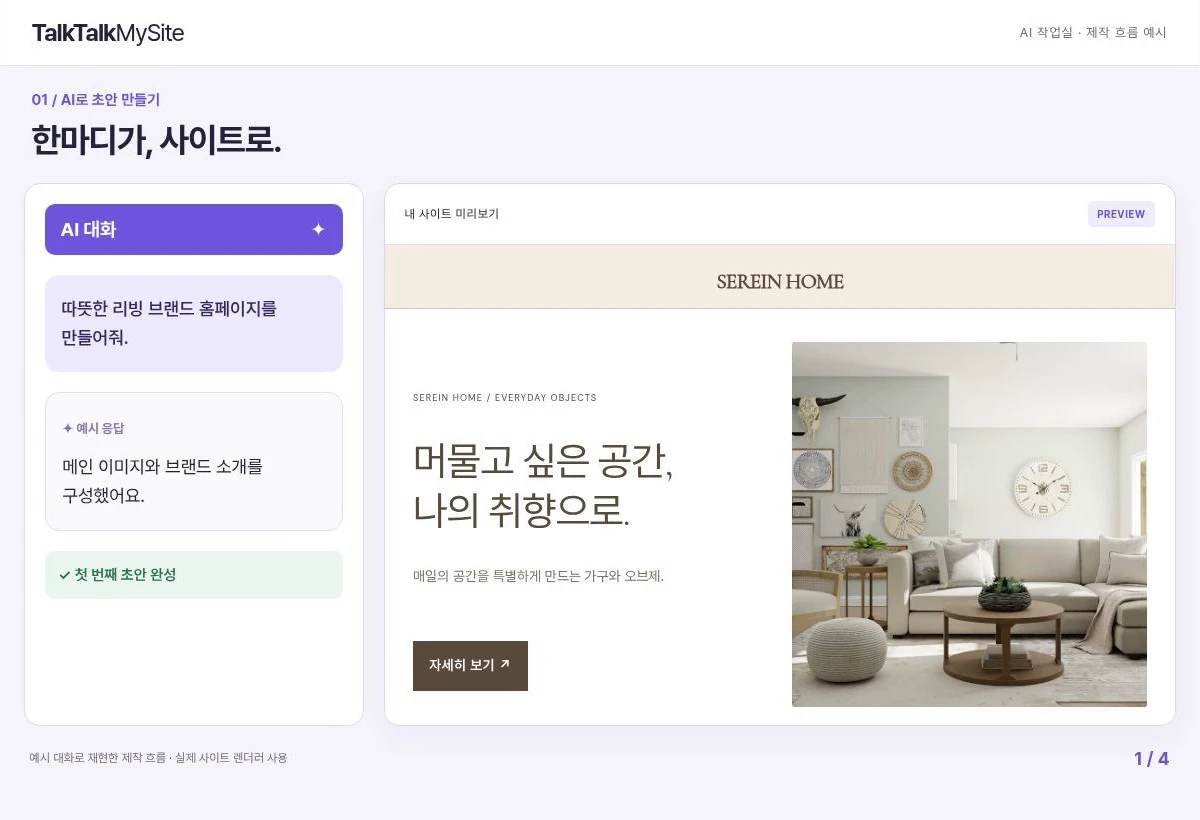
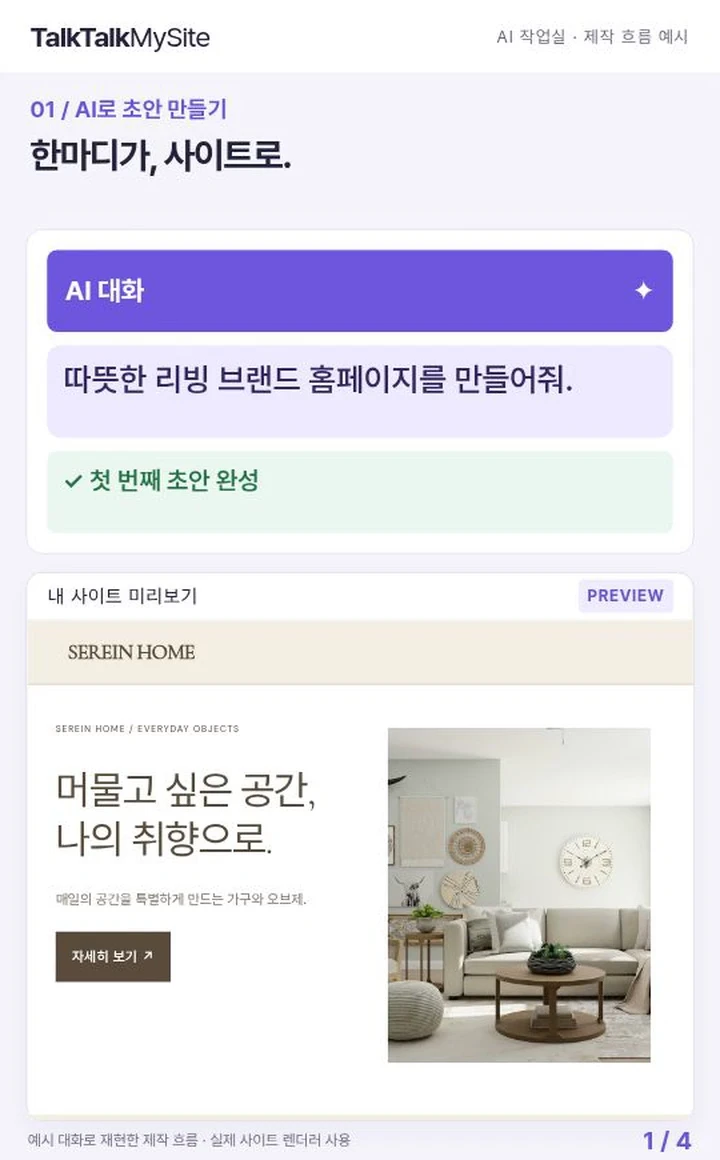
TalkTalkMySite is a practical no-code option for getting started at a manageable pace with templates and AI chat. Review what each plan includes, AI credits, and the setup required to see whether it fits your bakery. Even with a template, you still need to decide on product categories and the order flow yourself.
What the owner should check each week
Review these items on the same day each week so changes are less likely to be missed.
- 1. Check inventory and available quantities, and review the order status of sold-out items.
- 2. Update this week’s production schedule, reservation deadlines, pickup dates, and delivery availability.
- 3. Verify product prices, descriptions, and photos; remove or update seasonal and discontinued items.
- 4. Use a phone to follow the journey from finding a product to completing an order, and check contact details and instructions.
- 5. Confirm that payment and shipping settings work as intended. If you changed a setting, review a test order where possible.
With TalkTalkMySite, owners can edit text and images themselves to manage regular updates easily. However, editing things yourself does not mean mistakes cannot happen, and reduced custom-build or routine-update costs are not guaranteed. Check plan limits and setup requirements, try the AI workspace, and start by building a first page for one featured product.
#Bakery #BakeryOnlineStoreCreation #BakeryNoCode #BakeryTemplates #BakeryDesign #BakeryOnlinePresence #OnlineStoreCreation #NoCodeStore #AIStoreBuilder #StoreTemplates #EcommercePlanning #StoreManagement #NoCode #NoCodeBuilder #BuildWithoutCoding #DesignForBeginners #AIAssistedDesign #TemplateCustomization #ResponsiveDesign #MobileFriendly #ContentPlanning #BrandIntroduction #PageStructure #UserExperience #VisualEditing #WebsiteImages #LaunchPreparation #BeginnersGuide #MaintenanceChecklist #OnlineBusiness