Local Community Online Store Creation: Prepare Member and Guest Checkout
Planning your first online sales for a neighborhood shop or group? Compare member and guest checkout, gather the materials you need, and check payment and delivery setup first. This guide provides a hypothetical example and practical starting checklist.
Local Community Online Store Creation begins not with decorating product pages, but with deciding what you will sell, to whom, and how you will handle orders. Members log in to check order history and account details. Guest shoppers enter the information needed for an order without creating an account. Decide whether to offer both paths or prioritize one by weighing the value of managing regular customers against the simplicity of checkout. Check the chosen store tool and plan to confirm which options are actually available and how they must be configured.
Decide how you will operate
- Audience and product range: Decide whether you are selling to neighborhood residents only or also to visitors, then narrow down your initial product range.
- Member and guest policy: Decide whether you have a reason to encourage account creation and whether you will also accept guest orders. Prepare the information needed to confirm orders and a channel for customer questions.
- Sales and delivery area: Choose among store pickup, local delivery, and parcel shipping. Record the areas you can serve and your operating hours.
- Update ownership: Decide who will check inventory, prices, notices, and delivery information, and when they will do so.
Gather materials before building
Collect product names, descriptions, prices, inventory details, and photos. Prepare business information for payment methods, delivery fees and coverage, exchange and refund information, and customer inquiries. If you need social login or a custom domain, check the relevant accounts and connection steps as well. Payments, social login, domains, and shipping may require separate setup; building a site does not configure them automatically. Write privacy and transaction information accurately, based on how you actually operate and the requirements that apply to your business.
For a first-time builder, it is practical to test the order flow with a small selection of representative products rather than publishing everything at once. Check product descriptions and purchase buttons on a phone, then test the member and guest order steps, payment, notifications, and delivery information. Decide in advance who will check incoming orders and update inventory; this helps prevent operational steps from being missed.
Hypothetical example: a neighborhood side-dish shop
This is a hypothetical example. “Alley Banchan” plans to sell side dishes to nearby residents twice a week. The owner first gathers photos, prices, and relevant allergen descriptions for a selection of featured dishes, then states whether store pickup or delivery to a limited area is available. The shop considers offering member checkout so regular customers can manage their order history, while also considering guest checkout for people who do not want to register. Before proceeding, the owner checks whether the selected service supports both checkout paths and the required payment and delivery settings.
Build and check in order
- Gather product materials and operating information, then set your sales area and member and guest checkout policy.
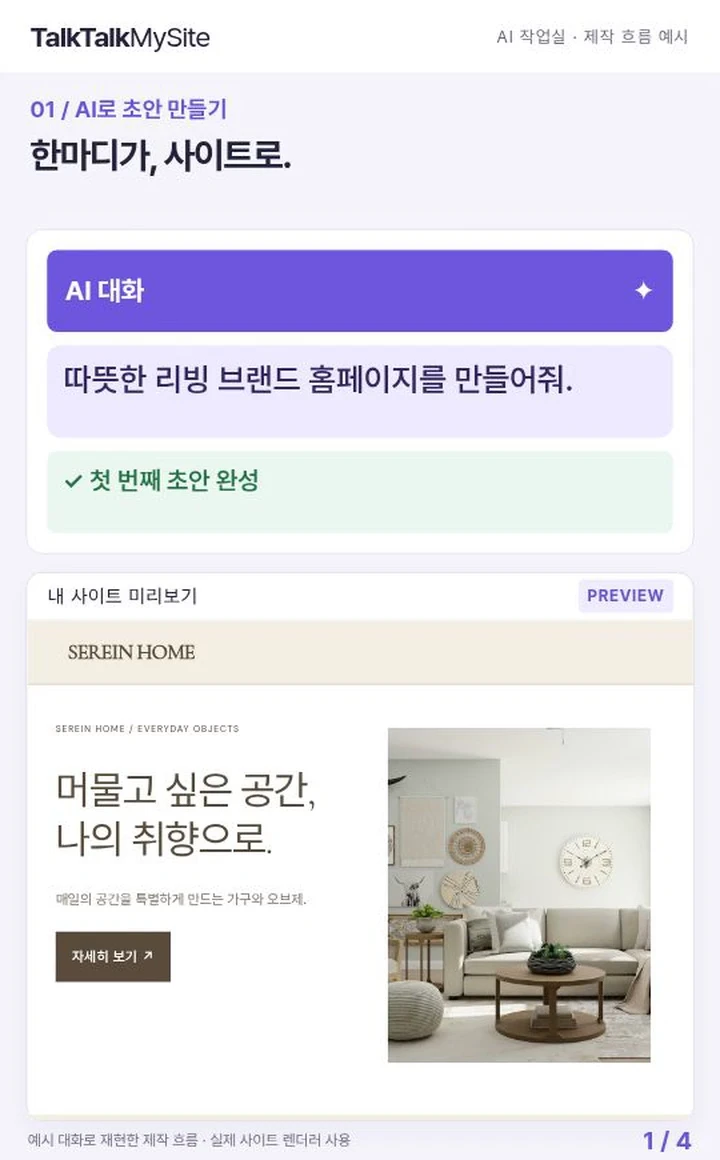
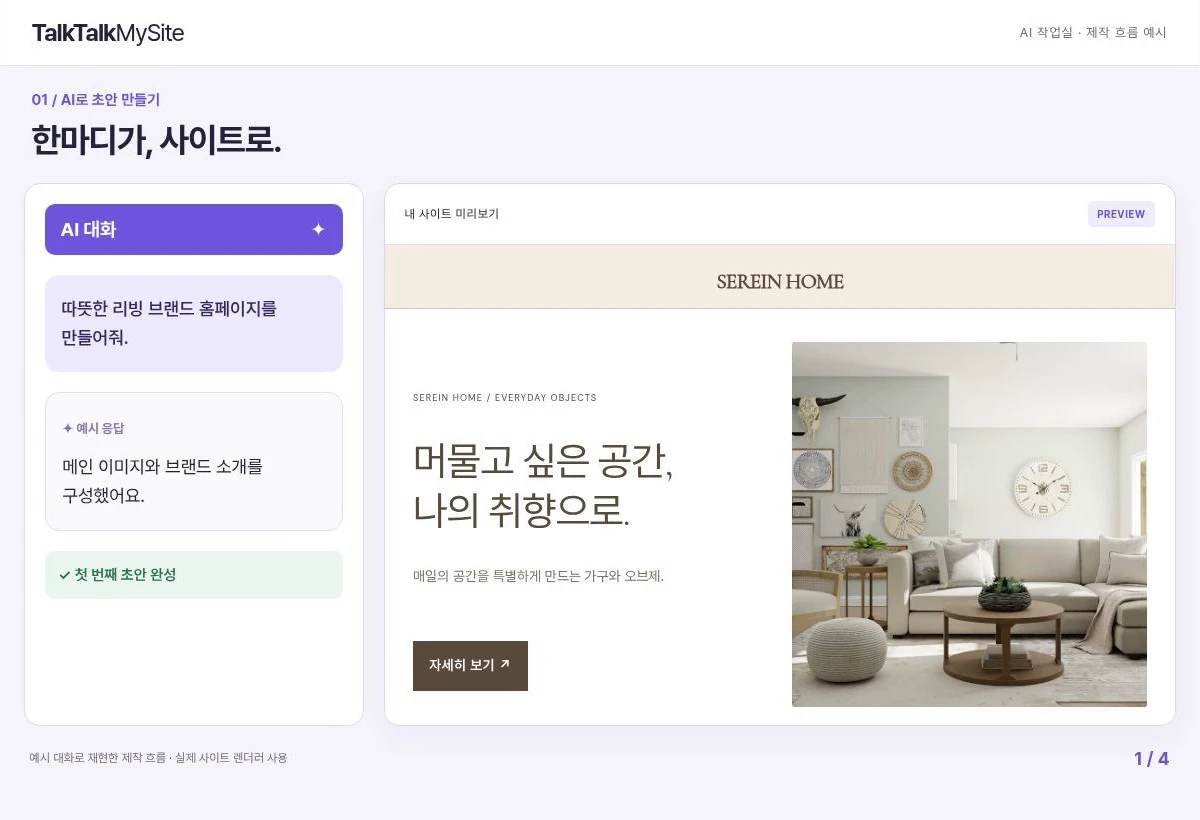
- Compare plans and features. TalkTalkMySite is a no-code option with templates, AI chat, and visual editing; you can get started without coding or design experience. Start with a template to keep the initial effort manageable, and check the plan, AI credits, and setup requirements.
- Create your first product page, then edit the text and images yourself to make sure the operating details are accurate. TalkTalkMySite lets owners visually edit text and images to manage routine updates. The owner remains responsible for checking content, layout, and business details.
- Configure payments, social login, a domain, and shipping as needed, then test member and guest orders separately. Basic is for a website, Standard for a store, and Premium for multilingual use. Confirm what each plan includes and any setup conditions before signing up.
Templates and owner editing can reduce the work involved in custom builds or repeated outsourced updates, but they do not guarantee lower costs or more sales. There is no guarantee of search ranking, unlimited use, or zero mistakes. Start by checking your product materials and purchase policies. Then try the TalkTalkMySite AI workspace, build your first page, and test the order flow.
#LocalCommunity #LocalCommunityOnlineStoreCreation #LocalCommunityNoCode #LocalCommunityTemplates #LocalCommunityDesign #LocalCommunityOnlinePresence #OnlineStoreCreation #NoCodeStore #AIStoreBuilder #StoreTemplates #EcommercePlanning #StoreManagement #NoCode #NoCodeBuilder #BuildWithoutCoding #DesignForBeginners #AIAssistedDesign #TemplateCustomization #ResponsiveDesign #MobileFriendly #ContentPlanning #BrandIntroduction #PageStructure #UserExperience #VisualEditing #WebsiteImages #LaunchPreparation #BeginnersGuide #MaintenanceChecklist #OnlineBusiness