Fashion Brand Online Store Creation: Product, Options & Stock Checklist
Before building your first store, standardize product names, color and size options, and inventory rules. Use this checklist to gather materials, start with a template, and review the store before launch.
1. Standardize product information
Before starting Fashion Brand Online Store Creation, choose consistent naming and record-keeping rules for every product. Include identifying details, such as the brand or a key design feature, in the customer-facing product name. Keep internal product codes separate from the names customers see. Use labels such as “new arrival” or “best seller” only when they match your actual store criteria.
Gather a product list, photos for each item, prices, material and care information, and verified stock quantities. Select the needed images, such as front and detail views, and save them in product-specific folders with clear filenames. Keep items with unfinished descriptions or photos separate from products approved for publication.
2. Manage options and stock consistently
Register only colors and sizes that customers can actually select. Make color names match the product photos, and use the same sizing convention across products. Check inventory for each color-and-size combination, and decide how to distinguish items that are available, sold out, or not yet for sale. For products whose stock changes often, decide who updates the quantity, when they do it, and which record they use to avoid conflicting counts.
**Hypothetical example:** “Mono Shirt” comes in Ivory and Navy, in sizes S, M, and L. Check quantities for all six option combinations, and confirm that the color names in the photos match the registered options. This is a format example only; each brand must verify its own product range and quantities.
3. Build your first page with TalkTalkMySite
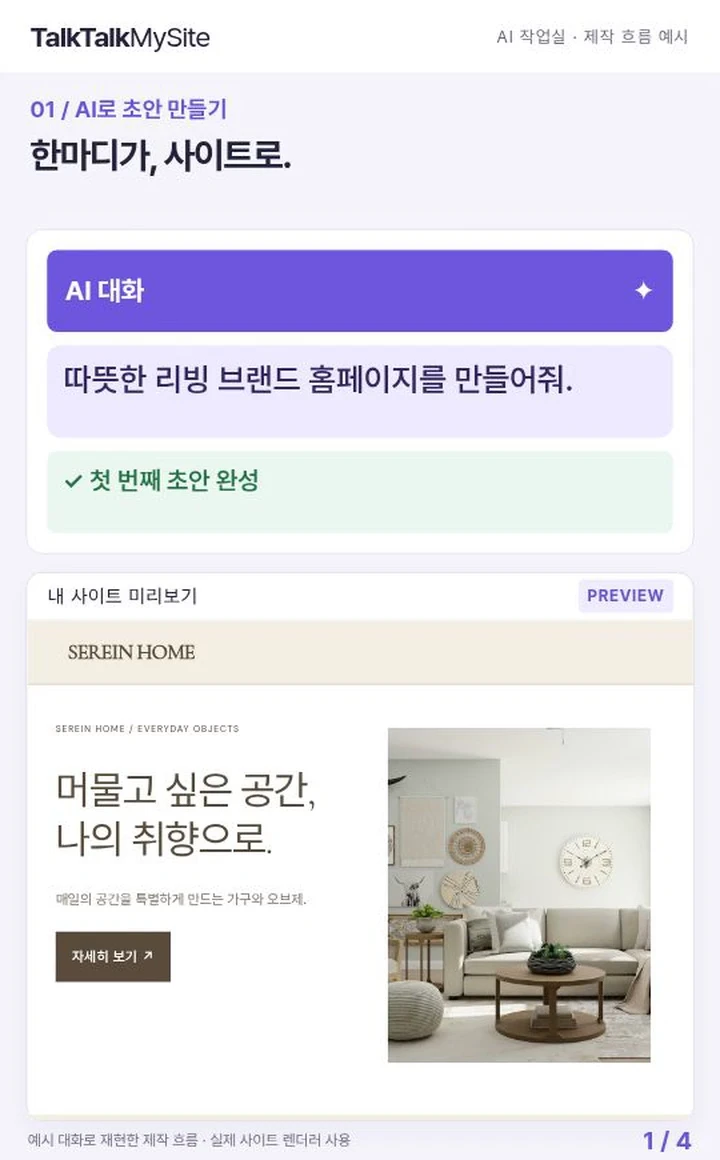
TalkTalkMySite offers no-code templates, AI chat, and visual editing, so coding or design experience is not required to get started. Rather than immediately commissioning a custom build, try setting up the basic pages with a template, then review your product information and required settings. This can be a practical way to begin affordably. Check the plan, AI credits, and setup requirements before using the service.
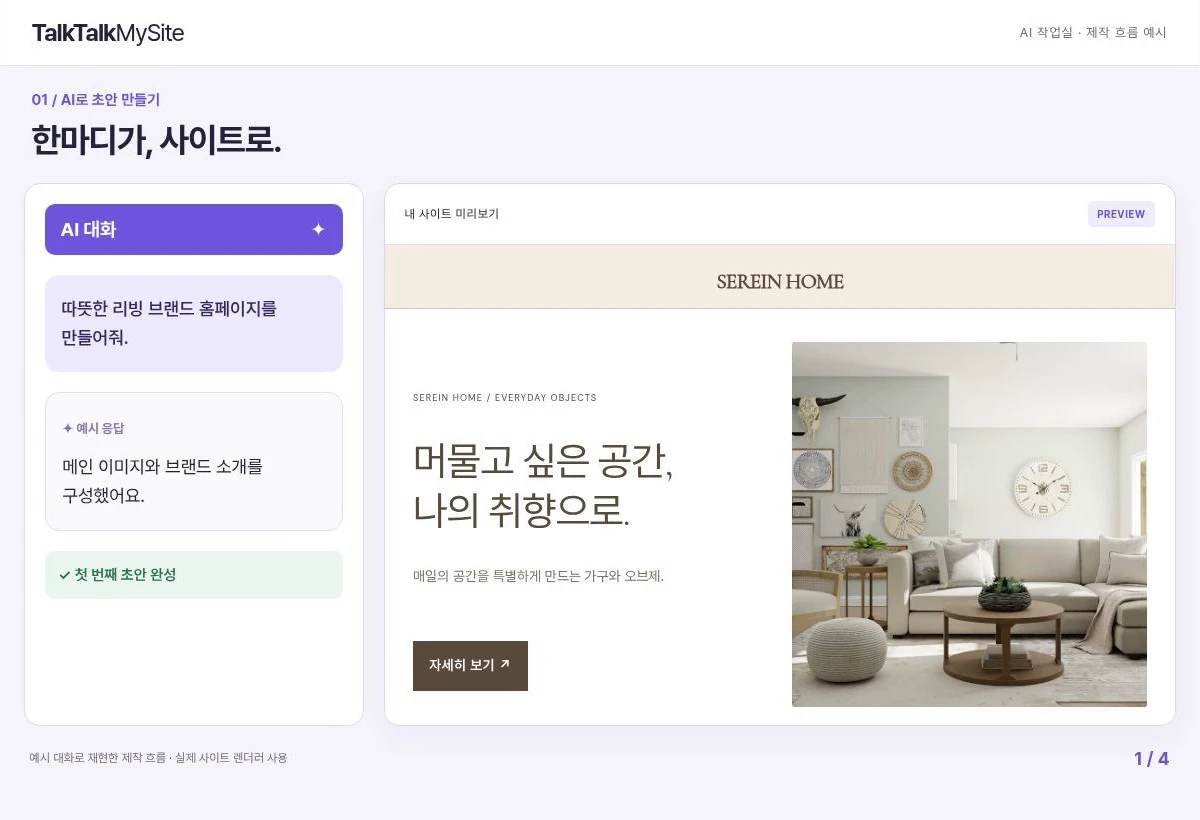
After that, owners can edit text and images themselves in the editor and manage routine updates. Still, review AI-generated content yourself to confirm product names, options, and material details. Experience in design or coding is not a prerequisite, but owners remain responsible for checking content, layout, and business details.
4. Pre-launch checklist and next step
- [ ] Do product names, prices, descriptions, and photos match?
- [ ] Have color and size labels and inventory for each option been checked?
- [ ] Have you completed any required payment, social login, domain, and shipping setup?
- [ ] Have you checked the product information and purchase flow on a mobile screen?
- [ ] Does your selected plan support the functions and language needs you have? Basic is for a website, Standard for a store, and Premium for multilingual use.
Templates and owner editing may help reduce the costs of custom builds and routine changes, but they do not guarantee savings, sales, search rankings, or error-free results. Do not assume use is unlimited; check plan terms and AI credits. For your next step, gather the information and photos for one product, try the AI workspace, and build your first page.
#FashionBrand #FashionBrandOnlineStoreCreation #FashionBrandNoCode #FashionBrandTemplates #FashionBrandDesign #FashionBrandOnlinePresence #OnlineStoreCreation #NoCodeStore #AIStoreBuilder #StoreTemplates #EcommercePlanning #StoreManagement #NoCode #NoCodeBuilder #BuildWithoutCoding #DesignForBeginners #AIAssistedDesign #TemplateCustomization #ResponsiveDesign #MobileFriendly #ContentPlanning #BrandIntroduction #PageStructure #UserExperience #VisualEditing #WebsiteImages #LaunchPreparation #BeginnersGuide #MaintenanceChecklist #OnlineBusiness