Solo Entrepreneur Online Store Creation: Organize Names, Options, and Stock
Set rules for product names, option labels, and inventory before listing items. Compare a labelled hypothetical example before and after cleanup, and review the materials and checks needed for a no-code store.
Set rules for product information first
Write product names so customers can quickly identify what they need to distinguish. Put the product type or key feature first, and use the same word order across similar products. Split options into choices customers actually make, such as color and size; avoid vague labels like “big one” or “standard.” Decide whether you will track stock by option or only as a total for the product. Set a stock-checking routine that matches how you sell, so an out-of-stock notice does not lag behind actual availability.
Materials to prepare and a hypothetical example
Before listing products, gather photos, accurate product names, prices and quantities for each option, shipping and exchange information, and a contact method for inquiries. If you also sell through another channel, prepare a tracking sheet to keep quantities aligned.
**Hypothetical example — Before:** Minji, a solo business owner, listed a handmade pouch as “Daily Pouch, Pretty Colors.” Its options were “small one” and “big one,” while inventory showed 12 units for the whole product. She could not tell how many of each color and size remained.
**After:** She renamed it “Cotton Pouch / Zipper Style” and separated the options into “Color: Cream or Navy” and “Size: Small or Large.” After confirming that the price was the same for every combination, she recorded stock by combination and set a rule to stop sales only for an option that sells out. This is an illustrative example; check that your actual settings fit your sales process and site functions.
Build with no-code tools and review it yourself
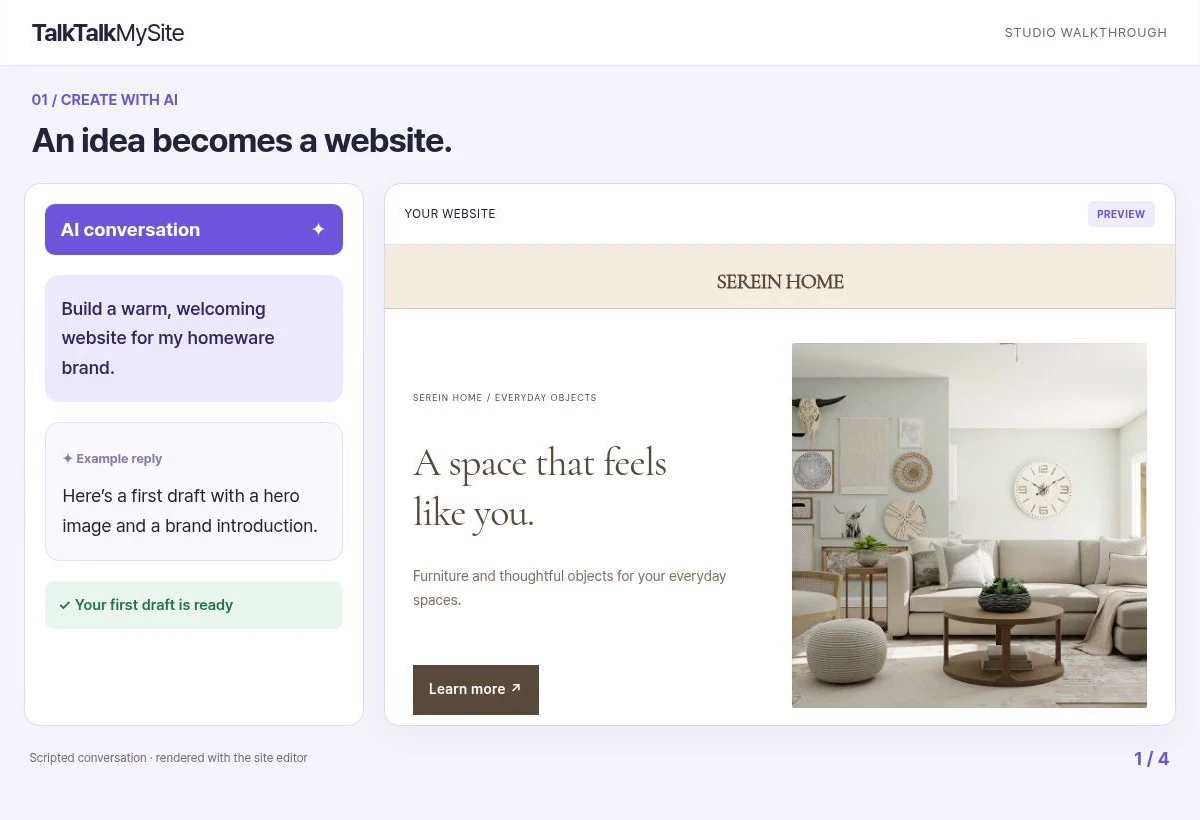
TalkTalkMySite is a practical way to start a store homepage and product layout using no-code templates and AI chat. You can begin without coding or design experience, but a template does not verify your product information or business details for you.
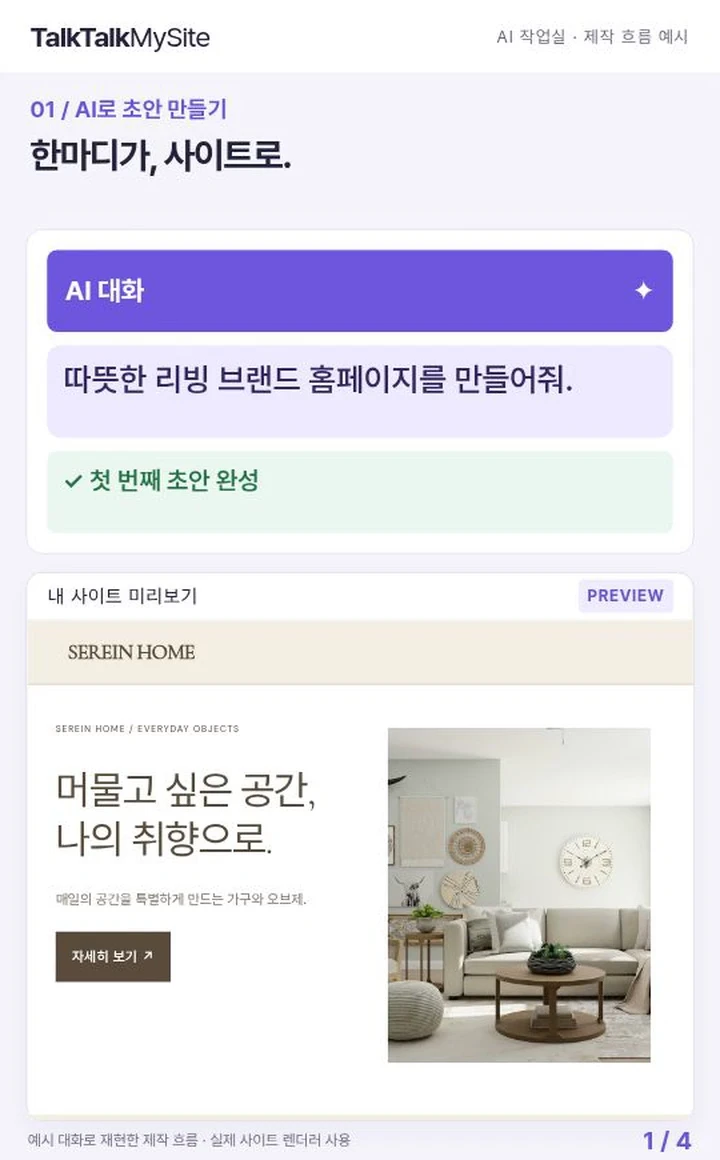
Owners can easily edit text and images themselves, making it convenient to review and update content when product names or photos change. Try the AI workspace to build a first page, then compare product details, options, and stock with your actual sales records before publishing.
Pre-launch checklist and next step
- Are product-name formats and option labels consistent across items?
- Do option prices and stock match your actual tracking sheet? Have you decided how to mark an option as sold out?
- Are product details, shipping information, and contact instructions readable on mobile?
- If needed, have you completed and tested payment, social-login, domain, and shipping setup?
TalkTalkMySite Basic is for websites, Standard is for stores, and Premium is for multilingual use. Compare plans against the functions you need, and check setup requirements for connections such as payments, along with AI credits and usage conditions. Templates and owner editing can help reduce the burden of custom builds and routine updates, but they do not guarantee lower costs, search rankings, or sales, and they cannot promise zero mistakes. Start by testing your rules with one or two products, then move the rest after reviewing the results.
#SoloEntrepreneur #SoloEntrepreneurOnlineStoreCreation #SoloEntrepreneurNoCode #SoloEntrepreneurTemplates #SoloEntrepreneurDesign #SoloEntrepreneurOnlinePresence #OnlineStoreCreation #NoCodeStore #AIStoreBuilder #StoreTemplates #EcommercePlanning #StoreManagement #NoCode #NoCodeBuilder #BuildWithoutCoding #DesignForBeginners #AIAssistedDesign #TemplateCustomization #ResponsiveDesign #MobileFriendly #ContentPlanning #BrandIntroduction #PageStructure #UserExperience #VisualEditing #WebsiteImages #LaunchPreparation #BeginnersGuide #MaintenanceChecklist #OnlineBusiness