Solo Entrepreneur Online Store Creation: Plan Categories and the Buying Path
Even a small catalog can confuse visitors if categories and buying steps are unclear. Compare a labelled hypothetical before-and-after example, then check your product menu, detail pages, and setup before launch.
Decide first: how customers look for products
Build your menu around what customers want to find and compare, rather than relying only on product names or your internal categories. If your catalog is small, begin with three to five main categories. Remove overlapping groups and names that sound alike. Check that you can explain which products belong in each category.
Prepare a product list, prices, options, and stock information; images you took or have permission to use; shipping terms; and exchange and contact information. Check in advance what information is needed to configure payment and shipping, and make sure the published details match the way you actually operate.
Hypothetical example: “Momo Desk Goods,” before and after
**Hypothetical example — Before:** Mina, a solo seller, grouped pen holders, memo pads, and desk mats under “New,” “Popular,” and “Other.” The desk mat’s sizes and colors were scattered near the bottom of its description, while shipping information appeared only in a separate notice. Visitors had trouble finding products by intended use and had to move between pages to check options and shipping costs.
**After:** Mina changed the menu to “Organizing & Storage,” “Writing & Notes,” and “Desk Decor.” When a product could appear in more than one category, she chose one primary category. At the top of each product page, she placed its intended use and key features, followed by size and color options, price, shipping information, and the purchase button. She also made contact and exchange information easy to find near the purchase area. This is an example only; choose categories for your own products and customers.
Keep the buying path short and clear
Write out the basic path: “Choose a category → compare products → check details → select options → add to cart or buy → pay.” At every step, check that the next action is clear and that the price and selected options are easy to understand. Review the mobile layout for readable buttons, images, and guidance. Test common blockers yourself, such as an out-of-stock product or a required option that has not been selected.
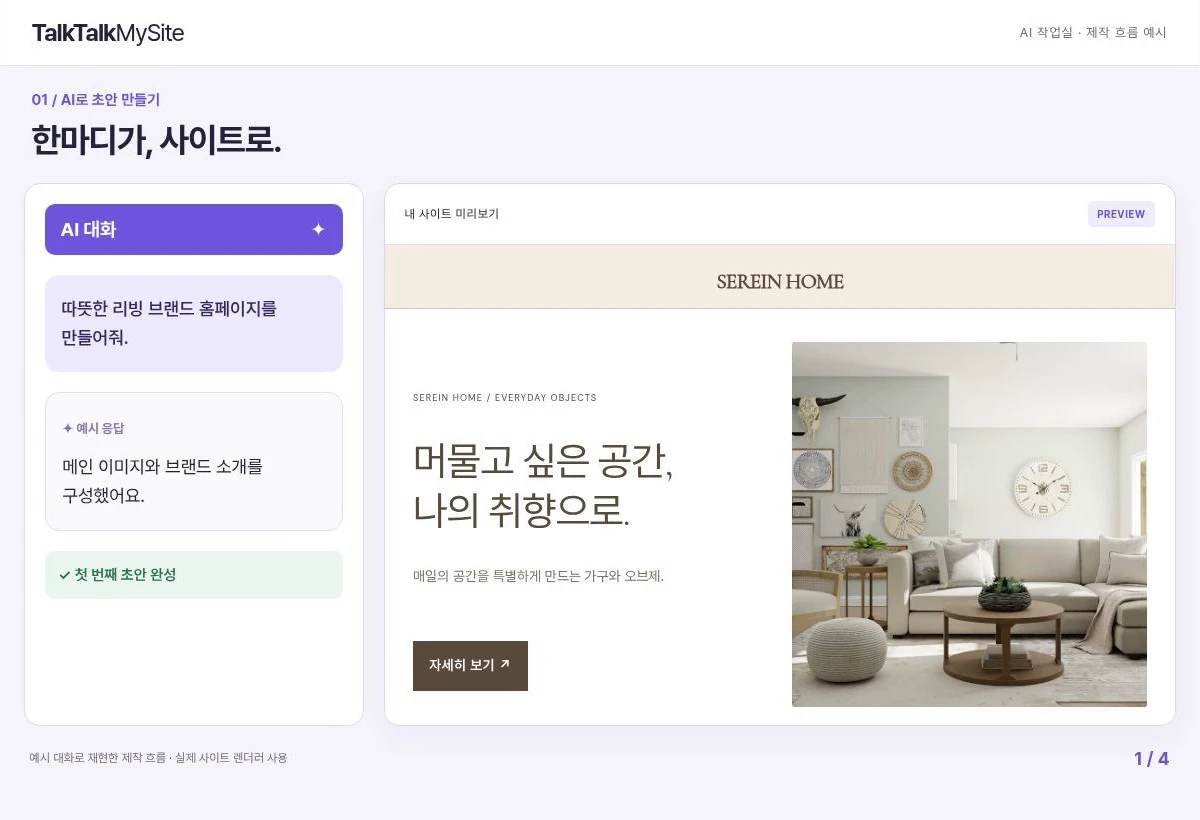
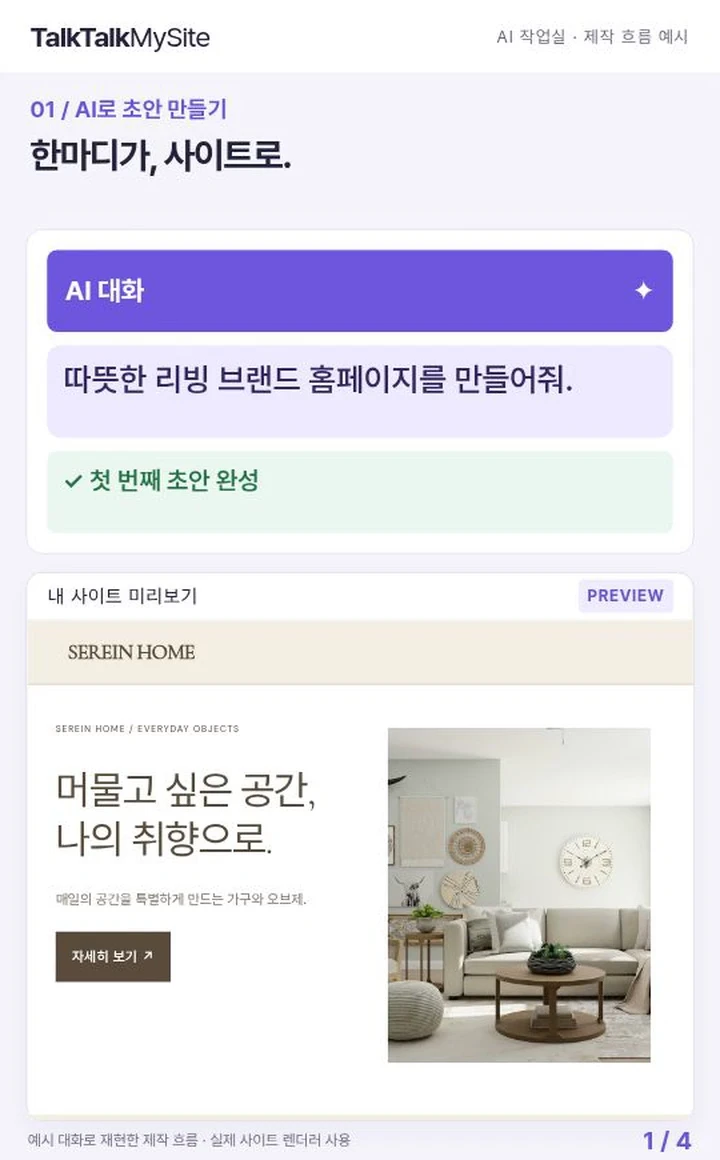
TalkTalkMySite offers no-code templates and AI chat to help you sketch a first structure without coding or design experience. It can be a practical way to clarify product categories and page flow before commissioning a custom build. Check what each plan includes: Basic is for a website, Standard for a store, and Premium for multilingual use.
Pre-launch checklist and next step
- [ ] Do category names match how customers browse, without dividing the catalog unnecessarily?
- [ ] Do product names, prices, options, stock, images, and shipping details agree with one another?
- [ ] Have you clicked through from the product list to checkout and checked for points where customers could get stuck?
- [ ] If needed, have you separately configured and tested payments, social login, your domain, and shipping?
With TalkTalkMySite, you can edit copy and images on top of a template and manage routine updates yourself. However, the owner must review AI-generated content, the layout, and business details. Payments, domains, and shipping may need separate setup. Templates and owner editing may reduce the work involved in custom builds or repeated updates, but check plan limits, AI credits, and setup requirements. There is no guarantee of search rankings, sales, unlimited use, or error-free results. Try the AI workspace, create a first page with one representative product, and test its categories and buying path.
#SoloEntrepreneur #SoloEntrepreneurOnlineStoreCreation #SoloEntrepreneurNoCode #SoloEntrepreneurTemplates #SoloEntrepreneurDesign #SoloEntrepreneurOnlinePresence #OnlineStoreCreation #NoCodeStore #AIStoreBuilder #StoreTemplates #EcommercePlanning #StoreManagement #NoCode #NoCodeBuilder #BuildWithoutCoding #DesignForBeginners #AIAssistedDesign #TemplateCustomization #ResponsiveDesign #MobileFriendly #ContentPlanning #BrandIntroduction #PageStructure #UserExperience #VisualEditing #WebsiteImages #LaunchPreparation #BeginnersGuide #MaintenanceChecklist #OnlineBusiness