Furniture and Home Goods Online Store Creation: Building Pages with Few Photos
Even with few product photos, clear dimensions, materials, and shipping details can help shoppers decide. A hypothetical small side-table example compares a weak product page with a more useful version and lists what to prepare.
When photos are limited, organize the information first
Furniture and home goods are difficult to evaluate from photos alone. Shoppers may need to check dimensions, materials, assembly requirements, care instructions, and shipping terms. Start by listing the questions your product page should answer. Rather than trying to increase the photo count at any cost, prioritize accurate images of the actual product. Do not present images you do not have as though they exist.
Before building the page, prepare a main product photo; width, depth, and height with units; materials and color; included items; assembly and care instructions; price and stock status; and your business’s shipping and exchange policies. Add a brief caption explaining what each photo shows. Decide which integrations you need, then configure and check payments, domain, shipping, and social login as applicable.
Hypothetical example: one wooden side table
**Hypothetical example — before:** The page has only one front-facing photo and a description that says, “A wooden table with a warm feel.” Visitors cannot easily tell its size, wood type, whether assembly is needed, or how shipping works. They may put off a decision or repeatedly ask questions before buying.
**After revision:** Keep the same photo as the main image, and make the dimensions and material prominent beneath the product title. Then separate information about included items, assembly, care, and shipping into short, clearly labeled sections. Do not hide that there is only one photo; provide the product details you can verify. If you can take more photos later, add a side view or a photo that helps show scale. Avoid staged images that misrepresent the actual product.
Choosing a setup and checking the page as a beginner
TalkTalkMySite offers no-code templates, AI chat, and visual editing for people who want to start without coding or design experience. Begin with a template suited to your product range and required functions, and check the plan, AI credits, and setup needs for payments or shipping. Basic is for a website, Standard for a store, and Premium for multilingual use.
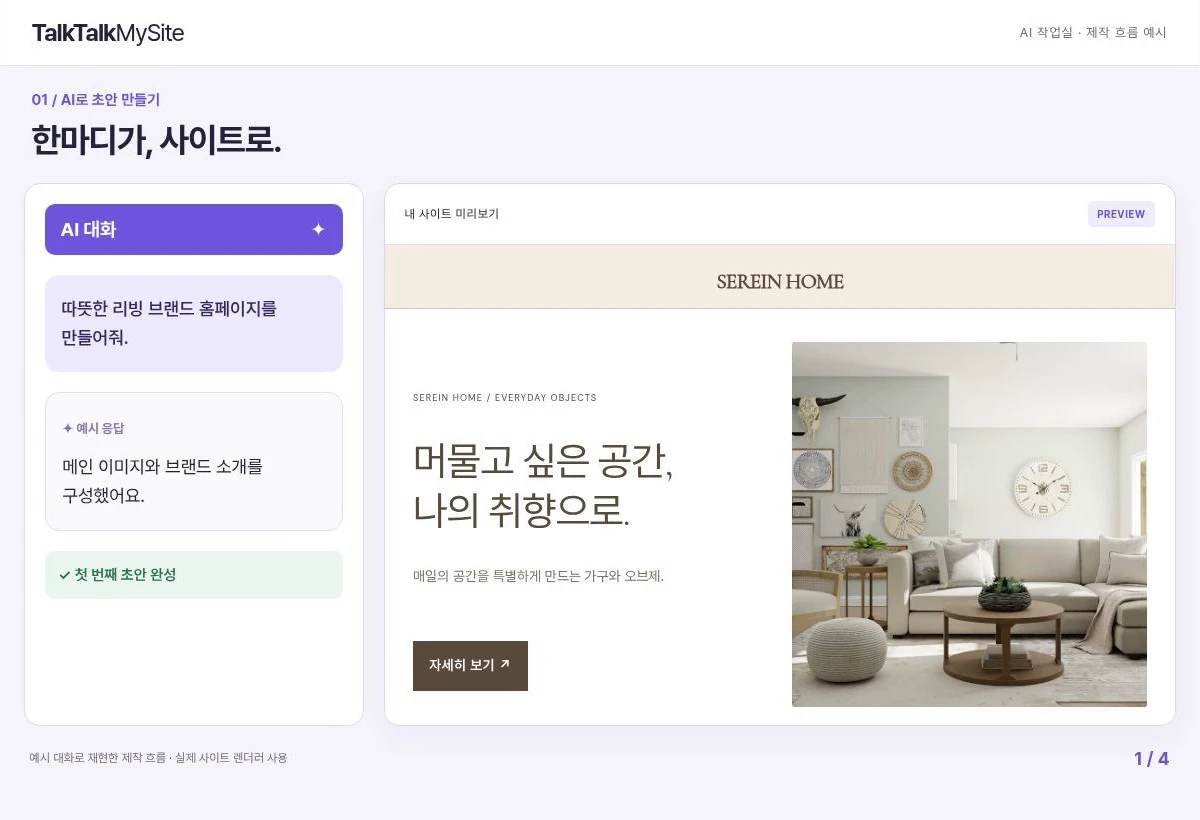
After creating the page, the owner must check the wording, photos, layout, product details, and business information. TalkTalkMySite’s visual editing lets owners update text and images themselves, making routine updates easier to manage. Templates and owner editing may reduce custom-build and recurring update costs, but neither results nor savings are guaranteed.
- Verify dimensions, materials, included items, care, and shipping details; mark anything missing.
- Check that the title, photos, and purchase information are easy to read on a phone.
- Where needed, complete and test the actual setup for payments, shipping, domain, and social login.
- Recheck links, prices, stock, and contact routes before publishing.
Search ranking and increased sales are not guaranteed, and AI-generated text can contain errors. Do not plan on unlimited use or error-free operation. As a next step, try the TalkTalkMySite AI workspace to build one first product page, then review it against the real product details yourself.
#FurnitureandHomeGoods #FurnitureandHomeGoodsOnlineStoreCreation #FurnitureandHomeGoodsNoCode #FurnitureandHomeGoodsTemplates #FurnitureandHomeGoodsDesign #FurnitureandHomeGoodsOnlinePresence #OnlineStoreCreation #NoCodeStore #AIStoreBuilder #StoreTemplates #EcommercePlanning #StoreManagement #NoCode #NoCodeBuilder #BuildWithoutCoding #DesignForBeginners #AIAssistedDesign #TemplateCustomization #ResponsiveDesign #MobileFriendly #ContentPlanning #BrandIntroduction #PageStructure #UserExperience #VisualEditing #WebsiteImages #LaunchPreparation #BeginnersGuide #MaintenanceChecklist #OnlineBusiness