Independent Publisher Online Store Creation: Connecting Store Visitors to Readers Online
Learn how to link an independent publisher’s physical shop to a website and online store, what materials to prepare, how to choose a sales setup, and which common mistakes to avoid.
Turn a Store Visit into an Online Next Step
A publisher’s website introduces the press and its books; an online store accepts orders. Keep those roles clear so visitors can browse in person, then find information and place an order from home. Add a short address or QR code to a counter card or bookmark, and make sure the destination page clearly shows featured titles, how to buy, and how to get in touch. Printed shop materials should point to information available online, while the website should keep the physical shop’s location and opening details current.
Gather the essentials first: a publisher bio; each book’s title, author, description, format, and price; cover images; stock and shipping policies; exchange and return information; contact details; shop information; and a domain you plan to use. Confirm that you have permission to publish the text and images. Choose photos that represent the actual books accurately, and describe sales terms in line with how you operate.
Set the Scope According to How You Sell
If you only want to announce new releases and events, without taking online orders, start with a website. If your priorities are a catalogue, shop information, and stock updates, you may not need to add ordering features straight away. Consider online store creation when you can handle orders from outside the shop and manage stock and shipping. Link book pages to purchase buttons, and make ordering, payment, and delivery information easy to check before checkout.
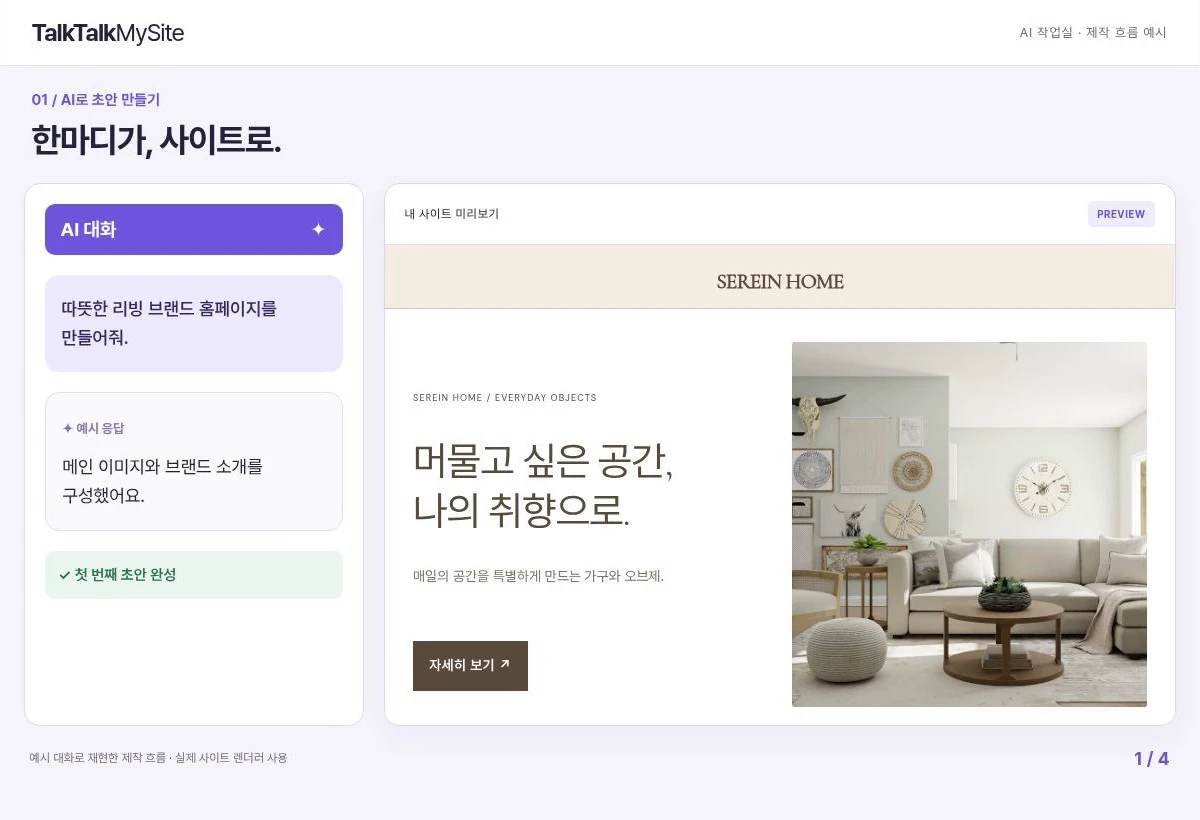
TalkTalkMySite offers no-code templates, AI chat, and visual editing, making it practical to sketch out a first site without coding or design experience. Basic is for a website, Standard is for a store, and Premium is for multilingual use, so review the option that matches your current needs. A template can be a starting point for reducing the work of a custom build, but check plan details, AI credits, and setup requirements before choosing.
A Checklist and a Hypothetical Example to Avoid Mistakes
- Check that every book’s title, author, price, stock status, cover, and description match.
- Configure and test payment methods, social login if used, the domain, and shipping to fit your actual operations.
- Test the shop’s QR code and online contact details on a phone.
- Assign someone and set a schedule for updating out-of-stock titles and ended events.
- Avoid promises about search rankings or sales, and do not make shipping commitments you have not verified.
**Hypothetical example:** Suppose a publisher of poetry and small literary journals wants to tell shop visitors about new releases but is not yet ready to process online orders. It could first publish a website with a press introduction, a new-release list, shop information, and contact details, then link a counter card’s QR code to that page. Once enquiries increase and the publisher is ready to manage stock, packing, and shipping, it can expand to an online store. This is an illustrative decision, not a promise of sales results.
Review Before Publishing and Build the First Page
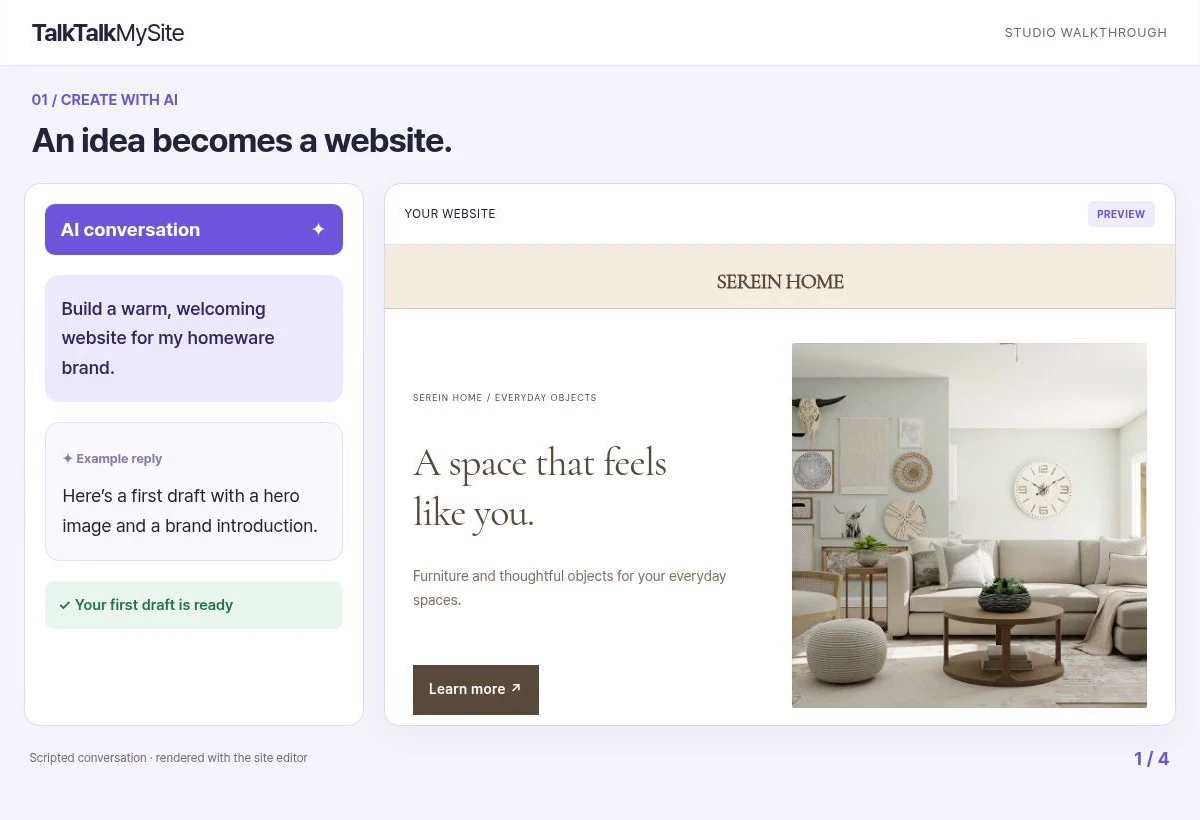
With TalkTalkMySite, use a template and AI chat to draft a press introduction or book information, then have the owner check and edit the wording, images, layout, prices, and contact details. Visual editing can make routine updates to release information and images easier, but generated content still needs a separate factual review. Payment, social login, domains, and shipping must each be configured when needed; do not assume unlimited use or error-free operation.
For a practical next step, gather the materials for one featured book and a shop-information page, try the AI workspace, and build a first page. Check its links and wording on a phone. Then decide whether the publisher is ready to take real orders or should keep the site as an informational website for now.
#IndependentPublisher #IndependentPublisherOnlineStoreCreation #IndependentPublisherNoCode #IndependentPublisherTemplates #IndependentPublisherDesign #IndependentPublisherOnlinePresence #OnlineStoreCreation #NoCodeStore #AIStoreBuilder #StoreTemplates #EcommercePlanning #StoreManagement #NoCode #NoCodeBuilder #BuildWithoutCoding #DesignForBeginners #AIAssistedDesign #TemplateCustomization #ResponsiveDesign #MobileFriendly #ContentPlanning #BrandIntroduction #PageStructure #UserExperience #VisualEditing #WebsiteImages #LaunchPreparation #BeginnersGuide #MaintenanceChecklist #OnlineBusiness