Startup Online Store Creation: Build a Shipping, Exchange, and Returns Page
A practical guide for startups preparing their first online store: organize policies, answer shopper questions, and check a sample layout and launch checklist before publishing.
When opening an online store for the first time, shipping, exchange, and returns information is not an optional page to fill in later. It helps shoppers decide whether to buy. Start by confirming the terms your business can actually provide, then answer common pre-purchase questions briefly and clearly. Do not copy another store’s wording as-is; write for your products and operating conditions.
1. Decide the operating details before publishing
For shipping, confirm the dispatch schedule, estimated delivery time, shipping fees and free-shipping conditions, and situations that may cause delays. For exchanges and returns, set out how to apply, applicable time limits, condition requirements, who pays the costs, and the steps involved. Clearly identify made-to-order, preorder, or other items with terms that differ from ordinary products. Do not publish guesses for details that are not settled; confirm them with the responsible person first.
Preparation checklist: □ Shipping terms for each product □ Where and how to request an exchange or return, and what information is needed □ Costs and exceptions □ Contact channels and operating hours □ Whether order confirmations and dispatch notices match the actual policy. Consumer-protection obligations may vary with the product and circumstances, so check relevant official information or an appropriate professional before publishing.
2. Structure the page around visitor questions
At the top, summarize the main shipping, exchange, and returns conditions. Below, organize questions and answers by topic. Use questions in a shopper’s own words, such as “When will my order ship?”, “How can I change my shipping address?”, “Where do I request an exchange?”, and “Who pays return shipping?” Include the relevant conditions, what the customer needs to do, and how to get in touch. Make exceptions easy to notice. Instead of putting every policy into one long paragraph, use short sections and clear headings so visitors can find answers quickly.
**Hypothetical example — a small home-goods startup:** The team explains its agreed weekday dispatch schedule, shipping fees by product, and the process for requesting a return of an unopened item. This is an example of page organization, not a universal policy. Each seller should publish only terms that match its products, agreements, and actual operations.
3. Start with a template and review it yourself
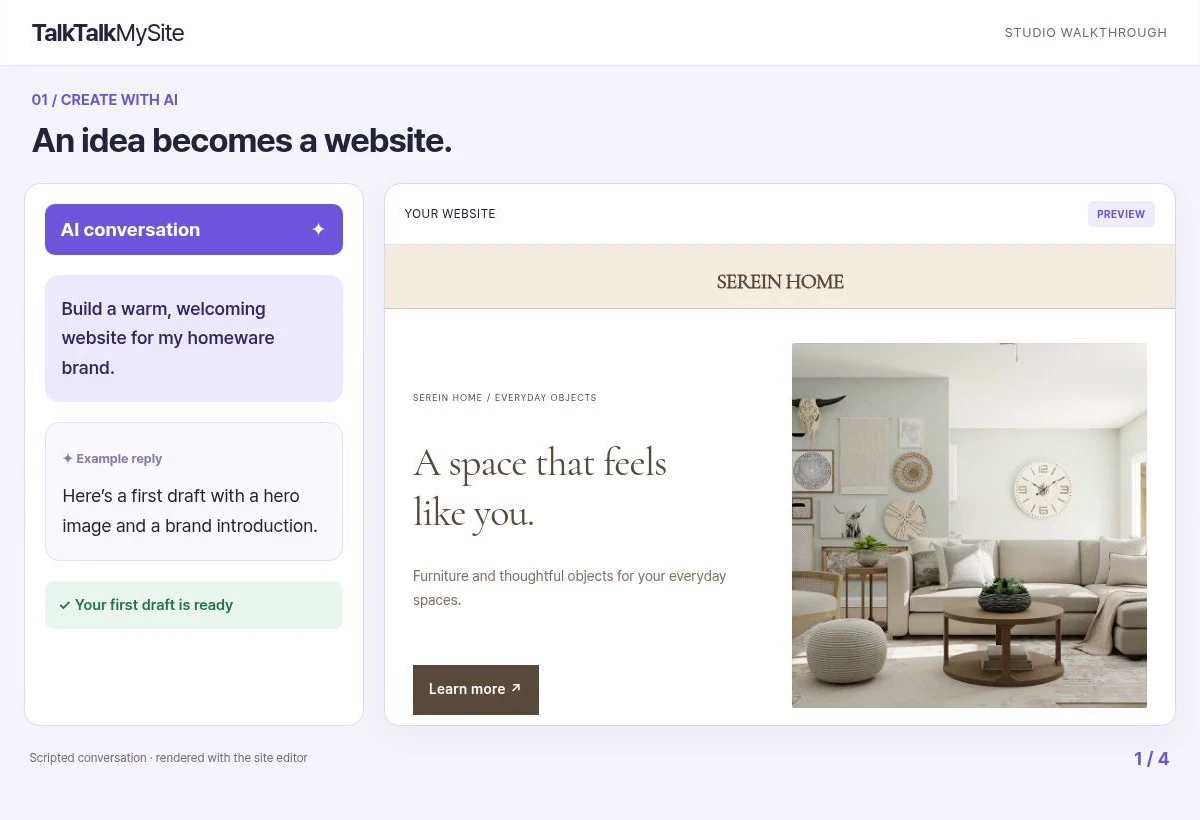
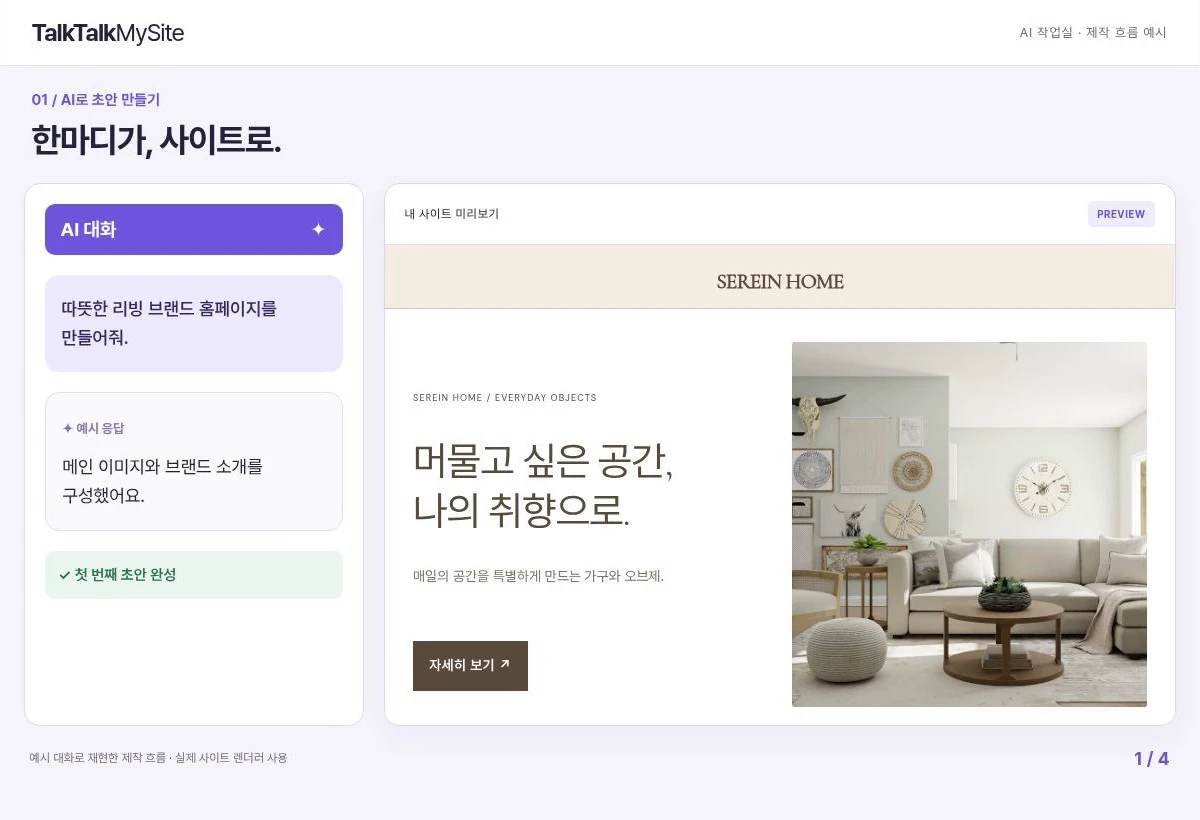
TalkTalkMySite offers no-code templates, AI chat, and visual editing, making it approachable even if you have no coding or design experience. Rather than immediately commissioning a large custom build, organize the information you need and use a template to create the highest-priority pages first.
After creating the page, the owner can review and edit the wording, layout, and business details. When a policy changes, update the text and images yourself, then check that the changes still match order confirmations and dispatch notices. Do not publish AI-generated wording without verifying the facts.
4. Check before launch and choose a next step
□ Are the heading and contact route easy to see on a phone? □ Do the shipping, exchange, and returns terms agree with one another? □ Can customers tell what information they need to submit a request? □ Do the actual contact channels work? After checking these points, record recurring questions and use them to improve the page.
Try the TalkTalkMySite AI workspace to draft your information page, then use visual editing to build your first page yourself. Basic is for a website, Standard is for a store, and Premium is for multilingual use; payments, social login, domains, and shipping require separate setup. Check plan details, AI credits, and setup requirements. Templates and owner-led editing may help reduce custom-build and routine update costs, but they do not guarantee rankings, sales, unlimited use, or error-free results.
#Startup #StartupOnlineStoreCreation #StartupNoCode #StartupTemplates #StartupDesign #StartupOnlinePresence #OnlineStoreCreation #NoCodeStore #AIStoreBuilder #StoreTemplates #EcommercePlanning #StoreManagement #NoCode #NoCodeBuilder #BuildWithoutCoding #DesignForBeginners #AIAssistedDesign #TemplateCustomization #ResponsiveDesign #MobileFriendly #ContentPlanning #BrandIntroduction #PageStructure #UserExperience #VisualEditing #WebsiteImages #LaunchPreparation #BeginnersGuide #MaintenanceChecklist #OnlineBusiness