Cultural Event Online Store Creation: Organize Products and the Purchase Journey
Learn how to group tickets, merchandise, and activities, then guide visitors toward checkout. This beginner’s guide covers decision criteria, required materials, common mistakes, and a practical launch checklist.
Start with what you sell and how people buy
Cultural Event Online Store Creation begins with understanding what visitors want to buy and when—not simply uploading a product list. If you sell tickets, merchandise, and workshops together, first record each item’s dates, collection or delivery method, stock, and purchase limits. When the event is short and seats or sessions vary by date, organize products around dates or sessions. If you mainly sell merchandise year-round, categories based on product type or purpose may be easier to browse.
**Hypothetical example:** Suppose a weekend art fair sells admission tickets, artists’ posters, and pottery workshops. Put “Tickets,” “Merchandise,” and “Workshops” on the first screen, and ask visitors to choose a date and time for tickets. Group posters by artist, and state their paper size and whether shipping is available in each product description. For workshops, let visitors check remaining sessions and what to bring before checkout. This is an illustrative hypothetical, not a real event.
Keep categories focused and the purchase journey simple
Use category names visitors would naturally understand, and avoid forcing the same item into several categories. If the choices become overwhelming, reduce the number of top-level categories and add useful decision criteria such as event date, price, or collection method. On each product page, make price, schedule, what is included, cancellation or change information, and shipping or on-site collection instructions easy to find. Before payment, let customers review options and quantities. On the confirmation screen, explain how to validate a ticket or collect an order.
Prepare a spreadsheet of product names, prices, stock, and options; event dates and venue; clear images with usage rights checked; shipping and on-site collection rules; and a contact method. Payment methods, social login, domain connection, and shipping may need separate setup. Test the full customer journey before publishing.
Draft with TalkTalkMySite and review it yourself
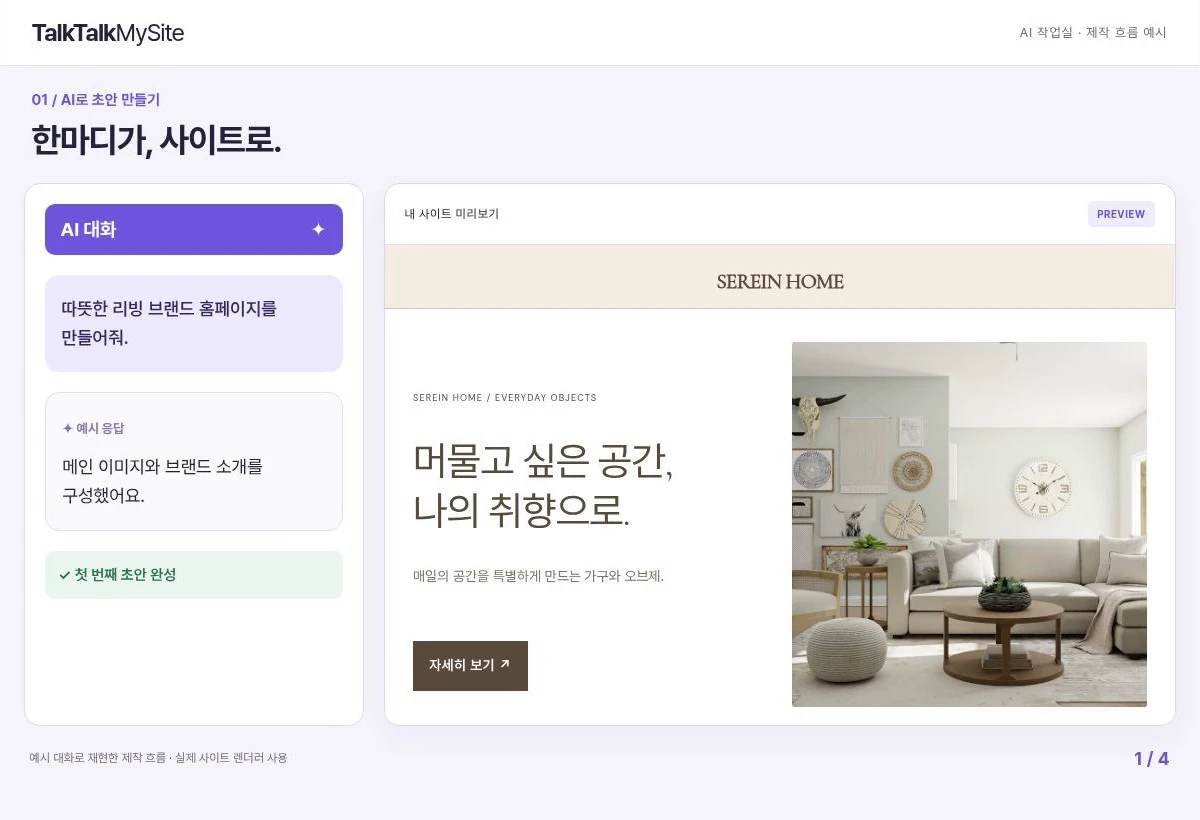
You do not need coding or design experience to begin with TalkTalkMySite’s no-code templates and AI chat. Use a template to draft the page structure, then describe your event and products in the AI chat to get ideas for categories and customer-facing copy. Basic is for a website, Standard for a store, and Premium for multilingual needs. Check which plan fits the features you require, along with plan terms, AI credits, and setup requirements.
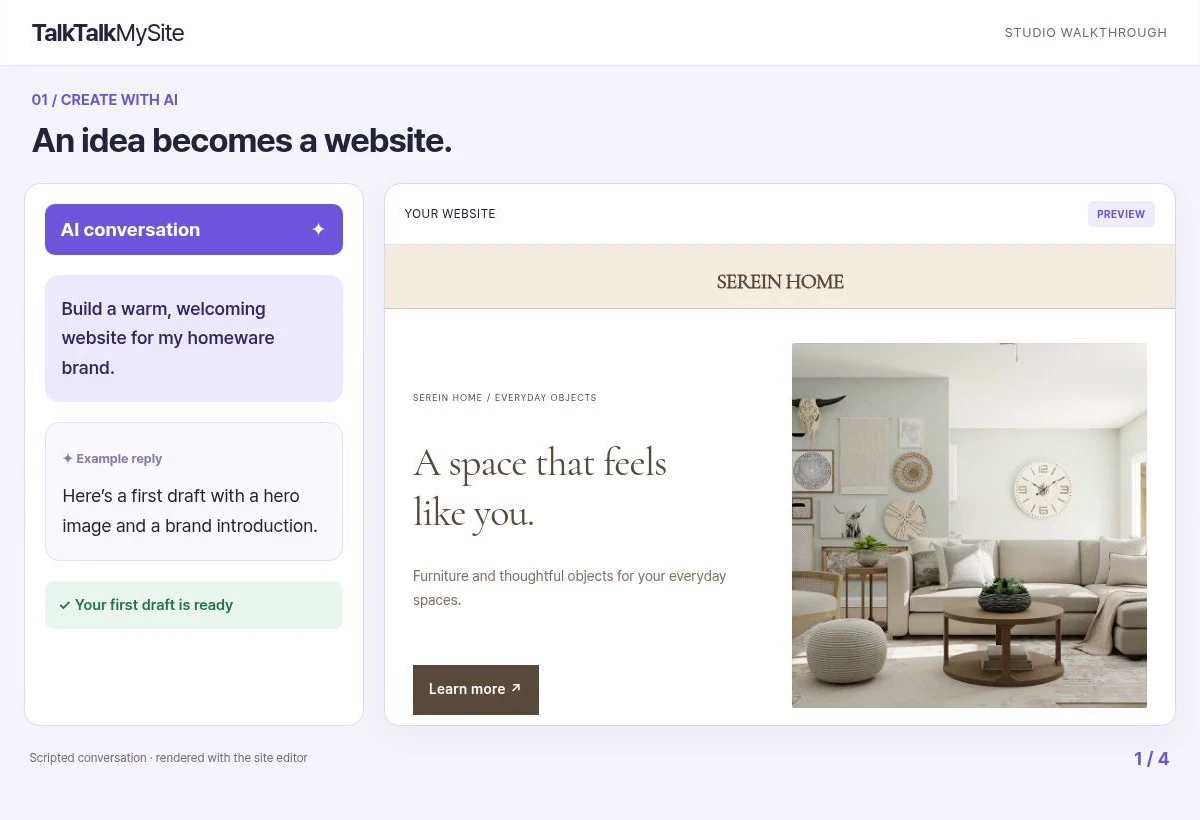
With visual editing, you can update text and images yourself and manage event schedules or sold-out notices. However, the owner must verify the content, layout, prices, and business details before publication; automated writing does not eliminate mistakes. Templates and owner editing can reduce the work involved in custom builds and routine updates, but they do not guarantee lower costs or sales results.
Pre-launch checklist and next step
- On a phone, are category names, product details, and checkout buttons easy to see?
- Have you tested choosing a date, session, or quantity through to payment completion?
- Do ticket validation, shipping, and on-site collection instructions agree across the site?
- Are image permissions, contact details, stock, and event information current?
- Have you checked required payment, domain, and shipping setup, as well as your plan and AI credits?
Instead of uploading every product at once, create a test page with a few representative items and review the buying process from a visitor’s perspective. Explore the TalkTalkMySite AI workspace and build your first page. Rather than expecting search rankings, sales, unlimited use, or error-free operation, start with the features your event needs and improve the site step by step.
#CulturalEvent #CulturalEventOnlineStoreCreation #CulturalEventNoCode #CulturalEventTemplates #CulturalEventDesign #CulturalEventOnlinePresence #OnlineStoreCreation #NoCodeStore #AIStoreBuilder #StoreTemplates #EcommercePlanning #StoreManagement #NoCode #NoCodeBuilder #BuildWithoutCoding #DesignForBeginners #AIAssistedDesign #TemplateCustomization #ResponsiveDesign #MobileFriendly #ContentPlanning #BrandIntroduction #PageStructure #UserExperience #VisualEditing #WebsiteImages #LaunchPreparation #BeginnersGuide #MaintenanceChecklist #OnlineBusiness