Local Retail Online Store Creation: Structuring Pages with Few Product Photos
Useful product information matters more than photo quantity. Learn how to build pages with limited images, what owners should check weekly, and which setup items to review before using a no-code store builder.
Prepare information before collecting more photos
For a local retailer, online store creation should begin with the information customers need to decide whether to buy, not with trying to gather a large number of product photos. Choose a few representative products and organize each product’s name, price, options, how to check stock, size or material, pickup and delivery terms, and a contact for exchange questions. Do not guess at details that are not confirmed; mark them for the owner to verify.
Even one photo per product can work as a main image if it is clear and accurately shows the item. Do not repeat the same image to make it look like there are several, or fill gaps with photos of other products. For products with few images, provide accurate descriptions and a way to ask questions before purchase; add more photos once they are ready. Also prepare your logo, store contact details, opening hours, and delivery information as basic materials for website creation.
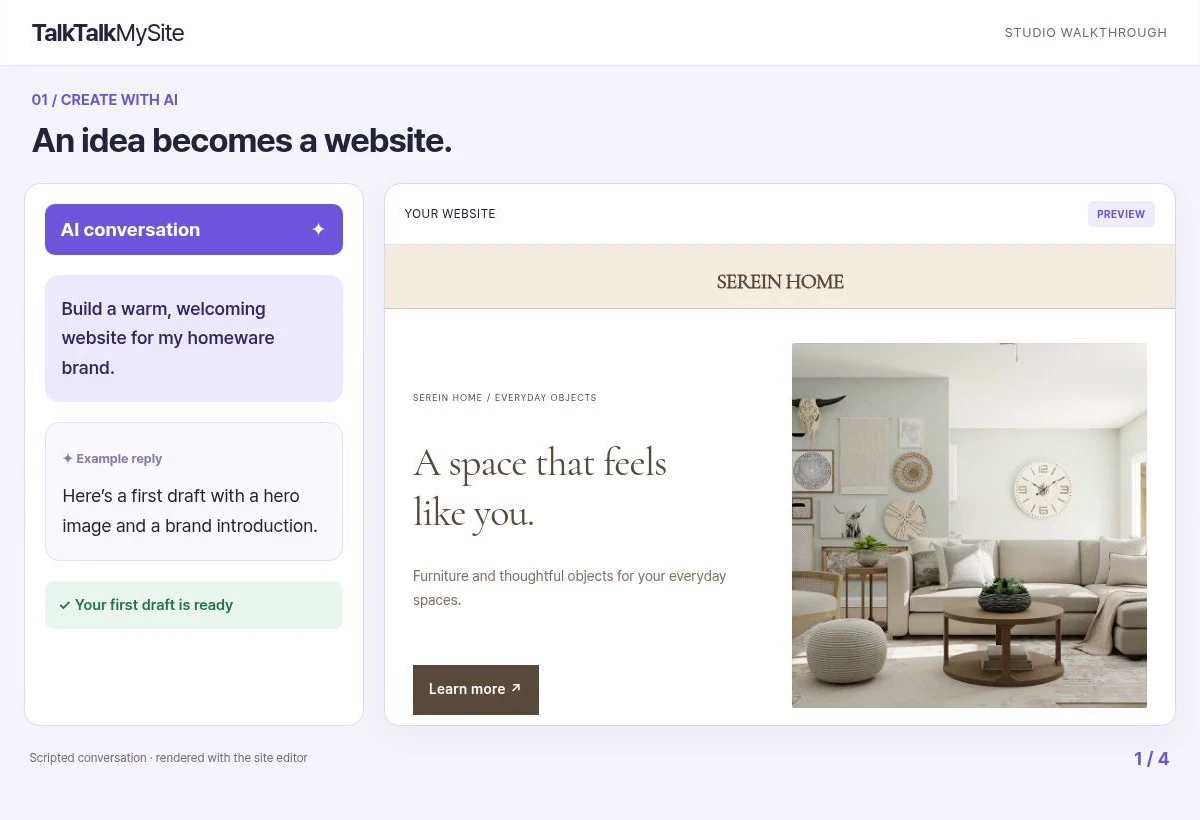
Structure pages with a limited photo collection
Start with a simple structure: store introduction and hours, product listing, product details, and delivery and contact information. On the first screen, show the store name and representative products or categories, with a clear path to ordering or making an inquiry. Make product names and prices easy to read in the listing. On each product detail page, place the available main photo alongside confirmed options, features, and delivery terms. Rather than increasing the image count, check the order of information and the readability of the text.
**Hypothetical example — neighborhood home-goods shop:** If a mug has only one photo, use it as the main image and state its capacity and material only if those details have been verified. If packaging or color choices matter but related photos are not ready, strengthen the description and inquiry guidance. Do not offer customers an option they cannot see or verify.
TalkTalkMySite provides no-code templates, AI chat, and visual editing, so owners can start with a basic structure without coding or design experience. To keep the initial scope manageable, use a template for the essential pages and ask AI chat to help draft copy, while personally verifying that all product information is accurate.
A weekly check order for the owner
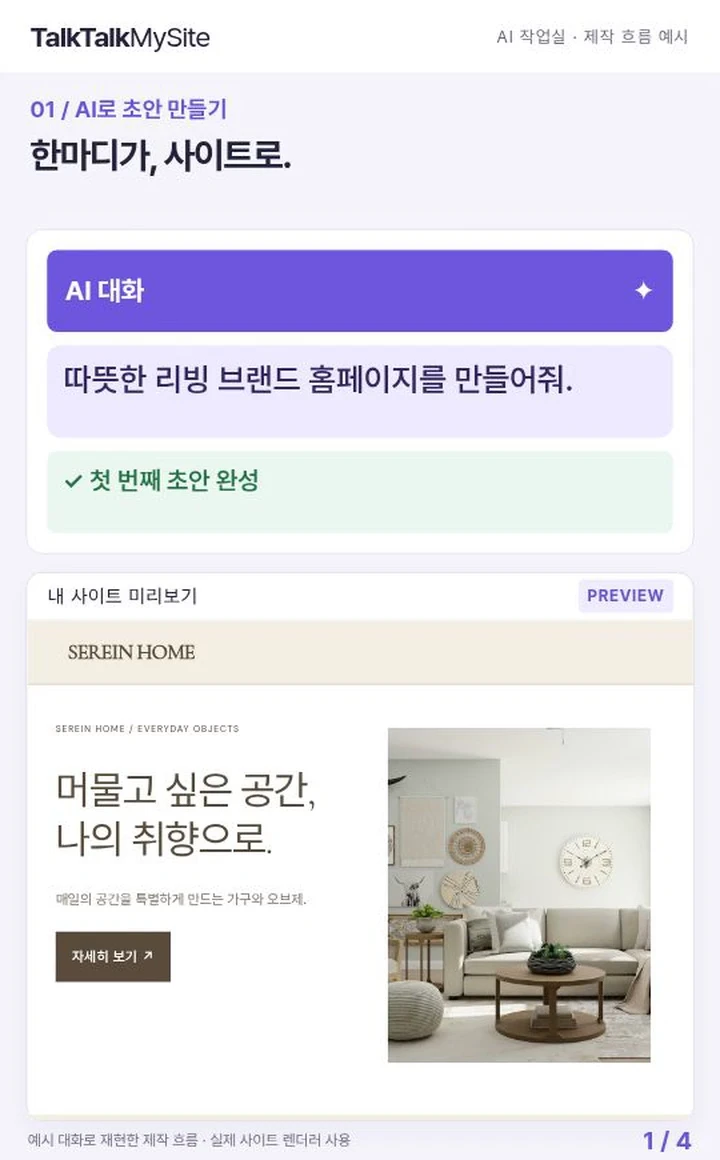
Checking the same items in the same order each week makes omissions easier to catch. Pick a regular day and follow these steps:
- **1. Store information:** Confirm opening hours, closed days, phone number, location, and current notices.
- **2. Product details:** Compare prices, options, sold-out or stock status, and descriptions against what is actually being sold.
- **3. Photos and display:** Check that images are not blurry or linked to the wrong item. Make sure product names and the purchase or inquiry path are readable on a phone.
- **4. Order flow:** Check that selecting a product leads to the intended payment or inquiry instructions. If something is wrong, correct it and check again.
- **5. Change log:** Briefly record updated prices, photos, delivery information, and the date checked so you can use the notes next week.
With TalkTalkMySite, owners can use visual editing to change text and images themselves and manage routine updates. Easy editing, however, does not guarantee the accuracy of your content, layout, or business details. Before publishing, compare the page with the way your store actually operates.
Setup decisions and realistic limitations
Check plans and prerequisites against the functions you need. Basic is for a website, Standard for a store, and Premium for multilingual use. Payments, social login, domains, and shipping require setup. Review each function’s setup process and the materials needed to operate it; also check plan terms and AI credit usage. Templates and owner editing can help reduce the costs of custom builds or recurring updates, but actual costs depend on the scope you choose and how you run the site.
Search rankings and sales are not guaranteed, and you should not assume unlimited usage or error-free operation. Start a draft with a few products and verified information, decide how orders will work and where you will deliver, then assign a person and time for the weekly check. As a next step, try the TalkTalkMySite AI workspace to create your first page, and review it yourself with the checklist before publishing.
#LocalRetail #LocalRetailOnlineStoreCreation #LocalRetailNoCode #LocalRetailTemplates #LocalRetailDesign #LocalRetailOnlinePresence #OnlineStoreCreation #NoCodeStore #AIStoreBuilder #StoreTemplates #EcommercePlanning #StoreManagement #NoCode #NoCodeBuilder #BuildWithoutCoding #DesignForBeginners #AIAssistedDesign #TemplateCustomization #ResponsiveDesign #MobileFriendly #ContentPlanning #BrandIntroduction #PageStructure #UserExperience #VisualEditing #WebsiteImages #LaunchPreparation #BeginnersGuide #MaintenanceChecklist #OnlineBusiness