Bakery Online Store Creation: From Pre-Order Questions to Weekly Checks
Before selling baked goods online, organize the product, pickup, and delivery details customers need, then review inventory and order information each week. Use this guide to prepare materials and set a practical routine.
1. Start with customers’ pre-purchase questions
Bakery Online Store Creation should begin with information that helps customers decide, not just attractive photos. Clarify what you sell, when items are baked, how to store and consume them, and whether you provide allergy-related information. For each product, keep the name, contents, price, options, and stock details consistent. State pickup hours and the available delivery areas and schedule clearly. Do not publish unconfirmed ingredient details or delivery promises; use information the owner has checked.
2. Prepare materials and choose how to sell
Gather current product photos, descriptions, prices and options, inventory rules, and a contact method for order questions. Decide whether you offer in-store pickup, shipping, or both, and set order cutoffs and dispatch days. Check whether payments, social login, a domain, and shipping each require separate setup. Before completing payment and delivery setup, use a test order to review the order instructions and your operating process. Which functions are included depends on the selected plan and setup requirements.
**Hypothetical example — a neighborhood bread shop:** List a basic loaf as a single item and a two-loaf bundle, and show the reserved pickup times in both the product description and order instructions. If weekend shipping is limited, make the quantity offered and the order cutoff consistent. This is only an example; the shop must verify its actual products and schedule.
3. Start with no-code tools and refine the store yourself
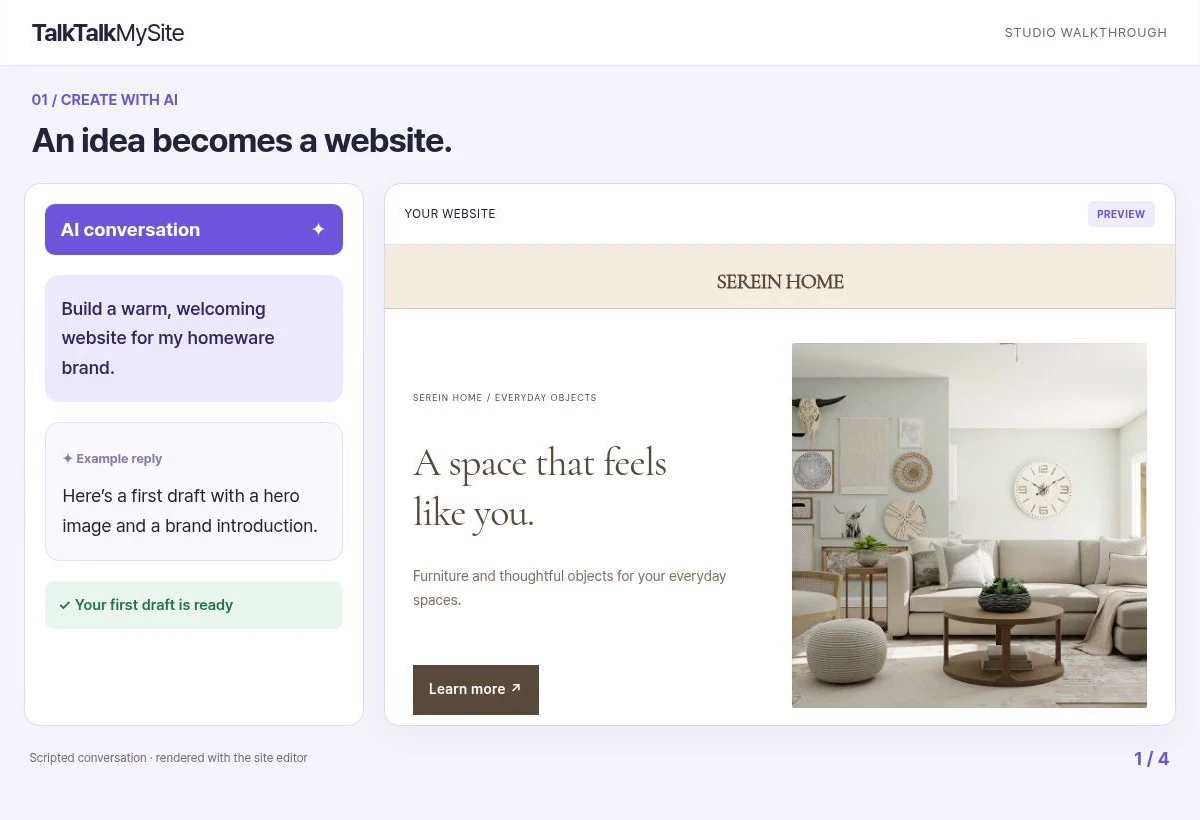
TalkTalkMySite offers no-code templates, AI chat, and visual editing, so you can begin with core pages and product listings before commissioning custom development. You can get started without coding or design experience, but the owner still needs to review whether the template layout and generated text are accurate. Basic is for a website, Standard for a store, and Premium for multilingual use. Check which plan fits your sales needs, along with AI credits and any initial setup requirements.
Once the pages are in place, owners can edit product names, photos, prices, and pickup instructions themselves, making routine updates easier to manage. Still, review the layout, inventory, and business details as well as the text and images. Templates and editing tools may not meet every custom-build requirement. Search rankings, sales, unlimited use, and error-free results are not guaranteed.
4. A weekly review sequence and your next step
- Check stock and sales status for each product, including out-of-stock notices.
- Confirm that prices, options, photos, and descriptions match what you currently sell.
- Review pickup hours, delivery schedules, order cutoffs, and contact details.
- Test payment and order notifications, then update new inquiries or changed information.
- Check key pages and the ordering flow on a mobile screen.
Following this sequence can help reduce order confusion caused by outdated information. Prepare the details and photos for one or two products, decide how customers will receive them, and try creating your first page in the TalkTalkMySite AI workspace. Before publishing, recheck all business information and setup.
#Bakery #BakeryOnlineStoreCreation #BakeryNoCode #BakeryTemplates #BakeryDesign #BakeryOnlinePresence #OnlineStoreCreation #NoCodeStore #AIStoreBuilder #StoreTemplates #EcommercePlanning #StoreManagement #NoCode #NoCodeBuilder #BuildWithoutCoding #DesignForBeginners #AIAssistedDesign #TemplateCustomization #ResponsiveDesign #MobileFriendly #ContentPlanning #BrandIntroduction #PageStructure #UserExperience #VisualEditing #WebsiteImages #LaunchPreparation #BeginnersGuide #MaintenanceChecklist #OnlineBusiness